Online Reporter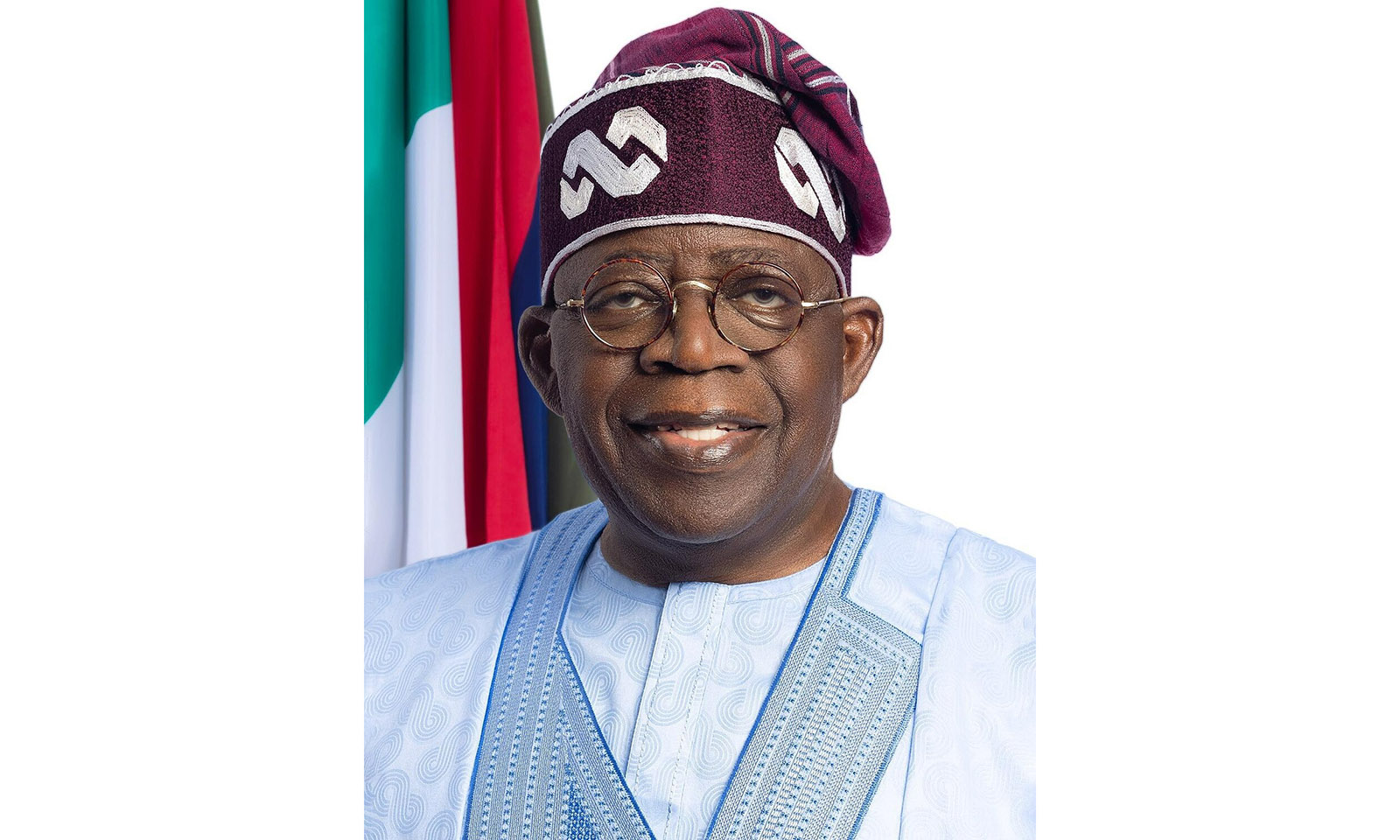
Communion with Bishop Lazarus
This week, Bishop Lazi begins his instalment by graciously asking for your indulgence as he elaborately taps the wisdom of King Solomon from Ecclesiastes 10:1-15.
While it is by no means exhaustive, it succinctly captures the destructive nature of folly, the dangers of incompetence in leadership and need for wisdom in daily life.
“As dead flies give perfume a bad smell, so a little folly outweighs wisdom and honour,” begins Ecclesiastes 10, adding: “The heart of the wise inclines to the right, but the heart of the fool to the left. Even as fools walk along the road, they lack sense and show everyone how stupid they are.
“If a ruler’s anger rises against you, do not leave your post; calmness can lay great offences to rest. There is an evil I have seen under the sun, the sort of error that arises from a ruler: Fools are put in many high positions, while the rich occupy the low ones.
“I have seen slaves on horseback, while princes go on foot like slaves. Whoever digs a pit may fall into it; whoever breaks through a wall may be bitten by a snake.
“Whoever quarries stones may be injured by them; whoever splits logs may be endangered by them. If the axe is dull and its edge unsharpened, more strength is needed, but skill will bring success.
“If a snake bites before it is charmed, the charmer receives no fee. Words from the mouth of the wise are gracious, but fools are consumed by their own lips. At the beginning their words are folly; at the end they are wicked madness — and fools multiply words. No one knows what is coming — who can tell someone else what will happen after them? The toil of fools wearies them; they do not know the way to town.”
Dear reader, you can never read something as close to the folly of the United States and Israel’s war on aggression on Iran, which began 64 days ago.
While Bishop Lazi refuses to go to the extent of indecorously calling Donald Trump, the president of the US, a fool, clearly his decision — against the best advice of his generals and intelligence officials — to launch a war of aggression against Iran was foolish.
Slowly, he is now discovering that he has fallen into a pit that he himself dug, and getting out of the quagmire is proving very difficult.
As King Solomon observes, “The toil of fools wearies them; they do not know the way to town.” Kikikiki.
10-day war of words
Despite the needless loss of life wrought by this senseless war, the major consequence, which has been very painful to everyone across the world, has been the closure of the Strait of Hormuz, through which a quarter of the world’s oil transits. This has expectedly had the adverse effect of pushing up prices of everything from food to luxuries, as oil is the lifeblood of all economic activities.
But it is not only about oil.
You see, roughly a third of the world’s fertilisers, such as urea, potash, ammonia and phosphates, normally pass through the Strait of Hormuz.
If the stalemate between the belligerents continues, this would have an impact on the availability and price of fertilisers in the near to long term.
All this has major implications on both food production and prices.
For the Bishop, the pervasive discomfort and anxiety caused by this conflict is best dramatised by the recent war of words between two gentlemen, Nigeria’s President Bola Tinubu and Kenya’s William Ruto.
It all began on April 10, when Tinubu, while inaugurating projects by Bayelsa State governor Douye Diri in Yenagoa, the state capital, told a gathering that Nigerians were faring better than their Kenyan counterparts in the wake of the conflict-induced soaring fuel prices.
“Yes, I hear you from various angles of the economy. The fuel price is biting hard, but look around, let’s just thank God together that you are better off. Listen to them in Kenya, in other African countries, to what they are going through,” he said.
Kikikikiki.
Ten days later, Ruto delivered a political clapback while addressing Kenyans living in Italy.
“We speak some of the best English in the world, that is true,” Ruto mused.
“If you listen to a Nigerian speaking, you don’t know what they are saying — you need a translator.”
After 10 days of Nigerians and Kenyans trading barbs and banter, especially on social media, Ruto, however, walked back his earlier statement and de-escalated the situation during the “Africa We Build” summit held in Nairobi, Kenya, on April 23, where he extolled Nigerian billionaire industrialist Aliko Dangote for finally coming up with a solution to Nigeria’s persistent fuel challenges.
“Nigeria has been a producer of oil for all the years . . . yet, when you went to Nigeria, there were queues of people looking for fuel in petrol stations for a long time. Until one African stepped forward and built a refinery, Aliko Dangote . . . The solution wasn’t in Europe or Asia. The solution was in Nigeria for a problem that disturbed Nigeria for years.”
The banter aside, the conundrum that Nigeria found itself, where it periodically and routinely grappled with fuel shortages whilst being Africa’s biggest oil producer, mirrored an African-wide tragedy and paradox.
Despite our fabulous mineral riches, we remain wretchedly poor.
Renaissance
But, if Nigeria’s fuel shortages, despite it being a major crude oil producer, highlight Africa’s biggest challenge to translate its mineral resources into a high standard of living for its people, then Dangote’s refinery is definitely the solution to its malaise.
It shows that only through industrialisation, led by Africans themselves, will Africa’s challenges — poverty and its cousins such as disease and famine — be solved.
Now, even our teapot-shaped Republic stands to benefit, as there are already ongoing plans to construct a 2 000-kilometre fuel pipeline from Namibia’s Walvis Bay to Bulawayo, which will strengthen the region’s energy security and reduce reliance on fuel imports.
A fuel storage facility for Walvis Bay, designed to store up to 1,6 million barrels of petrol and diesel, is also being planned.
The Dangote Refinery, which is now operating at its full capacity of 650 000 barrels per day, is already supplying most countries in West, Central and even East Africa, while exports of clean petroleum products more than doubled, leaping from 100 000 barrels per day to 214 000.
But the refinery is not providing only oil to succour African markets at a time when the world is facing shortages; it is also supplying urea fertiliser to a market that also faces the prospect of future shortages.
While shipments were traditionally earmarked for markets in the US and South America, supplies are increasingly being channelled to African markets.
The plant currently produces three million tonnes of urea annually.
The success of this remarkable industrial story and milestone is quite apparent in Nigeria itself. It is estimated that the refinery will help propel the West African country’s economy from around the current U$300 billion to US$400 billion within the next four years, which is quite staggering.
Further, it is also expected to ease demand for foreign currency by 40 percent, particularly in a country that imports refined products with a net value of US$17 billion annually.
And all these activities will cure one of the pressing challenges of our time — youth unemployment — with the refinery forecast to absorb more than 100 000 workers directly and indirectly.
This is just breathtaking.
More than just oil
Dangote’s story is, however, not just about oil. It is a masterclass in what Africa, sitting on a whopping US$29,5 trillion of mineral resources, can do when it decided to beneficiate its own wealth.
All told, the Dangote story also proves that domestic processing is not a dream — it is a superior economic strategy.
It is a reality that our teapot-shaped Republic acknowledged a long time back and is now actively trying to address head-on through an ambitious National Development Strategy 2 that pivots on value and beneficiation as critical tools to the country’s industrialisation and modernisation drive.
The recently unveiled triumvirate of policies — the Zimbabwe National Industrial Development Policy 2, the Consumer Protection Policy and the Local Content Strategy — are not just in isolation but are part of a comprehensive action plan for industrial revival.
It necessarily has to be viewed within the context of the recent ban on raw materials.
Why should we be content with exporting lithium concentrate, when we can export higher-value lithium sulphate?
Hell, why should we even export the lithium sulphate when we can export lithium batteries or manufacture electric vehicles?
Why should we condemn ourselves to be perpetual consumers of vehicles from elsewhere when we have all the raw materials to manufacture them?
The higher up the value chain, the more people are employed and the more accretive value for the economy.
Resistance
But it is naïve to think that industrialisation will be a walk in the park.
It will not. Building the Dangote Refinery was not easy as it is made out to be.
It is still facing resistance from cartels within Nigeria, which are linked to refineries in the West that depend on crude oil from West Africa.
According to Kpler, a global trade intelligence platform, refining capacity is at risk of closure as a result of the emergence of the Dangote Refinery.
In fact, as many as 90 European refineries could close if it ramps up refining capacity.
There is a whole economy of trade finance that thrives as a result of Africa’s imports.
Further, manufacturing hubs in both the West and East will not willingly cede their manufacturing capacity, for this has a bearing on their economies.
So, it is fair to say that Zimbabwe is currently in the throes of another economic revolution whose outcome will materially change the fortunes not only of this country but the continent as well.
This is a revolution worth fighting — and winning.
Bishop out!