Online Reporter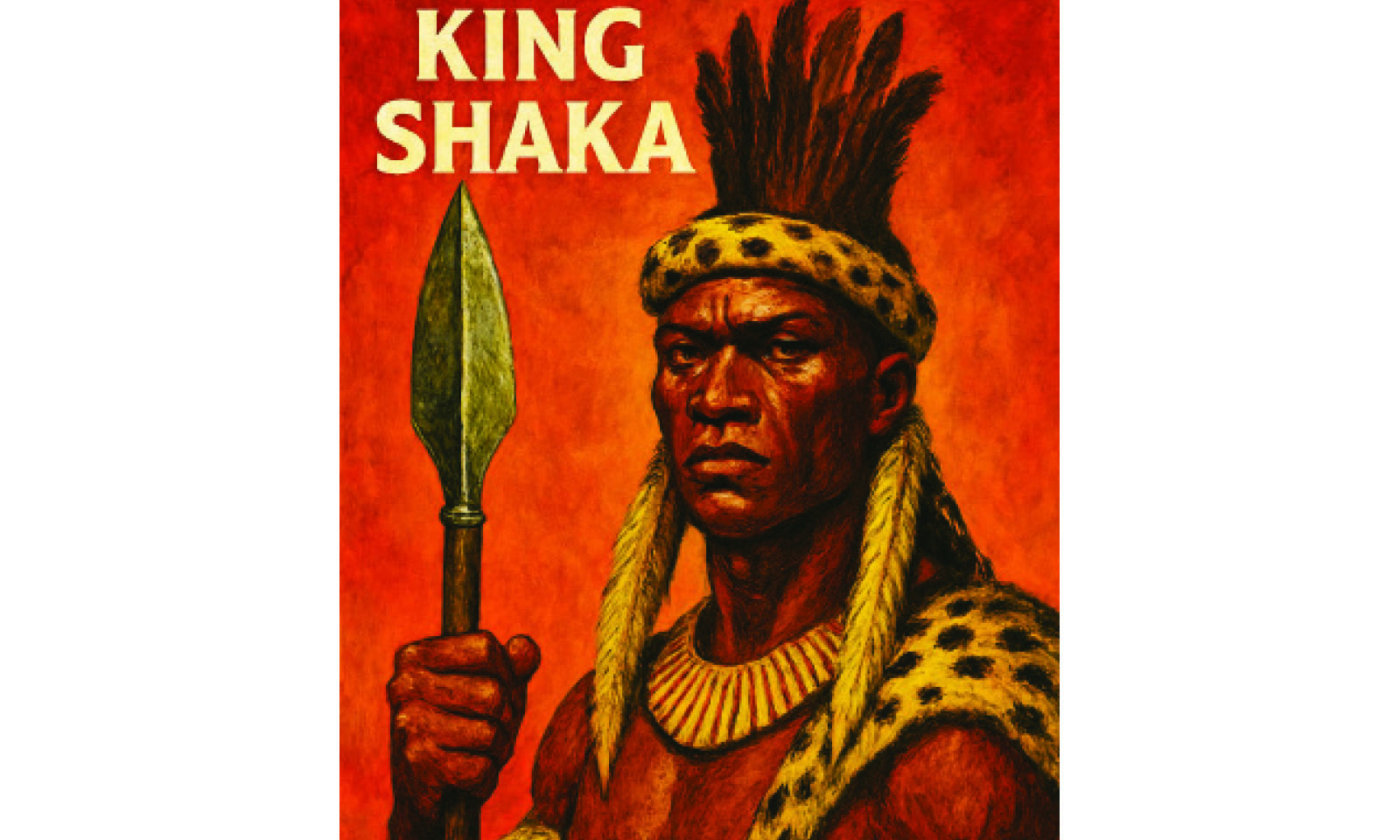
Communion with Bishop Lazarus
It is fair and safe to say a significant number of people in our teapot-shaped Republic have been religiously following the riveting South African drama series “Shaka Ilembe”, whose second season ended recently, to get some insights into the history of a man who dramatically and profoundly changed the history, culture, political, social and military dynamics of the region, Zimbabwe included.
Many of us would surely recall studying the Mfecane in secondary school, which was a period of bruising and intense warfare that was characterised by mass migrations in Southern and Central Africa.
The human shrapnel of the Shaka-inspired conflagration, prompted by the rise of the Zulu kingdom, included the Ndebele, under King Mzilikazi, who settled in the southern part of the country, and Soshangane, who migrated to present-day southern Mozambique, where he settled and established the Gaza Kingdom.
His territory later extended to south-eastern Zimbabwe.
So, the history of Shaka is as much intricately woven into, and inextricably connected to, the history of Zimbabwe as it is to South Africa.
But this television programme transcends mere entertainment — it is a powerful cultural project that renegotiates the country’s relationship with its history and identity.
You see, for centuries, the story of King Shaka kaSenzangakhona was largely told through the lens of European colonialists and missionaries, whose accounts often stereotyped him as a senseless “bloodthirsty tyrant” whose only language was violence.
“Shaka Ilembe”, which was produced after extensive research by South African historians and cultural experts, fundamentally shifts this perspective.
It tells the story from an internal, indigenous point of view that is infused with a Zulu worldview.
And instead of caricaturing Shaka, it presents him as a complex, multidimensional figure — a strategic genius, a vulnerable son, a visionary leader and a product of his complex political environment.
It is this humanisation that fosters a deeper, more nuanced understanding of his role in history.
In a radical and powerful shift, the series extensively uses isiZulu, elevating an indigenous language to the prestige typically reserved for English in the mainstream media.
This showcases the story’s poetic depth, richness and complexity.
“Shaka Ilembe” not only tells the foundational story of the region, but acts as a unifying cultural touchstone, helping to reawaken cultural pride and nationhood in South Africa and beyond.
It makes history dynamic, engaging and emotionally resonant.
It also sparks curiosity and encourages viewers to learn more about their own history.
So, in more ways than one, “Shaka Ilembe” is far more than a television show.
It is a cultural resurrection.
It successfully uses the medium of popular entertainment to reclaim a narrative that was distorted by colonialism, celebrate the depth and beauty of indigenous language and culture, and unify South Africa around a shared, proud historical epic.
In doing so, it provides a powerful source of cultural pride and strengthens the fabric of nationhood by reminding South Africans of the profound strength and sophistication of their pre-colonial heritage.
A compass to navigate the future
This is the power of telling one’s own story.
We should never tire telling our own history.
We should continue telling and retelling it to present and future generations.
The greatest importance of cultural history lies in its ability to tell a complete story — one that includes triumphs and failures, the powerful and the marginalised — to create a more understanding, resilient and unified nation.
Cultural history acts as the nation’s soul, memory and compass, influencing its present and shaping its future.
In addition to providing a shared story and common set of references that bind people together, it answers the fundamental questions: Who are we? and Where do we come from?
It safeguards the non-physical aspects of a culture that are crucial for its continuity.
Equally important, cultural history helps preserve indigenous and national languages, which are vessels of unique worldviews and knowledge systems, and keeps alive practices like festivals, ceremonies, dances and culinary traditions that define a people’s way of life.
Folktales, proverbs and myths often carry the ethical and moral codes of a society, passing them down through generations. Overall, the past is not about looking back; it is a tool of navigating the present and future.
In Isaiah 46:9, the Lord commands: “Remember your history, your long and rich history. I am God, the only God you’ve had or ever will have — incomparable, irreplaceable — From the very beginning telling you what the ending will be, all along letting you in on what is going to happen, assuring you, ‘I’m in this for the long haul, I’ll do exactly what I set out to do.’”
Deuteronomy 32:7 says: “Remember the days of old; consider the generations long past. Ask your father and he will tell you, your elders, and they will explain to you.”
As Zimbabwe, we also have a long, rich and proud history.
We are descendants of an empire that was one of the greatest civilisations on the continent, renowned for its political might, influence, trade and craftsmanship.
In terms of economic and cultural impact, the Mutapa Empire, just like China’s Silk Road across Eurasia, functioned as a critical African nexus in a global trade network.
It emerged as a dominant political and economic power controlling the trade routes connecting the interior to the Indian Ocean, effectively creating what can be termed the “Zambezi Silk Road”.
From between circa 1450 to 1902, it was renowned for its vast gold reserves, which were the primary export, as well as ivory from elephant herds and later copper.
These were the type of prestige goods demanded by Swahili-Arab traders on the coast, who integrated them into Indian Ocean trade networks reaching Arabia, India and beyond.
The Mwenemutapa, as they were also called, did not merely produce gold; they controlled its extraction and, crucially, the trade routes to the coast.
They established feitorias (trading posts) and maintained political alliances to ensure safe passage for merchant caravans, taxing the trade that flowed through their territory.
Similar to experiences elsewhere across the globe, with trade also came religious influences from the Islamic and Swahili worlds, which served to deepen and enrich the region’s cultural tapestry.
Trade also came with new military technologies and consumer goods such as Chinese porcelain and Persian glassware.
Reviving the Zambezi Silk Road
While the decline of historical networks gave way to colonial extractive economies that disrupted indigenous trade patterns, today, a conscious effort to revive global connectivity echoes these ancient models.
For example, drawing from its rich 5000-year-old civilisation, China’s ongoing Belt and Road Initiative (BRI) represents the revival of the Silk Road principles.
It is generally premised on building an interconnected network of trade routes to facilitate the exchange of goods, ideas and technologies.
Its ultimate goal is to create modern “routes” through ports, railways, highways and fibre-optic cables, as well as reduce trade barriers and increase the flow of goods, capital and services between Asia, Africa and Europe.
In the BRI, we see China’s assiduous effort to leverage its rich cultural history and traditions to shape the country’s present and future.
We, too, should memorialise and reflect on the Mutapa Empire to get inspiration, belief and pride that we are a people of consequence.
And, in the same way our forebears built an influential empire, we, too, are in the process of a prosperous country that future generations will be proud of.
With the same determination and craft we used to build the Great Zimbabwe walls, we are putting in place iconic infrastructure across the country.
The revival in critical sectors of the economy such as agriculture and mining represents a country that is slowly regaining its pride and soul.
Further, Zimbabwe’s “engagement and re-engagement” foreign policy seeks to create smoother pathways for exports to reach new markets.
Tomorrow’s Mutapa Day commemorations need to be viewed in this light.
Our past glory needs to be wired in our psyche for us to get the much-needed inspiration to take our country to lofty heights.
Indeed, we will revive our historical role as a key node in a global network.
We are not just seeking economic recovery; we are consciously stepping back into a role we mastered centuries ago: a vital land linking the African interior to the dynamic currents of global trade.
Bishop out!