admin
admin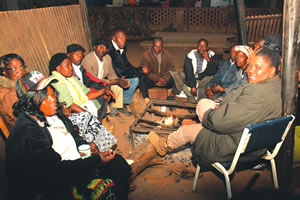
“Ndarangarira gamba” song by the late hero Simon Chimbetu, which is very poignant during these days of remembering heroes.
The words are in fact the communion and the pact that liberation war cadres gave to each other depending on circumstance — especially so the parting circumstances occasioned by enemy fire.
And when The Herald visited Manicaland province last week, the recollection of these words by liberation war fighters came ever so effortlessly. We arrived at Senator Mandi Chimene’s farm along Penhalonga Road around 7pm on Friday.
The farm was a gathering point of former fighters and ex-detainees and political prisoners who assembled here to travel to Chimoio on the morrow.
Chimoio, in Mozambique, is the place where hundreds of Zimbabwean refugees died after a bombing by the Rhodesian Forces of the brutal regime of Ian Smith in 1977.
Other refugees met the same fate at Tembwe, almost simultaneously.
The group at Cde Mandi’s farm would be joined by many others from the province on the memorial trek to the Chimoio shrines. The atmosphere at the gathering point, a fire in the shed to the east of the main house, reincarnated the war mood.
First, the gathering depicted a real dariro, as the fire-circle depicts, as did the turns each person took to relate, explain and expound on the war stories.
Second, there was high morale, as the camaraderie among the men and women was palpable ahead of the journey to the east.
Connected to this would be a sudden burst into song, which song would be taken up by the group, whose familiarity with each and every song had the conviction of a daily staple.
The meal of sadza and dried fish — bakayawo — which Cde Mandi (Chimurenga name Cde Rumbidzai Courage Muhondo) — recalled was a war time delicacy — as well as some beer, added to the camaraderie of the meeting.
Third was the resolve to continue with the struggle of yore and to prove to the dear departed that all had not been in vain. So, Cde Mandi explained that the journey to Chimoio served two purposes.
“We promised the comrades that we would come and take them home and that we would continue with the struggle. Our going to Chimoio is to show that we have not abandoned the fallen comrades.
“It might not be now possible to take and rebury them back home, for the purposes of records, but we should make sure that we give them respect,” she said.
Cde Mandi explained that the visits to Chimoio were mainly held during the Independence and Heroes holidays as well as the days that the Chimoio bombings took place in November as an obeisance to the departed cadres.
The team, led by provincial war vet leader Cde Linda Matatu, left Mutare for Chimoio on Saturday making a large group of war veterans, ex-detainees and prisoners as well as the youth whose role was to learn of the history and to maintain the site of the mass graves.
The team had been gathered at the provincial war veterans office.
From survivors of such massacres as Chimoio and Tembwe, and the real faces of the struggle, the war unravelled as people who played various roles in the fight against settler rule had their stories to tell.
From Ellen Mbodza, a sharp and determined 70-year-old ex-detainee, to the survivors of the Chimoio massacres like Cde Mandi herself came a picture of a continuum of struggle. Which struggle, that said, had had the goriest of moments.
Cde Mandi called the bombings “hell” and that it seemed the Devil had come strutting alive.
Another message came through: that Zimbabwe should not be allowed to go back into the hands of the enemy, as it would be a betrayal of the communion of liberation war.
Cde Fungai Pangeti is one person who is taking very great exception to some misplaced calls by some quarters that liberators can as well take the country back to the days of colonialism so that the latter can liberate themselves.
“Obviously these are words that come from people who did not see the brutality of the war,” he said.
The meeting went on into the morning, with the spirit of the struggle carrying the gathering through the latter-day pungwe, amidst song, dance and stories.
Meanwhile, in Chipinge, the obeisance of the role of liberation fighters and the spirit to fight on is as strong as could be. With fresh memories of the war, former fighters here have resolved to continue with the struggle. Crucial battle might have been won to date, but the war goes on. This is the feeling of war veteran Cde Farai Maphosa, a retired army major.
He is the political commissar in the Chipinge District War Veterans’ Association.
There is something really special about Cde Farai.
A great orator, energetic, intelligent and well-groomed fellow, he says he went to war aged only 16 in 1978. He was to survive many battles — a fact that he would be promised by one spirit medium as the war got to its bloodiest and final part before ceasefire in 1979.
Despite his young age then, he would be called to explain the war to the masses. And, boy, what an articulate speaker he is! He gave us a good two hours of his war adventures, which he did with equanimity all the while standing up. He told us of about seven big battles that he survived.
He took us to one battle spot at Silver Streams near Chimanimani’s Skyline and told of how a group of fighters laid ambush on a convoy of Rhodesian Forces that was travelling from Chimanimani to Chipinge.
Fought in the rugged terrain of the mountainous outpost, the battle was sweet and bitter.
“Having managed to successfully lay ambush at the convoy, we were surprised as we were retreating to the Gathering point that we had been circled and the enemy had laid a counter ambush. We had been sold out.
“We had to flee in all directions and I took the direction of the river. I was only saved by a mist that developed once I got to the river.
“When we at last gathered we realised that we had lost three comrades and one had been captured.”
Cde Maphosa also told of how man and beast would become one, bound by the divine spirits of the ancestors.
“We survived because we had discipline. When we got to a place we would approach the traditional leadership and the spirit mediums and they would give us the way to conduct ourselves.
Today, Cde Maphosa revels in the gains of Independence such as the success of the land reform programme, though there are some people still in need of land.
Many interviewees recalled brutal incidents of hunger, thirst (which could be sated by urine, at times) and death.
Others related the horror of being deflowered and used as sex slaves by Rhodesian forces because they had been assisting the fighters. Still others recall the humiliation and meanness of colonial detention and jails.
Some feel the question of liberation has not been fully settled — especially when the heads of former chiefs like Chingaira, Mapondera and Mushayavanhu have not been returned. The heads of these luminaries, among many others, were taken as trophies when they were murdered by the settlers.
For Cde Mandi, one niggling issue is that of the cadres who lie unburied up to today, which is disrespectful and indecent.
“Cecil John Rhodes rests at Matopos while our own children lie unburied in and outside the country, unknown,” she complained.
She called on concerted efforts to make shrines tourist attractions — just as Rhodes was being honoured by his own.
War vets chair in chipinge, Cde Samson Zondo says for a place like Chipinge that contributed immensely to the struggle by being a transit point into Mozambique, Government must pay back by providing infrastructure, a university and support income generating projects for people whose lives the war destroyed.


 Online Reporter