daniel chigunwe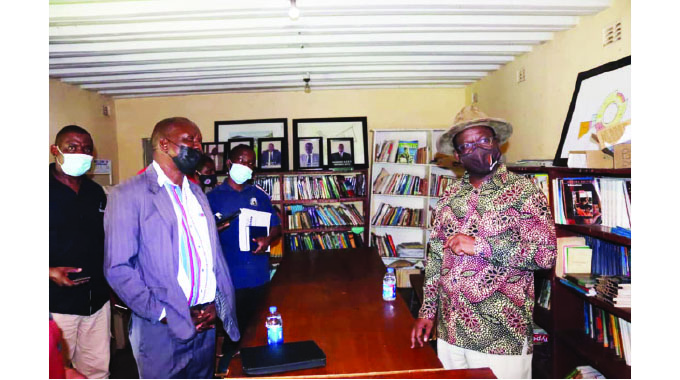
Thupeyo Muleya–Beitbridge Bureau
The granting of community radio licenses s part of the Second Republic’s desire to push developmental issues from the grassroots level in line with the devolution concept, Information, Publicity and Broadcasting Services Deputy Minister Kindness Paradza has said.
He said this yesterday during a familiarisation visit to the Beitbridge Shashe Community Radio station (Venda).
Fourteen community radio stations had been granted broadcasting licenses to help address issues of communication and underdevelopment in some parts of the country.
“It is also very critical that these radios amass as much content as possible so that they may broadcast meaningful and helpful programs for people in their respective areas of jurisdiction,” he said.
Deputy Minister Paradza said most communities, especially those living in border areas, had endured decades of poor radio and television reception.
Some of them had resorted to listening and watching foreign radio stations, which broadcast issues that concern.
“These licenses are language-based and the idea is to make sure that we leave no area or anyone behind as we drift towards attaining the envisaged Vision 2030.
“Currently, as a ministry, we are on the ground to inspect progress at all these community radio and television stations that were given licenses.
“As you are aware, the Government has issued 14 licenses to community radios stations and these are dotted around borderline areas and those used to be marginalised communities,” he said.
So far, Deputy Minister Paradza has visited community radio stations in Mashonaland Central and is now covering Matabeleland South and North provinces.
Matabeleland South province got four licenses for community radio stations to broadcast in Venda, Sotho, Kalanga, and Ndebele languages.
Said Deputy Minister Paradza: “This is a phase we have started as a ministry to make sure that we encourage these radio stations to set up, and according to our laws, they have 18 months to do so.
“However, the time is almost lapsing, so it’s because of these deadlines that the Minister (of Information Monica Mutsvangwa) has said go and see on location what is happening and what are the challenges.”
Out of 14 licensed radio stations, only the one in Chiredzi is fully operational while others are at various stages of setting up.
Most of the community radio initiatives were facing challenges with studio equipment and infrastructure (studios).
In some instances, some license beneficiaries did not seem aware of the 18 months’ deadline for them to go on air.
Deputy Minister Paradza said to ease that burden, the Government had given them the green light to outsource equipment.
“Further to that, once they become operational, they are now allowed to solicit for adverts, which is an alternative revenue stream to enhance sustainability,” he added.
He expressed optimism that most of the radio stations will go on air soon and that they will cover a radius of 40km.
Where the need is, some transmitters will be installed at convenient mobile telecommunications boosters to ensure total coverage.
The chairman of the Beitbridge Shashe Community Radio initiative, Mr Mekia Muyambo, said they had already identified a possible studio at a building in the CBD and that they expected to complete renovating by the end of June.
“We are expected to go on air by 7 December and we are working hard to make sure we have our house in order by that time,” he said.
Beitbridge’s Proportional Representation legislator, Metrine Mudau, said community radio stations were important in raising awareness and promoting development and gender mainstreaming countrywide.


 Online Reporter