admin
admin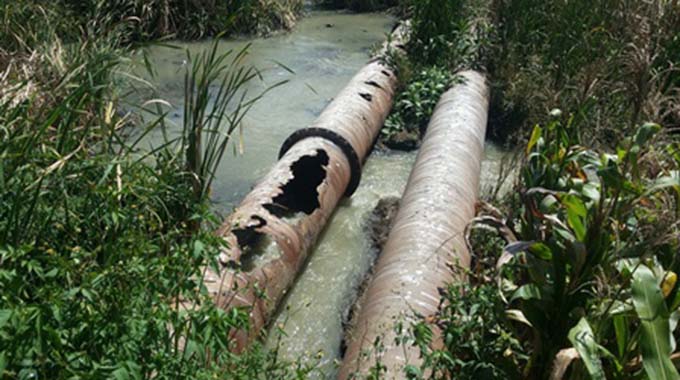
Muchaneta Chimuka Features Writer
In an effort to increase awareness on non- pharmaceutical methods of preventing Covid-19 like handwashing with clean running water and soap, the Community Water Alliance (CWA) has launched a campaign which seeks to ensure burst water and sewer pipes in Harare are repaired in a timely manner.
The campaign also seeks to prevent water borne diseases and increase quantity of water required for implementation of Covid-19 Prevention Protocols.
The campaign is code-named #TsimbaDzeUtano and is targeting Glen View and Budiriro high density areas.
CWA founder, Mr Hardlife Mudzingwa, said the campaign follows the previous outbreaks of water borne diseases as a result of poor sewer reticulation and sanitation.
“Glen View alone recorded 58 serious sewer bursts by February 01, 2021. The bursts have high prospects of birthing typhoid and cholera cases in Glen View and Budiriro,” Mr Mudzingwa said.
In 2008/9 Zimbabwe recorded 98000 cases of cholera with City of Harare recording 15773 cases of which more than 7000 cases were from Budiriro and Glen View districts.
“In 2017/8 Glen View recorded cholera and typhoid cases again. All the cases dating back to 2008/9 were attributed to contaminated water sources emanating from sewer bursts which are persistent in Glen View. Glen View is an area near Firle Sewer Treatment plant,” he said.
Added Mr Mudzingwa: “Firle Sewer Treatment plant is the main wastewater treatment plant in Harare whose design capacity is 144 megalitres per day. Close to three quarters of wastewater generated in Harare is directed to Firle which is in Glen View.”
He said Glen View and Budiriro are cholera hot spot areas in Zimbabwe. He added that the prevailing situation on sewer bursts in these two areas is likely to birth typhoid, cholera and fuel the spread of Covid-19.
He added that besides sewer bursts, there are also water pipe bursts, which have contributed to the 60 percent non revenue water in Harare.
“Leakages of water pipes reduce amount of water available at the tap and ultimately force citizens to congest public water points.
“This exposes citizens to Covid-19 and conflicts as citizens jostle for inadequate potable water,” said Mr Mudzingwa.
He added: “Diarrhoeal diseases and Covid-19 infections can only be contained if water, sanitation and hygiene services are addressed. In most cities and towns people are often found queueing for the precious liquid. Most of them won’t be wearing masks.”
Studies in South Africa, US and UK show that the Covid-19 virus can be picked up in wastewater before it’s found in a clinical setting.
According to a story published by Forbes, researchers in a new study say this could be really useful for tracking new mutations of the virus, like the B.1.17 strain that is now widespread in the U.K. and has already been introduced in the U.S.
“SARS CoV-2 virus is excreted by individuals that are infected by Covid -19 and the fecal waste ends up in the wastewater systems. By sampling wastewater, we can get information on infections for a whole population. Some wastewater systems serve several thousand people. Some serve hundreds of thousands of people,” the study’s lead author Kara Nelson, from College of Engineering at the University of California-Berkeley told Forbes.
“Sampling wastewater is a very efficient way to get information. It is also a less biased source of information, because we can get information from all individuals in the sewershed, whether or not they are being tested in a clinic. We know that there are individuals that have asymptomatic infections that may never get tested.”



 Online Reporter