Online Reporter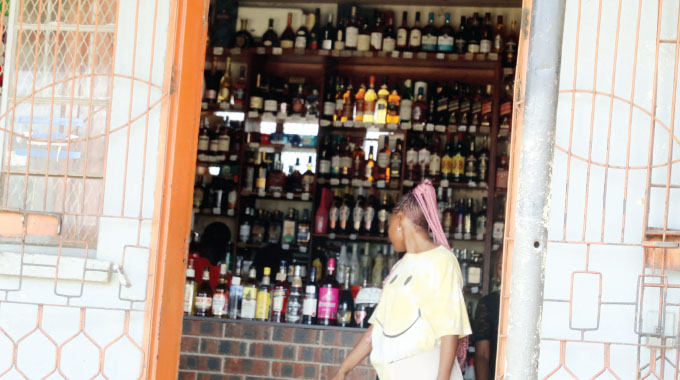
Cuthbert Mavheko
The abuse of alcohol, which is raging in the country like a monstrous tidal wave, poses a serious threat to the nation’s moral fabric.
Many youths today spend most of their time at bottle stores and in beer gardens, imbibing highly intoxicating alcoholic beverages like whiskies, cane spirits and gins.
What is shocking, if not alarming altogether, is that most of these youths are now mixing alcohol with drugs. Hard drugs such as ecstasy and cocaine are consumed. Some youths often pass out after excessive drinking of alcohol.
Once intoxicated, some of them engage in delinquent behaviour. They engage in promiscuous sexual activities, assault and rob people of money, cellphones and other valuables.
The trend is frightening in what it portends, and should shake every responsible citizen out of complacency to act. This ominous tide of alcohol-induced lawlessness gnawing at the moral fabric of the nation should be stemmed.
In the past, life followed a fairly predictable pattern. For youths, alcohol, cigarettes and drugs were taboo—we never touched them. In those bygone years, alcohol was strictly for adults.
The way today’s young people are abusing alcohol is a pitiful spectacle and a national disgrace. These delinquent youths are indeed ‘wise’ in their conceits, but woefully ignorant of the adverse ramifications of their misguided pursuits.
Hindsight shows that a few years ago, the Zimbabwe Republic Police reportedly arrested 32 pupils from Milton High School and Pace College during a raid at Centenary Park, where they were holding a vuzu party.
For the benefit of the uninformed, vuzu parties are parties where schoolchildren embark on alcohol and drug-fuelled sex orgies with reckless abandon.
The arrested learners, who were drinking alcohol and engaging in illicit sexual activities at the park, were found with alcohol, used condoms and dangerous drugs like bronco. The police also arrested 224 pupils who held a vuzu party at Rest Camp on the outskirts of the city.
Because alcohol is legal, many people today think it is harmless. What they seem to be oblivious of is that it is harmful. Studies show that one of the most serious problems with alcohol is that it is extremely addictive.
Research shows that alcohol, in large quantities, is a potentially lethal toxin that can lead to various cancers, like alcoholic hepatitis, cirrhosis of the liver, pancreatitis, low blood sugar in diabetics, fetal alcohol syndrome, stroke, and heart failure, which can easily lead to a comatose or death.
Several years ago, Dr Morris E Chafetz, a former director of the US National Institute on Alcohol Abuse and Alcoholism said: “Excessive consumption of alcohol wreaks a certain common havoc on the psyche, which is even more insidious than the damage sustained by the liver, the heart and other vital organs.”
“Further to this, excessive consumption of alcohol raises blood pressure, weakens the heart, and can lead to irregular heartbeats. These conditions make blood clots more likely to form and travel to the brain. Limiting your alcohol intake to moderate levels or avoiding it altogether can greatly reduce this risk.
“But humans do not need to drink alcohol to prove masculinity, femininity, sociability or maturity. In fact, humans do not need alcohol at all to survive.”
It is essential to understand that alcohol abuse is not just a Zimbabwean problem.
It is a tragic social problem around the world. The World Health Organisation (WHO) estimates that as of 2010, there were 208 million people ensnared in the web of alcoholism worldwide.
The abuse of alcoholic drinks has taken a disastrous toll on many lives and, at its worst, has split many marriages, alienated children and ruined careers.
The Christian Bible, which is the inspired authentic Word of God, says God commands humans to avoid the improper use of alcoholic drinks.
The Apostle Paul says: “Do not be drunk with wine, in which is dissipation” (Ephesians 5:18). In Luke 21:34, Jesus Christ also warns His followers not to become drunk. The Bible is replete with many warnings and examples about the abuse of alcohol.
It is essential to understand that alcohol is being abused when it results in harmful spiritual, mental and emotional attitudes as well as damaging physical and bodily reactions.
Immoderate use of any alcoholic beverage, even low-alcohol ones, will eventually cause problems and ignite the fire of alcoholism.
I write from the platform of experience. I used to drink amasese or opaque beer. But whenever I drank this opaque beer, I always set a definite, risk-free limit. I did this to avoid drunkenness.
One insightful observation that l personally made is that many people, both youths and adults, often use alcohol to cope with their daily problems and frustrations.
This is because they have seen alcohol used this way or carelessly allowed themselves to slip into this pattern because of unresolved stress or problems. Alcohol abuse occurs when a person automatically reaches for alcohol when he has difficulties or emotional problems.
Over time, a person can become psychologically addicted to alcohol as a method of coping with personal problems. Studies show that by persistently keeping alcohol in the bloodstream, a person may alter his or her metabolism and become physically addicted to alcohol as well.
Therefore, alcohol should never be used to escape problems or to cure loneliness, boredom or depression. Using alcohol for such reasons is habit-forming and worsens these problems.
Alcohol is an anaesthetising drug. It should never be taken, even in small amounts, before making critical judgments, evaluations or decisions affecting a person’s life or someone else’s.
Even people who drink alcohol ‘moderately’ sometimes get drunk and temporarily lose their self-control and good judgement. The danger of getting ensnared in the web of alcohol addiction or getting involved in acts of violence, sexual promiscuity and other vile activities while drunk is always there.
That’s why the only safe rule for dealing with alcohol is never to start drinking alcohol at all.
Cuthbert Mavheko is a freelance journalist and theologian, contactable on 0773963448 and 0775522095.
Email [email protected]