Online Reporter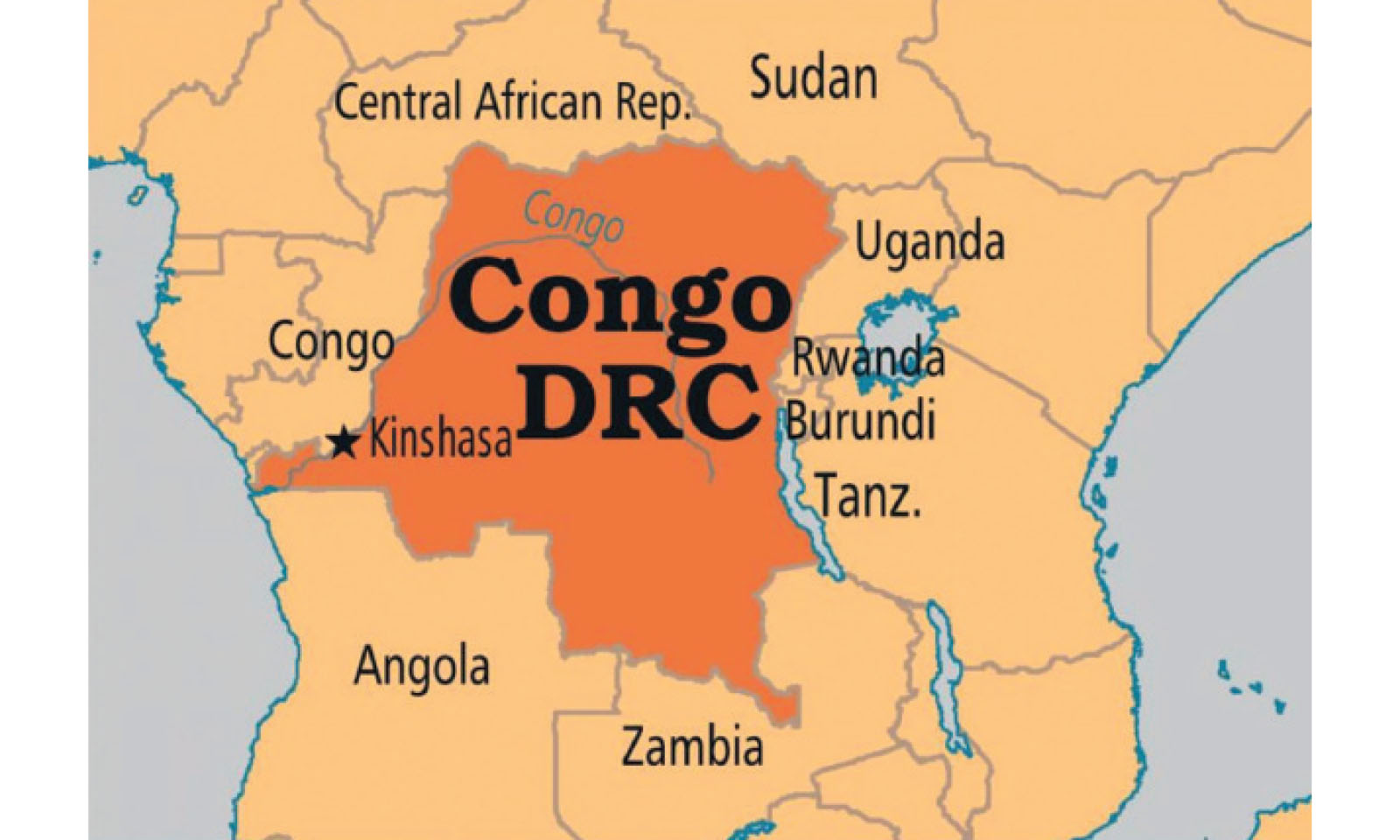
Wellington Muzengeza
Herald Correspondent
The Democratic Republic of Congo has become the graveyard of slogans, a mausoleum where Africa’s most cherished mantra, “African solutions to African problems”, lies in tatters.
No phrase has been more cynically invoked, nor more consistently betrayed. For many decades, African institutions have staged interventions in the DRC-Rwanda conflict: summits galore, regional forces paraded as military resolve, and communiqué’s posing as solutions, yet each has collapsed into futility, leaving behind nothing but a spectacle of impotence.
The irony is corrosive. African leaders gather in Luanda, Nairobi, or Bujumbura to proclaim continental agency, yet the real bargains are struck in Washington and Doha. The continent’s statesmen act as architects of peace, but in truth some of them are subcontractors to foreign patrons.
The DRC, with its endless wars and mineral wealth, has become the stage where Africa rehearses sovereignty, but performs subservience.
Origins of the Congo Wars
The DRC wars did not erupt spontaneously; they are the poisoned harvest of centuries of exploitation, betrayal, and predation. Congo’s tragedy is not accidental; it is structural, engineered by colonial greed and perpetuated by post-independence chaos. Independence in 1960 should have been the dawn of sovereignty, yet it immediately descended into mutiny, secession, and sabotage. Belgian meddling ensured that Congo’s liberation was crippled at birth, while the assassination of Patrice Lumumba, = signalled that the continent’s most resource-rich state would remain shackled to external manipulation.
Mobutu Sese Seko’s dictatorship from 1965 to 1997 entrenched kleptocracy as the governing creed. For three decades, Mobutu hollowed out institutions, looted the treasury, and ruled through repression, while Western powers applauded his plunder because it served their interests. Congo became a carcass picked clean by elites, a state reduced to spectacle and decay. The Rwandan genocide of 1994 spilt its poison into the Congo, unleashing millions of refugees and armed Hutu militias across its eastern frontier. Rwanda and Uganda intervened militarily, but in reality, igniting regional rivalries that turned Congo into a battlefield for neighbours’ ambitions.
The First Congo War between 1996 and 1997) saw Rwanda and Uganda back Laurent-Désiré Kabila’s rebellion, toppling Mobutu but entangling Congo in new webs of dependency.
The Second Congo War between 1998 and 2003 escalated into Africa’s “World War,” with Angola, Zimbabwe, and Namibia intervening against Rwanda and Uganda-backed rebels.
There was large-scale plunder and resource exploitation of coltan, gold, and diamonds, minerals that have perennially become currencies of death in the Great Lakes Region, funding militias while fuelling the global consumer economy.
Literally every smartphone carries the blood of Congolese civilians, every glittering jewel masks the graves of Kivu. The DRC’s minerals have been transformed into instruments of plunder, enriching outsiders while its people bleed at home. The origins of the DRC’s wars are not mysterious, but are the logical outcome of a system built on exploitation, sustained by corruption, and perpetuated by regional and global predators. Indeed, the Congo’s soil is very rich, but its history is soaked in betrayal.
African-Led Interventions
The African union (AU) has repeatedly attempted mediation, most notably through the Luanda Process in 2022. Angola’s João Lourenço sought to de-escalate tensions between Kinshasa and Kigali, promising troop withdrawals and dialogue, yet the talks stalled almost immediately, the violence persisted, and the AU’s diplomacy was eventually overshadowed by Washington and Doha.
The East African Community (EAC) attempted to flex military muscle by deploying a regional force in 2022, with troops from Kenya, Uganda, Burundi, and South Sudan and the mission was heralded as a decisive intervention to stabilise eastern Congo, however in reality, it became a tragic spectacle that had soldiers stationed in volatile zones, but unable, or unwilling, to confront the M23 rebellion.
The Luanda Process, under the mandate of the AU, was supposed to be a breakthrough where Angola had positioned itself as a mediator, promising to reduce support for armed groups and restore trust between Kigali and Kinshasa, instead, mistrust deepened and accusations multiplied. The Nairobi Process, hosted by Kenya, brought Congolese officials and armed groups into dialogue, and some pledges of integration were made, but they were fragile, quickly broken, and never enforced. Nairobi joined the long list of promises, where words were exchanged but lives continued to be lost.
The role of Burundi’s President Évariste Ndayishimiye as guarantor in peace efforts, including the Washington accords, was symbolic at best. Lacking enforcement power, Burundi’s mediation was more theatre than substance, a performance staged to give the illusion of African leadership while real decisions were made elsewhere. Taken together, each initiative, AU mediation, EAC deployments, Luanda and Nairobi processes and Burundi’s symbolic role have promised African solutions but delivered very little. The bitter irony is that while Africa convenes summits and issues communiqué’s, the real deals are cut in Washington and Doha.
Outsourced Peace
The futility of African-led interventions has created a vacuum eagerly filled by external actors. Into this void step Washington and Doha, draped in the rhetoric of peace but driven by the cold calculus of power and profit. Ceasefires are brokered not in Kinshasa or Kigali, but in foreign capitals where African sovereignty is reduced to a bargaining chip.
This outsourcing is not neutral; it is deliberate, designed to secure geopolitical leverage and commercial access. Rare metals, not Congolese lives, are the prize.
The Washington Peace Deal of December 2025 serves as a prime example of hypocrisy, as within days of its signing, President Félix Tshisekedi accused Rwanda of violating the accord as M23 rebels advanced in South Kivu. The ink was barely dry before the blood flowed again. The mistrust between Kagame and Tshisekedi was palpable even in Washington; they left the American capital already at odds, proving that no political foundation existed for genuine reconciliation.
The spectacle itself was damning. African leaders were paraded in Washington, photographed as props in a foreign theatre, while the African union and East African Community were sidelined. The very institutions created to embody continental agency were ignored, reduced to irrelevance in the face of American choreography. Worse still, the deal made no provision for justice or accountability. Atrocities were brushed aside, impunity entrenched, and the cycle of violence guaranteed to continue.
Critics rightly observed that the accord was less about peace than about securing US access to Congo’s rare metals, cobalt, coltan, and gold. The deal was marketed as a triumph of diplomacy, but in reality, it was a commercial transaction disguised as conflict resolution. Signed in Washington, broken in Kivu. Marketed as peace, delivered as plunder. African leaders were summoned abroad, while African civilians were buried at home.
The Tragedy of Leadership
The blind involvement of former President Uhuru Kenyatta and current President William Ruto in Washington’s diplomatic theatre is more than regrettable; it is a betrayal. Their complicity exposes the hollowness of African agency, reducing Kenya’s statesmanship to a subcontractor role in America’s geopolitical script. This is not leadership; it is servitude dressed as diplomacy. How can Rwanda openly wage war in Congo and still bask in global goodwill? How can a nation that once symbolised resilience and rebirth after genocide now be implicated in destabilising its neighbour?
Reclaiming Sovereignty
If Africa is to escape this cycle of humiliation, it must reclaim its sovereignty through enforcement, accountability, and solidarity. Real solutions demand more than summits and communiqué’s; they require mechanisms that punish impunity, protect civilians, and enforce agreements. African leaders must confront each other directly, without outsourcing their disputes to foreign capitals.
Corrective action in Africa must be rooted in structural transformation rather than rhetorical posturing.
The continent’s institutions, particularly the African union and the East African Community, must transcend their ceremonial roles and assume the mantle of genuine enforcement, and they must acquire the authority and capacity to sanction violators and, when necessary, deploy credible forces that safeguard continental interests. Equally, Africa must recalibrate its external partnerships.
This transformation requires continental solidarity. Regional blocs such as SADC, ECOWAS, and others must coordinate their strategies to ensure that Africa speaks with one coherent voice. Fragmented whispers are easily drowned out by the louder narratives emanating from Washington or Doha; only unity can amplify Africa’s agency in global affairs. Finally, justice must be placed at the centre of peace.
Wellington Muzengeza is a political risk analyst and urban strategist offering incisive insight on Africa’s post‑liberation urban futures