daniel chigunwe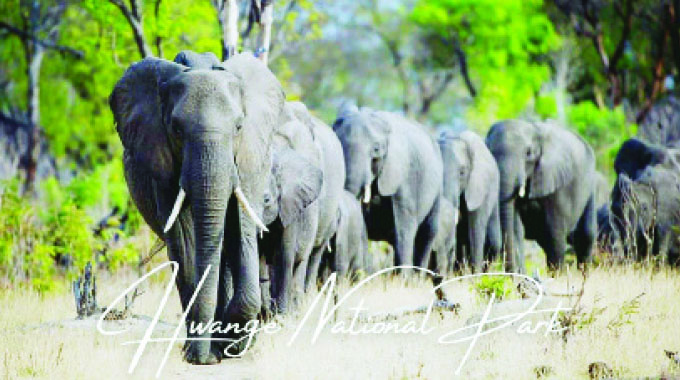
Isdore Guvamombe
In 1930, Africa had as many as 10 million wild elephants roaming its length and breadth.
By 2016, experts say Africa had been left with 415 000 elephants although poaching was on the decline.
Zimbabwe is one of the few countries left in the world where elephants still roam wild freely.
Together with its neighbours, Zimbabwe has been in the forefront of caritical conservation work, but has also been battling bad perception and bully tactics from the United States of America in particular and its allies in general.
With an elephant requiring a square kilometre when using sustainable conservation methods, Zimbabwe and its neighbours in Southern Africa face a mammoth task marinating the livelihoods of the elephants and at the same time balancing the needs of other stakeholders such as communities sharing boundaries and resources with the elephants.
Yesterday Zimbabwe joined the rest of the world in commemorating the World Elephant Day which is held on August 12 each year.
Of importance to this year’s commemorations is that they come at a time when the Kavango-Zambezi Transfrontier Park is planning an aerial elephant head count, slated for later this year.
Suffice to say the day brings to the fore, the plight of one of the most important wildlife species — the elephants — and also serves as a reminder of the urgent need for bold and decisive action to save the world’s largest land mammal from extinction, while at the same time looking at benefiting communities that live around them.
In that case, striking a balance between the plight of elephants and that of communities and stakeholder governments and non-governmental organisation involved in the protection and upkeep of the elephants is therefore critical for the future.
As different state and non-state actors across the globe pause to marked, the 2021 World Elephant Day, the world’s largest terrestrial transboundary initiative, Kavango-Zambezi Transfrontier Conservation Area (KAZA-TFCA) — home to more than half of the remaining African savannah elephants — has intensified preparations for the first-ever large scale savannah elephants aerial survey.
A journalist and friend of mine Luckmore Safuli who now works for KAZA-TFCA, an area, says his organisation reaffirms its commitment to coordinating efforts of the partner states and various stakeholders in the management of more than half of the remaining African Savannah elephants found in the landscape.
We cannot imagine a world without the elephants given their incalculable importance to the ecosystems, livelihoods of approximately 2,5 million people living in the KAZA region and socio-economic development of the five Partner States.
The partner states are committed to, and prioritises the creation of safe havens for the elephants.
Of importance is the fact that KAZA’s evolving conservation success story — as testified by the stable and in some areas growing elephant populations has been the result of deliberate policies, decisions and actions by the partner States.
Safuli made me understand that the KAZA secretariat was also pleased that significant progress had been made in preparing for KAZA-wide synchronised aerial survey to determine numbers and seasonal distributions.
As KAZA Secretariat, he said, we appreciate the importance and magnitude of the survey. We are taking the necessary measures to ensure that there is effective coordination and management of the survey.
The support being rendered by different stakeholders is encouraging and strengthens our confidence that the synchronised transboundary survey will be successful, on time and within budget.
To date, key milestones achieved in preparation for the survey include the development of a standardised methodology consistent with the recently revised MIKE aerial survey standards (CITES MIKE 2020) and securing nearly 80 percent of the approximately US$3 million budget required.
Partner States are set to officially launch the survey during the fourth quarter of 2021 with the actual survey implementation scheduled for the dry season, July-October 2022.
The aerial survey aligns with and builds on the KAZA Partner States’ recognition that connectivity across the broader KAZA landscape is essential for the future of the region’s wildlife, including elephants, and this must be underpinned by sound ecological understanding of wildlife movements and other dynamics.
As the world celebrates the World Elephant Day, stakeholders are encouraged to note and reflect on the responsibility that the Partner States carry in managing the globally significant elephant population in KAZA.
It is fact, not fiction, that knowing the number of elephants and the matrix of issues around them, makes management of KAZA practical, as it will be based on facts.
The planned macroscale reconnaissance which has already generated a lot of interest from researchers, conservationists, policy makers, media organisations, ecologists, and other cooperating partners across the globe, is meant to provide comprehensive assessment of the status of elephant populations in KAZA region, shared by Angola, Botswana, Namibia, Zambia and Zimbabwe.
It is therefore very critical for the world to invest in the proper management of the elephants in Kaza, for, this is the last vestige of elephant, from which the world might learn and lean on in future.
So critical is the importance of understanding the value of Kaza TFA wholesomely because since its establishment in 2011, it has done a great job in sustainable wildlife management, against many odds.
It is a fact that the future of the African elephant population might as well hinge on the management of the Kaza TFCA.



 Online Reporter