Fidelis Munyoro – Chief Court Reporter
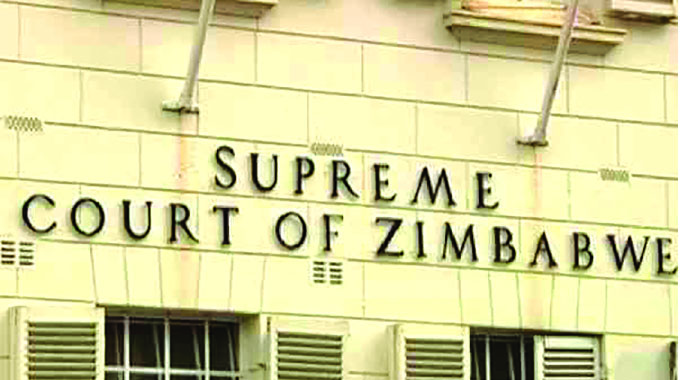
THE Supreme Court faces a constitutional challenge over its handling of a US$10,7 million debt dispute between Zimbabwe Consolidated Diamond Company (ZCDC) and Adlecraft Investments, after the Constitutional Court ruled that there is a case to answer over whether the appeal was properly determined.
The Constitutional Court has granted ZCDC direct access to seek a declaration that the Supreme Court violated its right to a fair hearing and access to the courts when it dismissed the company’s appeal against a High Court judgment ordering it to pay US$10 718 373,51.
Justice Rita Makarau, sitting with Chief Justice Elizabeth Gwaunza and Justice Bharat Patel, ruled that the Supreme Court may have failed to address issues that were central to the appeal, including whether the debt had been paid and whether the claim had prescribed.
The court directed ZCDC to file its substantive constitutional application within 10 days.
Justice Makarau said an appellate court could not merely endorse a lower court’s findings without explaining why they should stand.
“Merely certifying the judgment as correct without more is, in my view, insufficient,” she said.
The dispute arose from a contract under which Adlecraft provided services at ZCDC’s diamond mining fields in Chiadzwa.
The parties signed the agreement in February 2016, but continued working together after the contract expired the following year. Their relationship ended in April 2020.
The dispute centres on a debt of US$4 344 965,67, which Adlecraft said remained outstanding as at December 31, 2018.
ZCDC maintained that the amount had been settled through payments made in local currency in August 2019 following the enactment of Statutory Instrument 33 of 2019, which converted certain United States dollar obligations into local currency at parity.
Adlecraft disputed that position, arguing that the payments related to other expenses. The High Court heard oral evidence from both parties before accepting Adlecraft’s version and granting judgment for US$10 718 373,51, including interest under the in duplum (double the amount) rule.
It also ordered ZCDC to pay costs on the legal practitioner-and-client scale. ZCDC appealed, arguing that the debt had been discharged and that the claim had prescribed. The Supreme Court dismissed the appeal.
However, Justice Makarau said the appeal court was expected to assess whether the High Court had correctly determined the amount outstanding and applied the law on prescription.
She noted that the parties had presented conflicting evidence and that the trial court had not made findings on credibility.
“Where mutually destructive evidence is led on an issue, the court must weigh the probabilities arising from the evidence tendered and all the circumstances of the case to determine which of the two versions is more probable,” she said.
The Constitutional Court also questioned the Supreme Court’s reliance on payments ZCDC made in May 2023 while challenging the judgment. ZCDC said those payments were made to avert execution pending appeal, not to acknowledge liability.
Justice Makarau said the Supreme Court’s remarks on those payments raised a question about whether the company had been heard before the issue was used against it.
The dispute has already travelled through the High Court, the Supreme Court and the Constitutional Court. In an earlier constitutional proceeding, the parties agreed to an order setting aside the Supreme Court’s first decision and remitting the appeal for a fresh hearing before a different panel.
The Supreme Court dismissed the appeal again after the rehearing, prompting the latest application.
Justice Makarau said the matter illustrated the need for courts to give reasons that enable litigants and the public to understand how decisions are reached.
The Constitutional Court stressed that its findings at this stage were preliminary. The substantive application will determine whether the Supreme Court’s handling of the appeal infringed ZCDC’s constitutional rights.
The court made no order as to costs.
Advocates Thabani Mpofu and Tawanda Zhuwarara, instructed by Sawyer and Mkushi, represented ZCDC, while Advocates Lewis Uriri and Mabel Tarugarira, instructed by Tarugarira, Sande Attorneys, represented Adlecraft Investments.