Online Reporter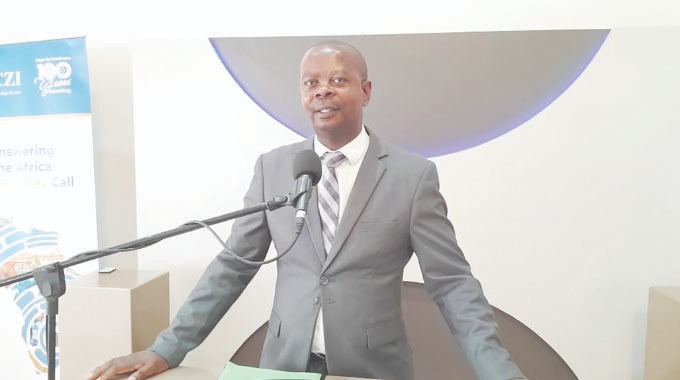
Sikhulekelani Moyo, [email protected]
THE Confederation of Zimbabwe Industries (CZI) Matabeleland Region says Constitutional Amendment Act (No. 3), 2026 has the potential to create a more stable environment for business and long-term investment, although sustained economic growth will ultimately depend on policy consistency, strong institutions and continued macroeconomic reforms.
Speaking during the CZI Matabeleland Region Annual General Meeting in Bulawayo recently, outgoing chapter president Mr Stephen Ncube said while political stability is an important ingredient for economic growth, it must be accompanied by regulatory certainty, improved infrastructure, affordable utilities and a conducive investment climate.

He said industry remains optimistic about the country’s economic prospects but continues to face structural challenges that require urgent attention.
“The enactment of the Constitutional Amendment Act (No. 3), 2026, introduced important considerations for the business community. Government has presented the amendment as a measure aimed at strengthening political stability, ensuring policy continuity, and facilitating long-term national development, said Mr Ncube.
“While reduced election-related disruptions may provide a more stable environment for economic reforms, investor confidence continues to be influenced by regulatory certainty.”
Mr Ncube said the business community believes long-term investment decisions are influenced not only by political stability but also by predictable policies, efficient institutions and sustained macroeconomic stability.
The Constitution of Zimbabwe Amendment (No. 3) Act, which was recently assented to by President Mnangagwa, introduces several constitutional changes, including extending the presidential term cycle from five to seven years. Government has argued that the reforms are intended to strengthen policy continuity, improve governance stability and support the implementation of long-term national development programmes.
Business leaders noted that frequent election cycles often create uncertainty, divert public resources towards electoral processes and delay investment decisions.
They believe a longer policy implementation period could provide Government and industry with greater certainty to execute development projects and economic reforms.
Mr Ncube said the period under review had been characterised by a marked improvement in Zimbabwe’s macroeconomic environment compared to previous years.
He attributed the gains to policy measures implemented by Government and the Reserve Bank of Zimbabwe, which have helped moderate inflation, reduce exchange rate volatility and improve coordination between fiscal and monetary authorities.
“These developments contributed to greater business confidence and enhanced planning capabilities for industry,” he said.
Despite the improved macroeconomic environment, Mr Ncube said several structural constraints continue to weigh down the manufacturing sector.
He identified high production costs, expensive utilities, limited access to affordable finance, regulatory inefficiencies, smuggling and global economic uncertainties as some of the major challenges affecting industrial growth.
According to CZI, Zimbabwe’s manufacturing sector demonstrated resilience during 2025, with Bulawayo recording an increase in manufacturing capacity utilisation from 45,8 percent in 2024 to 51,3 percent in 2025.
“Firms benefited from the relatively stable macroeconomic environment, which supported improved investment confidence and better production planning,” said Mr Ncube.
“Growth remained uneven, with energy-intensive industries still struggling under high electricity tariffs, which remain among the highest in the region.”
He, however, welcomed the significant improvement in electricity supply during the year, noting that minimal load-shedding had enabled manufacturers to improve production planning and operational efficiency.
“The improved availability of electricity significantly reduced production disruptions, enhanced operational efficiency and enabled businesses to plan production schedules with greater certainty,” he said.
Nevertheless, he cautioned that the cost of electricity remains one of the biggest threats to the competitiveness of local manufacturers.
Mr Ncube also raised concern over the continued influx of smuggled and counterfeit products, saying the practice undermines legitimate businesses, erodes Government revenue and threatens local industrial production.
He called for stronger collaboration between Government agencies and the private sector to curb illicit trade through enhanced border controls and stricter enforcement measures.
On the policy front, Mr Ncube welcomed the launch of the National Development Strategy 2 (NDS2), which will guide the country’s development agenda from 2026 to 2030.
He said successful implementation of the strategy has the potential to accelerate industrialisation, attract investment, create employment and improve Zimbabwe’s competitiveness.
“The Chamber welcomes the strategy and remains hopeful that successful implementation will create a more competitive and investment-friendly environment capable of unlocking sustainable industrial growth, job creation and increased investment,” said Mr Ncube.
He also noted that foreign currency continues to dominate business transactions, with 82 percent of banking sector deposits and 76 percent of manufacturing revenues denominated in foreign currency.
Mr Ncube urged Government to continue implementing coordinated fiscal and monetary policies that strengthen confidence in the Zimbabwe Gold (ZiG) currency while maintaining macroeconomic stability.
He further called for the speedy implementation of regulatory reforms announced by Government in May this year, saying delays in enacting supporting legislation continue to increase the cost of doing business.
Mr Ncube also highlighted findings from a recent CZI study on the sugar tax imposed on non-alcoholic beverages, saying the levy was encouraging some manufacturers to substitute locally produced sugar with imported sweeteners while also increasing the competitiveness of imported finished products.
He urged Government to adopt evidence-based policy reviews that strike a balance between achieving public health objectives and promoting industrial growth, investment and employment.
The CZI is Zimbabwe’s largest industry representative body, advocating policies that promote industrial development, competitiveness and private sector-led economic growth.
Its Matabeleland chapter represents manufacturers and businesses across Bulawayo, Matabeleland North and Matabeleland South, where industry continues to play a pivotal role in employment creation and value addition.