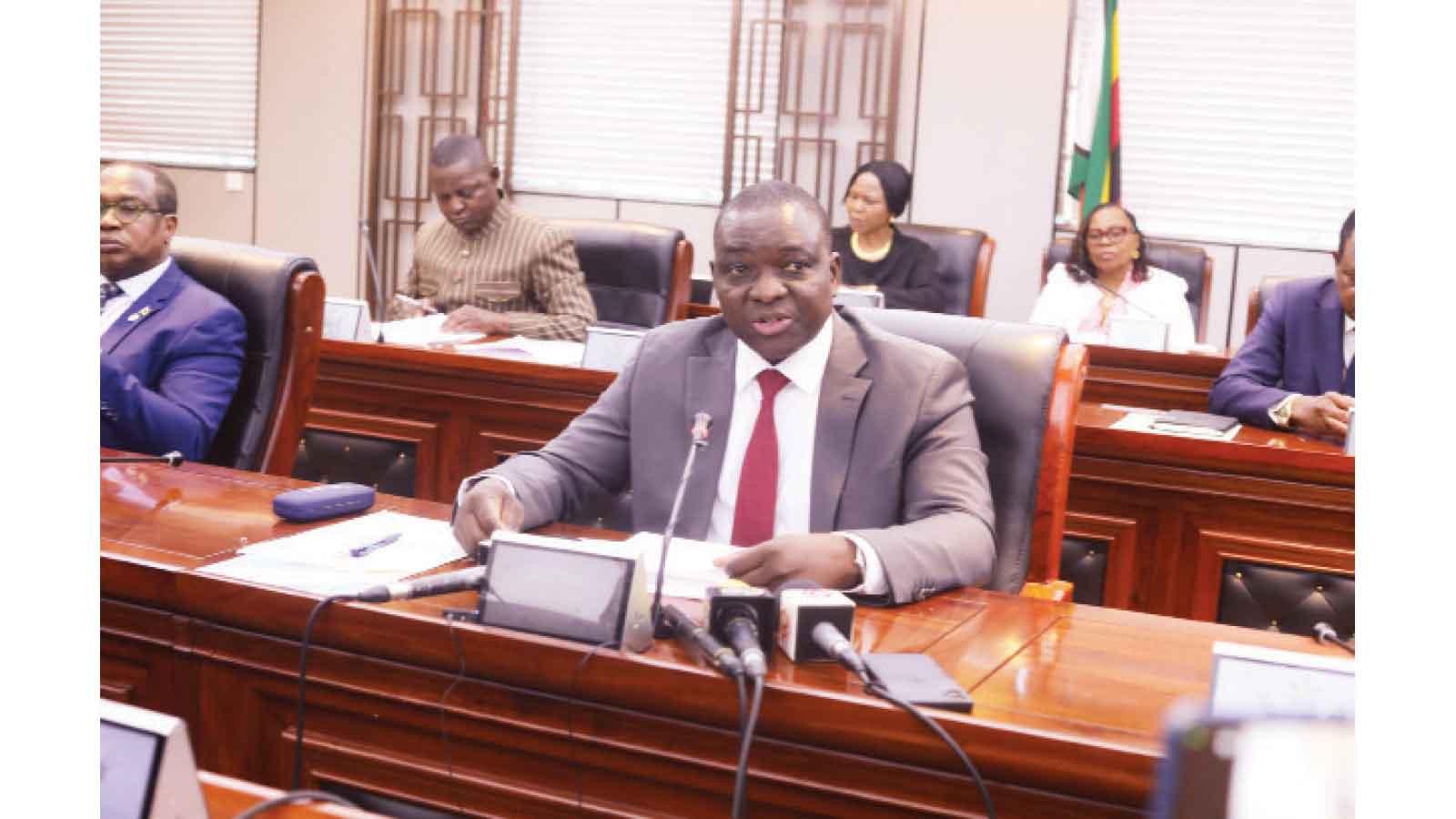
We publish here the 7th post Cabinet media briefing presented by Information, Publicity and Broadcasting Services Minister, Dr Zhemu Soda, in Harare yesterday.
Cabinet considered and approved the updated report on Tobacco Production and Marketing, as presented by the Minister of Lands, Agriculture, Fisheries, Water and Rural Development, Honourable Dr AJ Masuka.
In Zimbabwe, tobacco production and marketing are guided by the Tobacco Value Chain Transformation Plan 2: 2026-2030, which seeks to build a US$7 billion tobacco industry by 2030. Among others, the specific objectives of the plan are to enhance productivity, sustainability and farmer resilience by increasing production from 355 million kg to 500 million kg by 2030 through climate-smart agriculture, irrigation development, and mechanisation; to localise tobacco financing by accelerating the localisation of funding to cover 70 percent of production costs, reducing dependency on offshore financing and enhancing local value retention; and to diversify export markets under the African Continental Free Trade Area, strengthen trade surveillance and develop a premium brand for Zimbabwean tobacco.
The Tobacco Value Chain Transformation Plan 2 succeeded the Tobacco Value Chain Transformation Plan 1: 2021-2025. Under the Tobacco Value Chain Transformation Plan 1, a total of 354,8 million kg was produced in the 2024/2025 tobacco season, exceeding the plan target by 18.3 percent. By 2025, 67 percent localisation of funding was achieved, against a target of 70 percent, and value addition and beneficiation increased from 2 percent to 10.78 percent.
The 354.8 million kilogrammes produced in 2025 represents an 88 percent increase from the 189 million kilogrammes recorded in 2017. For the first time in the history of tobacco cultivation since 1895, growers earned a record US$1,2 billion. A total of 135 284 households are currently producing tobacco, reflecting a 37 percent increase from the 98 927 households involved in 2017. Average earnings per grower rose to US$9 986 in 2025, reflecting a 77percent increase from the US$5 651 earned in 2017 and placing many tobacco farmers firmly in the upper-middle-income bracket.
About 40 percent to 55 percent of tobacco growers benefited from the Land Reform Programme. Women and youth participation in tobacco production increased by 12,34 percent and 62.63 percent, respectively, between 2021 and 2025.
Meanwhile, a total of 22.9 million kilogrammes of tobacco had been sold as of March 18, at an average price of US$2.66/kg, during the current marketing season which opened on March 4, 2026. This marks a 34 percent increase in volume and a 24 percent decrease in the average price compared to the previous season, where 17.1 million kilogrammes was sold at an average price of US$3,49/kg.
The average tobacco price for contracted tobacco is currently US$2,72/kg, compared to the US$3,53/kg realised in 2025, showing a 23 percent decline. Decentralised floors currently account for 42 percent of the total tobacco sold under contract. Similarly, the average tobacco price at the Auctions is currently US$1,77/kg, compared to the US$303/kg realised in 2025, reflecting a 42 percent decrease.
As at March 20 2026, exports reached 73 081 397kg compared to the 45 000 494 kg achieved in 2025, representing a 62 percent increase. The export price is slightly firmer at US$6.68/kg (translating to a 1 percent increase compared to 2025). China remained the largest export market throughout the period 2021-2025, consistently taking the biggest share at relatively high prices, followed by Belgium, the United Arab Emirates, South Africa and Indonesia. Global tobacco production is expected to reach 6,5 billion kg in 2026, with China alone producing over 2,3 billion kg.
Meanwhile, due to favourable Government policies, there have been positive changes in tobacco processing, with cigarette manufacturing having increased by 67,2 percent since 2021.
Government assures farmers that it is aware of challenges being faced by tobacco farmers, and is actively crafting the required solutions in consultation with all stakeholders.
REVIEW OF LICENCES, PERMITS, LEVIES AND FEES IN THE REAL ESTATE DEVELOPMENT SUB-SECTOR
Cabinet considered and approved the review of licences, permits, levies and fees in the construction sector focusing on the real estate development sub-sector, in line with the Cabinet decision of July 29, 2025, which approved the implementation of a raft of business reforms in twelve sectors of the economy. The review process is aimed at reducing the cost of doing business, increasing competitiveness, enhancing investor confidence and stimulating the growth and expansion of the domestic construction sector.
Cabinet approved the streamlining of duplicated and overlapping regulatory licences and permits, the removal of unnecessary levies and fees and the lowering of unjustifiably high levies and fees for the real estate sub-sector as per the following highlights:
Capping of local authorities building plan approval fees for high density suburbs;
Capping of local authorities building plan approval fees for industrial plans;
Scrapping of local authorities building permit inspection fee for high density suburbs;
Reduction of the local authorities structural engineering design approval fees;
Abolishing the Environmental Impact Assessment fees; and
Reduction of the local authorities contractor registration fees.
Government will subject the reviews to further consultations based on three categories, namely: review of Government levies and fees; review of private sector levies and fees; and Others. The relevant Statutory Instruments and detailed fee schedules will thereafter be gazetted. Regarding the “Other” category, Government will review cross-cutting issues such as constrained credit facilities that have a significant impact beyond the real estate sub-sector and relate to the accelerated regularization of informal settlements through a structured programme to ensure the provision of essential social and physical infrastructure under the approved user-pay principle.
THE IMPACT OF THE MIDDLE EAST CRISIS ON PRICING OF BASIC COMMODITIES
Cabinet considered and approved the Report on the Impact of the Middle East Crisis on Pricing of Basic Commodities as presented by the Minister of Industry and Commerce.
Cabinet noted the price movements and availability of basic commodities in the domestic market during the period January to March 2026, taking into account the impact of the ongoing geopolitical developments in the Middle East. In light of disruptions in the global oil market and the corollary effect on international fuel prices, the local commodity prices have largely remained stable. Most businesses have not increased the prices of basic goods such as mealie-meal, laundry soap, cooking oil, sugar, flour, rice, bath soap, washing powder, powdered/fresh milk, eggs, beef, chicken and salt. However, a few bread makers increased prices by an average of 10 percent. While price hikes have been witnessed in the transport sector, in particular by passenger vehicle operators, Cabinet considered and approved the review of selected and time-bound fuel taxes in order to contain inflationary pressures and safeguard consumer welfare.
Government also considered the option of increasing the ethanol blending of petrol from the current E5 to E20 level with a view to reducing the pump price of petrol in the local market. Appropriate refinements of the options are underway, and the necessary fuel price adjustments will be communicated in due course.
PLAN FOR THE TARGETED DEVELOPMENT OF TOURISM ATTRACTIONS IN THE EASTERN HIGHLANDS
The Minister of Tourism and Hospitality Industry, Honourable Barbara Rwodzi, presented the Plan for the Targeted Development of Tourism Attractions in the Eastern Highlands, which was approved by Cabinet.
The plan seeks to develop targeted tourism attractions in the Eastern Highlands corridor, which the Second Republic has identified as a tourism-designated zone with significant potential for tourism development. This comes when the country’s tourism sector is on an upward trajectory, recording a 10 percent growth in tourism receipts, 6 percent contribution to Gross Domestic Product (GDP) and receiving international accolades such as Forbes Magazine’s Best Destination in the World and Best African Tourism Minister in Africa.
Generally, Government’s Strategy is to advance tourism development through a Cluster-Based Approach, which is designed to diversify tourism products and strengthen provincial competitiveness. The identified Clusters include Meetings, Incentives, Conferences and Exhibitions (MICE) Tourism; Sports Tourism; Culture and Heritage Tourism; and Agro-Tourism. Implemented in alignment with the Government’s Devolution and Decentralisation Policy, the Cluster-Based Approach will enhance the effective utilisation of regional tourism and heritage assets, thereby promoting balanced, inclusive and sustainable growth across all tourism regions.
Government’s commitment to developing the Eastern Highlands as a prime tourist attraction has been demonstrated through the hosting of the 2025 Sanganayi/Hlanganani/Kumbanayi Tourism Expo in Manicaland. The province recorded notable achievements as a result, including rehabilitation of key roads, refurbishment of hot spring facilities, and upgrades of sports and recreational infrastructure. These investments have delivered legacy projects such as the Mutare Sports Club and Grand Reef Airport expansion.
Building on these developments, a targeted development approach to tourism, with priority focus on unlocking the high-potential destinations within the Eastern Highlands, particularly Nyanga, Mutare, Vumba, Chipinge and Chimanimani, as anchor tourism growth nodes, will be adopted to consolidate the province as a competitive tourism hub. These nodes provide a strong foundation for Manicaland’s transformation, enabling the sector to leverage the zone’s internationally recognised strengths in eco-tourism, adventure tourism, agro-tourism, and culture-and-heritage tourism. Product development will therefore follow a zonal approach, recognising that each district possesses unique tourism assets and comparative advantages.
Coordinated investment in iconic tourism products within the Eastern Highlands will stimulate local economic development, promote community participation in tourism and generate sustainable employment opportunities. The interventions under the plan for the targeted development of tourism attractions in the Eastern Highlands will enhance destination competitiveness, attract higher-value visitors and increase tourism earnings, thereby supporting attainment of national targets for inclusive economic transformation.
UPDATE ON THE NATIONAL RESPONSE TO THE DRUG AND SUBSTANCE ABUSE SCOURGE
Cabinet considered and approved the Report on the National Response to Drug and Substance Abuse Scourge for the period December 9, 2025 to March 15, 2026, as presented by the Minister of Defence as chairperson of the National Committee on combating Drug and Substance Abuse.
The Inter-Ministerial Committee on the National Response to Drug and Substance Abuse has to date achieved significant progress in mitigating and ultimately eliminating the drug and substance abuse scourge in Zimbabwe. The Committee’s strategic thrust centred mainly on supply chain reduction, rehabilitation and legal enforcement efforts.
Under the Supply Reduction Pillar, Government targeted drug suppliers, distributors and end-users, resulting in 3 193 accused persons being apprehended. A total of 2 113 accused persons were also arraigned before the courts while 493 convictions were secured. The crackdown also netted 461 drug suppliers and 2 731 individual end-users, and 52 drug bases being dismantled countrywide. Meanwhile, regulatory compliance inspections for medicines were conducted across 419 public and private health institutions, resulting in 29 premises being fined and closed. The strategic interventions are yielding benefits in disrupting illicit drugs supply networks.
The Government seeks to strengthen the institutional arrangement for drug enforcement and psycho-social support services through the establishment of a specialised National Drug and Substance Abuse Control and Enforcement Agency. Other milestones include the establishment of drug rehabilitation centres across the country; increased public awareness campaigns to influence drug demand reduction; and the push for tighter enforcement and strengthening rehabilitation.
MEMORANDUM OF UNDERSTANDING BETWEEN ZIMBABWE AND GHANA ON COOPERATION IN ENERGY
Cabinet considered and approved the Memorandum of Understanding between Zimbabwe and Ghana on cooperation in energy, which was presented by the Minister of Justice, Legal and Parliamentary Affairs, as chairman of the Cabinet Committee on Legislation.
The envisaged cooperation will foster stronger economic ties and enhance the existing friendly relations between the two countries. Mutually benefiting both parties, the memorandum outlines parameters for collaboration in key areas, including renewable energy, oil, gas, electricity and petroleum.
The MoU offers strategic benefits for Zimbabwe such as enhancing security of energy supply, electricity trading, infrastructure development, promotion of renewable energy, and capacity-building in transition to clean energy in order to accelerate its deployment.
MEMORANDUM OF UNDERSTANDING BETWEEN ZIMBABWE AND GHANA ON COOPERATION IN HIGHER AND TERTIARY EDUCATION, SCIENCE AND TECHNOLOGY DEVELOPMENT
Cabinet considered and approved the Memorandum of Understanding between Zimbabwe and Ghana on cooperation in higher and tertiary education, science and technology development, which was presented by the Minister of Justice, Legal and Parliamentary Affairs, as chairman of the Cabinet Committee on legislation.
The Memorandum of Understanding seeks to provide a legal framework for academic and scientific collaboration between the two sister republics in order to promote human capital development. It provides a structured framework for collaboration between universities, polytechnics, teacher education colleges and research institutions, thereby expanding opportunities for students, lecturers and researchers to access training, research partnerships and international best practices in education, research and science.
The MoU will also facilitate staff development, curriculum innovation and joint research projects in strategic fields such as agriculture, mining and medicine, which are critical to industrialisation.
MEMORANDUM OF UNDERSTANDING BETWEEN AND BELARUS ON COOPERATION IN SPORT AND RECREATION
Cabinet received and approved the Memorandum of Understanding between Zimbabwe and Belarus on cooperation in the field of sport and recreation.
The Memorandum of Understanding promotes cooperation in the field of sport in the following specific areas: exchange of experts in various sporting disciplines, and exchange visits in sports administration; reciprocal bi-annual hosting of tournaments in various sporting disciplines; exchange of information on anti-doping procedures, sports laws and sports medicine; production of sports literature; exchange of knowledge on high performance and elite sports; establishment of talent development centres; and the exchange of knowledge on the establishment of facilities and the management thereof.
REPORT ON THE 70TH SESSION OF THE COMMISSION OF THE STATUS OF WOMEN (CSW70) MEETING: UNITED NATIONS HEADQUARTERS, NEW YORK,
Cabinet noted and approved a report on the 70th Session of the Commission of the Status of Women Meeting held at the United Nations in New York from March 9-20, 2026, as presented by the Minister of Women Affairs, Community, Small and Medium Enterprises Development, Honourable Monica Mutsvangwa.
Zimbabwe’s attendance at the high-level event underscored the country’s commitment to providing inclusive and equitable access to justice services for women and girls and the commitment to eliminate structural gender barriers within the society. The event provided an invaluable platform for the Zimbabwean delegation to hold bilateral meetings with international civil society organisations and development partners with a view to gaining insights and best practices on women participation in leadership and decision-making positions, addressing gender violence and enhancing the empowerment of older women.
The salient outcome of the 70th Session of the Commission of the Status of Women Meeting was the adoption of a Political Declaration affirming Member States’ commitment to universal access to justice by all women and girls and the expeditious implementation of global agreements on gender equality and women empowerment.
Of particular note, is the election of Zimbabwe to serve on the United Nations Commission on the Status of Women Bureau for the period 2027 to 2030.
Zimbabwe’s membership of the Bureau will offer, among other benefits, opportunities to enhance Zimbabwe’s leadership role in shaping the global gender equality agenda; provide greater influence in negotiating CSW policy outcomes; increase Zimbabwe’s diplomatic visibility within the UN system; and generate opportunities for partnerships and resource mobilisation for gender equality and women empowerment initiatives.