admin
admin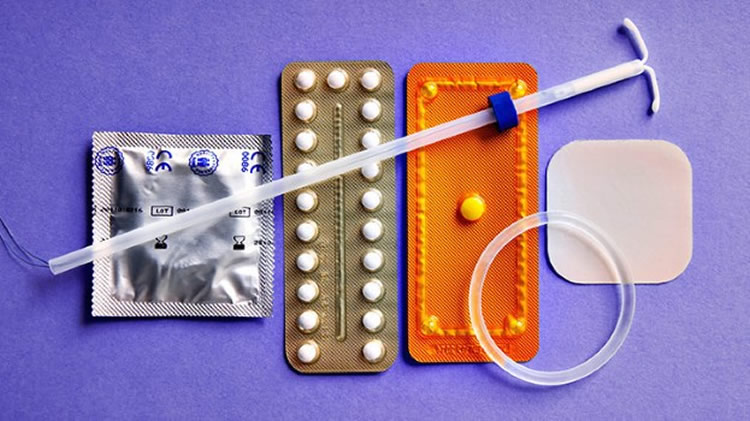
 Rachel Marie Stone
IN the current debates around birth control, one distinction that is frequently overlooked is that some forms of birth control are considered to be morally equivalent to abortion.
Those on one side cannot understand how anyone could ever have qualms about something – forms of birth control such as the NuvaRing, IUD, Depo-Provera, the Pill, and Plan B – that so dramatically reduces abortion.
But those on the other side feel frustrated because they view these methods and others like them, as abortifacient or causing an abortion.
For many people to refer to these methods as contraceptive is to misuse terms.
It is a tricky conversation; because many of the labels accompanying these various types of birth control, including emergency contraception, have in the past – and do at present – list among their possible mechanisms the “altering of the endometrium”.
In laypersons’ terms, this means that some of the above methods may theoretically prevent a fertilized egg from implanting on the wall of a woman’s uterus.
However, that is not the primary mechanism of any of these forms – not even the hotly contested Plan B. The newest research indicates that all of these methods primarily interfere with fertilization, whether by blocking sperm, immobilising them, or inhibiting ovulation.
This does not mean that they never cause a fertilised egg to fail to implant.
It is remotely possible that they do – which is why some labels say so, just as tampon labels indicate that tampons may cause Toxic Shock Syndrome. I have heard numerous people voice suspicion of the science.
I am satisfied with the science, but because I grew up in a religious tradition that is deeply skeptical of science – perhaps because evangelical identity, which I still hold, is often conflated with very particular positions that depend on dogma more than on historical and scientific fact – I can sympathise why some people are not satisfied: we smell conspiracy when the facts do not match up with what we have long believed.
And as a person who cares deeply about life at all stages, I also understand not wanting to use a method on the off chance that it may inhibit the implantation of a fertilised egg.
But I get stuck when that conviction is taken from the personal realm – “I choose not to do this myself” – into the realm of policy – “I will take measures to make obtaining this method more difficult.”
Here is why:
◆ It results in too many deaths – not quiet cellular deaths, but the loud deaths of grown women and the whimpering deaths of children; and
◆ It seems very clear to me that if we put most methods of reversible birth control besides condoms and diaphragms off the table, ethically speaking, we exchange the very hypothetical failure of a blastocyst to implant for the definite reality of visible, screaming, bloody deaths of women and children worldwide.
According to data at USAid, “family planning could prevent up to 30 percent of the more than 287 000 maternal deaths that occur every year, by enabling women to delay their first pregnancy and space later pregnancies at the safest intervals. If all babies were born three years apart, the lives of 1,6 million children under the age of five would be saved every year”.
That does not include the lives saved due to death from malnutrition in areas where population growth far outstrips the food supply.
I may be accused of resorting to emotional appeal here, and I have heard a Catholic ethicist argue that it is only because of our (my) sinful nature that we do not, generally speaking, accord fertilised eggs the same degree of sympathy as we do people we can see and touch.
But please bear with me.
In the United States, these conversations are often comfortably hypothetical.
While poverty and hunger and maternal death do occur, they are not visible to the degree that they are in, say, Malawi, where I recently spent a year-and-a-half.
There, I saw itty-bitty girls-girls entirely too small for many of the clothes at GAP Kids – hugely pregnant. There, I saw girls barely older than toddlers carrying heavy jugs of water on their heads and infant siblings on their backs, simultaneously.
There, I saw and cuddled a prematurely born baby, dying of dehydration because his mother had no access to anything, and gave birth at home, miles from transportation, let alone a hospital.
There, I sat on the floor to grieve with women who had just buried, literally, with their own hands, one such baby, born too soon and too closely after its older sister, who giggled and played nearby.
We are talking about a children’s holocaust each year-of kids who could live if their moms got enough of a break between pregnancies.
I know many of the answers proposed by the side that generally opposes certain methods of birth control: “use condoms,” they say, “teach people family planning”.
But we are speaking of cultures in which women have no choice whatsoever in when or how they have sex, cultures in which to use a condom is insulting and emasculating.
When my husband tried to teach his seminary students in Malawi about St Paul’s unequivocal call for equality in the marriage bed, there was an outcry.
“We’d be run out of church and out of the village for preaching that,” they said. “The man is in charge, no question.”
It is easy from this side of the world to offer answers; answers that crumble in the face of the complexities faced by those in the majority world where, make no mistake, contraception is one of the healthcare issues. So yes, I do understand what people feel is at stake. But I also believe that to reject and inhibit access to birth control on the remote and contested possibility that a fertilized egg might not implant is to consign more than a million and a half people annually-mostly children, but many women-to death. – Faith Street
◆ Rachel Marie Stone is a regular columnist for The Englewood Review of Books and has contributed to Christianity Today, InTouch, OnFaith, Books and Culture, The Christian Century, and Sojourners, among other publications.



 Online Reporter