

 Online Reporter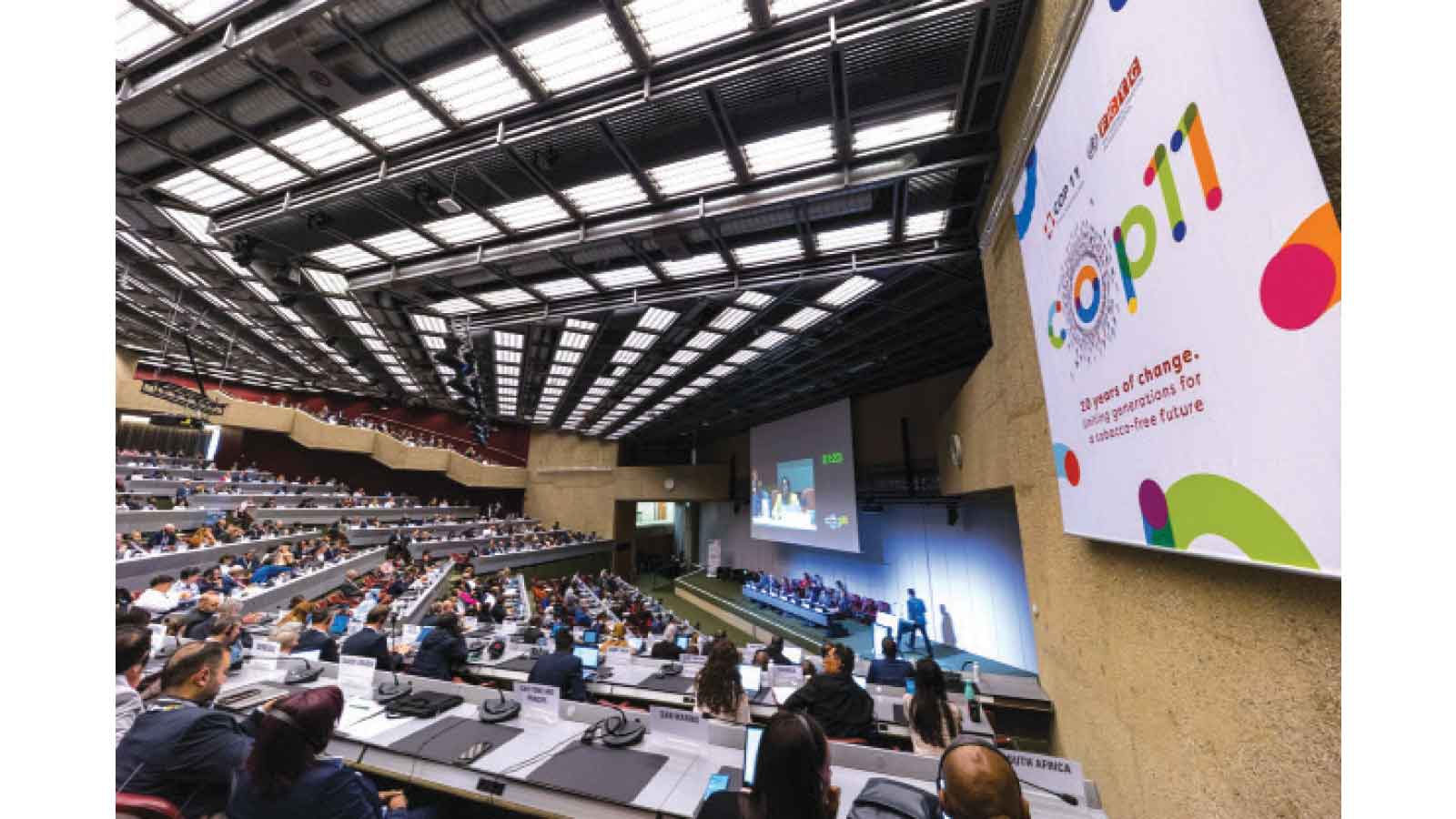
Dr Tendai Mhizha
As the COP11 of the World Health Organisation Framework Convention on Tobacco Control (FCTC) is in progress, governments and international agencies will be grappling once more with a fundamental question: how can we balance public health imperatives with the economic realities of tobacco-growing nations?
Nowhere is this tension more acute than in parts of Africa where most livelihoods, rural economies and state revenues rest on tobacco. Take, for example, countries such as Malawi, Zimbabwe and Tanzania.
According to the WHO, Africa’s top tobacco-leaf producing countries in 2020 included Zimbabwe (33,3 percent of the continent’s output), Malawi (16,8 percent) and Tanzania (8,4 percent).
In Tanzania in 2018, tobacco remained the second-largest export crop, contributing approximately 30–35 percent of annual exports. In Zimbabwe, tobacco remains one of the major foreign-currency earners.
For small-holder farmers in these countries, the crop offers a familiar path: established buyers, contracts, auction floors and the hope of cash income.
For governments, tobacco provides tax revenue, export income, rural employment and a degree of resilience in commodity markets.
For example, studies have shown that in Malawi, tobacco alone once accounted for over 60 percent of the country’s total annual earnings and 13 percent of its GDP.
But this dependency creates risks for farmers, rural economies and governments. What happens when global markets shrink, when demand falls, when regulations tighten, or when alternative livelihoods are limited.
The case for fair transition
A fair transition means acknowledging that farmers and governments cannot simply be told to stop growing tobacco without viable alternatives, support structures and a realistic pathway away from dependency.
The FCTC under Article 17 explicitly encourages Parties to “promote economically viable alternative activities” for tobacco growers.
In many African contexts, however, transition is complex. Farmers may lack access to credit, infrastructure and guaranteed markets for alternative crops.
Governments may be wary of losing export income and tax revenue. At the same time, global health policy pressures are mounting for reduced tobacco supply.
With COP11 afoot, the international focus is sharpened on supply-side measures, but without a transition framework, such measures risk leaving farmers and states behind.
Diversification programmes are beginning to surface: for instance, the “Grow food, not tobacco” message from the WHO highlights that some tobacco-growing nations already struggle with food security yet devote land and labour to a crop with both health and environmental costs.
The key question becomes: how can governments design policies that shift away from tobacco while preserving livelihoods — and how can rural economies move into new streams of value?
Balancing government revenues and public health
For governments, tobacco is more than a crop. It is revenue, foreign exchange, employment and political economy.
Tax-and-duty regimes on tobacco products—or on leaf export markets—represent funds that can buffer public services and rural development.
According to the African Tax Outlook 2023, average tax-to-GDP ratios rose to 15,43 percent in 2022, with 69 percent of African countries seeing increased revenue collections. What this suggests is that any shock to export commodities, including tobacco, must be managed carefully so as not to endanger government finances.
In Malawi, for example, one study noted that while tobacco remains heavily relied upon, farmers often earn less profit from tobacco than they imagine, and many households’ growing tobacco are poorer than those growing other crops. So, the challenge is two-fold: maintaining revenue streams while improving the economic well-being of farming households.
At COP11, delegates from tobacco-growing countries will face pressure to reduce production and encourage alternatives.
That is laudable from a public-health perspective, but unless governments can ensure a credible plan for revenue replacement and farmer transition, the shift may result in unintended hardship: weakened rural incomes, loss of export capacity and increased vulnerability for small-holders.
Diversification and sustainable alternatives
What does a proper diversification pathway look like? Alternative crops, agro-forestry, value-adding industries and linking smallholders to secure markets are elements.
For instance, there is growing documentation of programmes aimed at helping farmers transition out of tobacco by developing alternative livelihoods.
These initiatives emphasise that diversification must be context-specific, farmer-centred, and financially viable—not simply an academic desire.
Given global declines in smoking rates and rising regulation, the future demand for tobacco leaf is contested.
While some projections suggest modest growth, many farmers remain exposed. If governments can harness new investment into agro-industries, food systems, agro-processing and export value-chains, they stand to capture new revenue streams instead of being locked into a single commodity.
Crucially, banning or heavily restricting tobacco cultivation without a workable alternative means that Africa may miss out on new investment opportunities: agro-processing, diversification bonds, green-agriculture funds, sustainable agro-forestry and climate-resilient crops.
One scholar cautioned that without external assistance, countries like Malawi “have only limited capacity to develop economically effective alternatives to tobacco production.”
What happens if tobacco growing continues unchanged?
Continuing on the current path may not simply be about ‘business as usual’. Climate change, shifting global demand and regulatory pressure all converge. For example, while Africa’s tobacco-leaf production rose 35,7 percent from 2005 to 2020, globally it decreased by 4,6 percent.
That suggests growth in African tobacco is increasingly singular, potentially reliant on fewer markets and exposed to risk.
Small-holder farmers in tobacco systems often face thin profit margins, labour intensity, health hazards (such as green-tobacco sickness) and environmental degradation. For governments, if tobacco use declines (as many projections expect), then the value of export leaf may fall, potentially collapsing revenue that was once assumed to be durable.
If the FCTC at COP11 is able to steer parties towards supply reduction, without parallel demand for alternative livelihoods, these countries risk being caught in a policy trap: expected to deliver on supply-side control without having the agricultural or economic infrastructure in place to take the next step.
A call to action for the FCTC at COP11
As COP11 is underway, African governments and development partners must heed three imperatives.
1. Design fair transition plans: Policies must recognise that farmers and rural economies cannot shift overnight. Transition must involve training, credit access, market linkage, crop insurance and value-chain development.
2. Balance revenue policy with health policy: Governments should consider how to cushion revenue shortfalls, perhaps by dedicating part of any tobacco tax/excise growth into transition funds for farmers. (Such mechanisms have been used elsewhere: for example 15 percent of incremental excise revenue in the Philippines is allocated to farmers and local government units in tobacco-growing areas.) African governments should explore analogous mechanisms.
3. Attract new investment to alternatives: Rather than simply winding down tobacco, countries should actively promote alternatives—diversified agriculture, agro-processing, green export crops and climate-resilient systems. This means crafting policies that send the right signalling to investors: Africa is open for business beyond tobacco.
In short, economic stakes are high. The livelihoods of thousands, the rural economies of whole districts, and the fiscal bases of governments in Malawi, Zimbabwe, Tanzania and others hinge on how well they manage the transition. If COP11 becomes a turning point in global tobacco supply policy, Africa must be ready—not left behind.
The choice is stark: continue the familiar path of dependency, or chart a new one built on sustainable agriculture, diversification and economic inclusion. The world is watching COP11. African governments must ensure they are not simply subjects of global policy, but architects of their own economic futures.
* Dr Tendai Mhizha is chief advisor, allafrica global media



