Chronicle Editor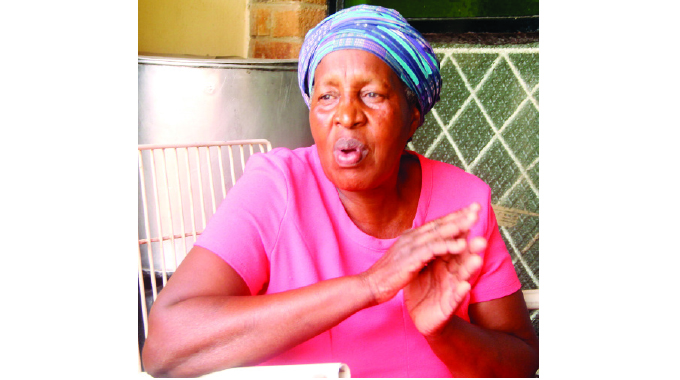
WE conclude our interview with Cde Phinah Sibanda pseudo name Cde Mqandweni Godlwayo, a former ZPRA woman instructor at Mkushi who during the bombing of the camp on 19 October 1978 by the Rhodesian forces saw herself at the receiving end as she was one of the nine combatants who were captured. Last week Cde Sibanda told our Assistant Editor Mkhululi Sibanda (MS) how she left the country to join the armed struggle when she was supposed to go for a nurse training course at St Luke’s Hospital in Lupane District, Matabeleland North Province. Today she resumes the conversation by narrating the events of the day of the bombing and how she was captured. Below are excerpts of the interview. Read on . . .
MS: Let’s resume our conversation by taking us through your training programme.
Cde Sibanda: During our training programme we had done things like topography where we were taught how to use the compass, obstacle crossing, commissariat lessons, military communication, reconnaissance and so on. We were also taught how to set up an ambush, laying of mines and weapon handling. After completing the training which was very intense I was chosen to be part of the Group of 50 that were made instructors for the second group. We started training the second group at Mkushi and myself I was in the medical corps and would work at the dispensary which was staffed by seven comrades. It was during that time that I fell in love with Cde Kumbirai (Lucky Sibanda), who was an instructor at Mkushi and had trained us. He is now my lovely husband having rekindled our love soon after independence.
MS: Let’s get to the 19 October 1978 bombing. Take us through the events of that day.
Cde Sibanda: On that day I had a class at about 11am since I was an instructor. I was taking the recruits through the medics stuff. Kumbirai had suggested that we go for hunting but could not do that since I was engaged with my duties. My company that was D Company then went for breakfast, which was not breakfast per se as it consisted of isitshwala. Then on my way from the kitchen that is when the bombing started. I then quickly moved past an ant-hill (isiduli) and was heading towards our armoury and it looks like the enemy forces spotted me. My situation was not helped by the fact that I was wearing combat gear of the first group that was creamish in colour. A helicopter crew should have spotted me and they started firing at me but they missed. They located me again as I ran past the armoury and when I looked up I saw para-troopers being dropped. At that moment the environment turned red, umkhathi waphenduka waba bomvu.
MS: At that point what did you do?
Cde Sibanda: I continued running towards the west. The Rhodesians’ tactics was to push us towards the raging Mkushi River so that people could drown there or be attacked by the crocodiles. As I continued towards the west I noticed other comrades were turning back as a way of avoiding the river and also for the fact that the enemy was encircling us. But now people were in a difficult situation, you could not throw yourself into the river and on the other hand the enemy forces were combing the area. That is what forced the comrades to change direction. I also changed direction and noticed that there was a thicket and I dashed there and hid in some shrubs. While I was still there I saw some of the girls who had fallen into the hands of the Rhodesian soldiers and had surrendered coming my way. They had been rounded up and were now captives. They came straight to the direction where I was hiding and one comrade set her eyes on me. She pointed in my direction and said “Comrade Phinah phuma sesikubonile.” One of the Rhodesian soldiers then shouted and said “another terrorist, do you mind John.” That is how I was smoked out of my hiding place. I couldn’t believe what was happening, now surrounded by huge white soldiers, it was as if I was having a bad dream. It had never crossed my mind that one day I would fall into the hands of the Rhodesians and be captured, but there I was starring death in the face. I could smell death. We were then force-marched to a spot where we found other girls under a tree. Despite the fact that they had been captured, the Rhodesians in their evil minds made them sit down and started shooting them, killing them in cold blood. It happened right in front of us, summarily executing people that had surrendered and were defenseless was horrific. We waited for our turn.
MS: What was going through your mind when you were watching others being killed in cold blood just in front you?
Cde Sibanda: I was waiting for my turn. But to be honest with you when I saw the comrades being killed, fear of death just vanished. I thought it was better to die, I wanted them to kill me so that I would not witness any of that. After shooting those whom we found under a tree, they ordered the three or four us whom they had come with when they fished me out of that shrub to carry their kits. I refused and said it was heavy for me, I wanted them to shoot me. That defiance was a way of provoking them. We then walked past the parade square and when we got to a place where there was an ant-hill, they made me, Sithabile and some to sit down. We were about 10 of us. We were near the dispensary. We were then handcuffed and when they moved away from us, others said let’s get inside the pits that were at the dispensary. Other girls and I refused but others got inside the pits. What followed was horrific as when the Rhodesians returned they threw grenades inside the pits and that’s how those comrades were blown up there. We asked to use the toilet and the Rhodesians said do whatever you want to do there. Just imagine relieving yourself handcuffed and still dressed. We were then made to line-up, then they pushed us down. They went on again to shoot some of the comrades. After some time they led us out of the camp and we were eight girls. We crossed Mkushi River and walked until we reached their base where there were drums and drums of fuel, an indication that they had set up a base, which they were also using to refuel their aircrafts while bombing us. That’s where we found Cde Ntatshana who was our camp’s chief of logistics tied to a tree. He had also been captured as well. The way they had tied him to that tree was terrible as both his feet and hands were fastened to that tree, he could not move an inch.
MS: That means the Rhodesians came out of Mkushi with nine captives.
Cde Sibanda: Yes. We were eight girls that were captured and one man, who was Ntatshana. Some of the captured girls were Sithabile and Samukeliso who had trained at Mwembeshi. From that base we were flown in a helicopter, which was flying low. On the way we saw a man whom I believe was on a hunting expedition, the Rhodesians shot him dead. We finally reached what I believe was Kariba. The Rhodesians then blindfolded us with a black cloth and threw us into cells. They then demanded that we tell them everything about ZPRA’s strategy and said if we did not they will throw us into the Kariba Dam. They were very rough but they did not beat us that much. They would kick us with their boots. It was at Kariba that one of the girls who had been injured succumbed to her injuries, she died in the cells as the Rhodesians did not render any medication to her. After some days we were taken in a helicopter and then switched into a car. Now we were seven girls and Ntatshana. We were blindfolded and when they removed the blindfolds we saw a sign that read Essexvale now Esigodini. At the facility we were detained we found a captured guerilla who was being beaten up thoroughly. From Esigodini we were blindfolded again and made to board a car which we later on realised had tinted windows. We were moved to Bindura in Mashonaland Central Province where we were kept.

MS: So how was it in Bindura?
Cde Sibanda: The security was very tight. There they kept captured guerillas from both ZPRA and ZanlA. Others told us that there was a car that usually came to take people from that facility and those would never be seen again as the Rhodesians would have killed them. With time they made me assist Cde George, a captured Zanla combatant to render medical assistance to other captured guerillas. Although the Rhodesians still harassed us seeking information about ZPRA, one of their senior soldiers came to our rescue and told those officers that we were too young to have crucial information on the ZPRA strategies. He said we were too far away from the senior command element that we would have that kind of information. Then Cde George escaped from captivity and that got me into big trouble as the Rhodesians said I knew where he had gone to. They harassed me. Samukeliso and I were later moved from Bindura to Bulawayo where we stayed at a house in Lockview but under tight security. The intention of the Rhodesians was to initiate us into their spy network. They would take us to public places so that we could identify guerillas there. Then things turned dramatic while we were still being kept at Lockview. With the time the Rhodesians had sort of become a bit lax.
MS: What was that drama about?
Cde Ncube: A member of the Zapu intelligence unit, NSO, uCde Tafara in the company of his colleague whose name I can’t remember made a daring raid and got away with us. The Rhodesians had left us on our own, so Tafara in movie style came to the premises and rescued us. It was typical guerilla fashion. It seems our intelligence unit had been looking for us and they came here in Bulawayo and carried that dramatic rescue operation. I was taken to the house of former Bulawayo Mayor, businessman and Zapu member, Alderman Nick Mabodoko. I was then moved to Mabodoko’s farm koDundubala which is along the Bulawayo-Victoria Falls Road in Umguza District. That is where I stayed in hiding until the time of the ceasefire. The Rhodesians obviously looked for us but to no avail. I then came home after the ceasefire period to be united with my family. It then happened that I went to Gwayi River Mine Assembly Point to visit my brother Phebion Ncube Malaba who had also joined the armed struggle. To my lovely surprise I found Kumbirai there and we rekindled our love. He thought I had been killed, so it was a lovely surprise. From there we both demobilised and moved into civilian life. That was in 1982.

MS: So from the military what was your next move?
Cde Sibanda: In 1983 I enrolled at St Pius in Njube here in Bulawayo to resume my education under a scheme that catered for ex-combatants. Besides proper secondary education I also did bookkeeping, typing and office work. I wanted to go and train as a nurse but that became a challenge because I was married. We then decided to start some business which we jointly managed with my husband. Our marriage has been blessed with five children, three sons and two daughters. At the moment I am involved in the War Veterans League here in Ward 18. We also have a plot at Lochard in Insiza District where we are doing farming.


 Online Reporter