admin
admin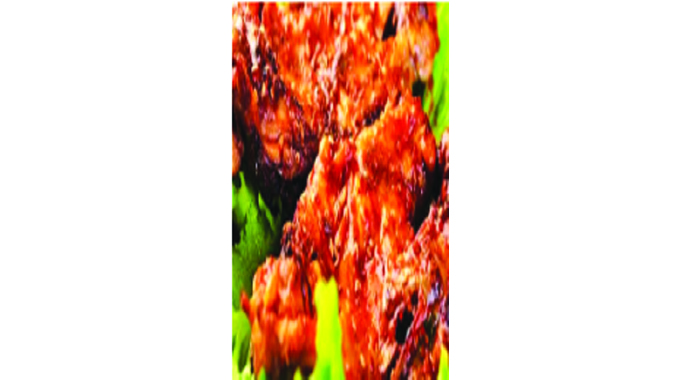
Ms G
China has put the Covid-19 pandemic under excellent control within its borders.
For months, there has not been a single domestic case.
Almost all new cases are imported.
Life has returned to the most normal we can wish for under these unusual circumstances.
But Chinese health officials are not blinking their eyes.
Rigorous contact tracing is activated whenever a new case comes along.
Recently, a retired man from the city of Shenyang in North Eastern China, who was confirmed to have contracted the virus, got unexpectedly famous when his daily whereabouts were released by local health authorities.
The nation was intrigued by the fact that he had been frequenting a deli shop for roasted chicken frames almost everyday before he was found to be positive.
Many were curious why he was so into something not as meaty as drumsticks or tender as wings or protein-rich as breasts.
After all, chicken meat is cheap and there is no way he cannot afford the other, better parts.
Indeed, chicken frames are extremely popular in North Eastern China.
They are boiled, fried, roasted, and smoked in all corners of the cities in that part of the country.
Coupled with a small dish of peanuts, cucumber salad and a bottle of Chinese liquor, they make a beautiful night for guys looking to unwind after work.
But what makes the snack so popular in the cold cities is a painful story.
North Eastern China, including the three provinces of Heilongjiang, Jilin, and Liaoning, used to be the hub of China’s heavy industry.
Factories of heavy mining equipment, machine tools, iron and steel, coal and oil, combustion engines, metals, and military equipment stand side by side.
The famous Chinese automaker FAW, which has a plant here in Zimbabwe, is head-quartered in Jilin Province.
While these manufacturing giants had their days of glory in the 1950s and 60s, they were developing sclerosis in the 1980s and 90s.
Poor corporate governance, mismanagement, corruption, low productivity sank them further and further into unsustainable debts.
The perks their employees enjoyed from cradle to grave meant ballooning bills for the factories and national fiscus.
Many were tottering on the brink of collapse.
Long sheltered by state-granted monopoly over the market, they were not able to survive under the market economy which China was shifting to at the time.
They are also holding back the country’s market reforms.
In 1998, then Chinese Premier Zhu Rongji prescribed two bitter pills: mass layoffs and shareholding.
Some research concludes 30 to 40 million workers were laid off on his watch, hundreds of SOE privatised, and thousands more consigned to history.
Most of the newly unemployed did not have skills that were competitive on the market.
Having been spoiled for a long time in the big factories, the “unbreakable iron rice bowls”, where efficiency was low, competition was non-existent, and job positions could even be passed on from father to child, they despised and were despised by private employers.
Finding another job with the same economic and psychological safety was impossible.
Many went straight into retirement on meagre severance packages. Others hopped between odd jobs.
It was against this background of substantially decreased income levels and suppressed economic activities that chicken frames found popularity, for the singular reason of being cheap meat.
Thirty years on, the economy in this part of China has long emerged from the shadows.
The laid off workers have settled down in a new life.
The benefits of a fast growing Chinese economy did not leave the northeast untouched.
But locals have gotten used to chicken frames as a snack.
New ways of cooking them continued to be invented and embraced. They have become part of the local culture.
The SOE restructuring and other reform programmes China embarked on in the 1990s were no easy pills to swallow.
But they were crucial to China’s economic takeoff.
On their back, the Chinese economy went on to grow at double-digits for years. Inflation was brought down to 3 percent.
China was able to keep the strength of the Hong Kong dollar amid the 1997 Asian financial crisis when US financial moguls destroyed a number of Asian currencies and tried to replicate the attack in Hong Kong.
Quite like chicken frames, real transformations may look not appetising at all in the first place.
However, if you sum up the courage to try, you may be surprised by its delicious, lasting flavour.



 Online Reporter