Limukani Ncube, Intake Editor
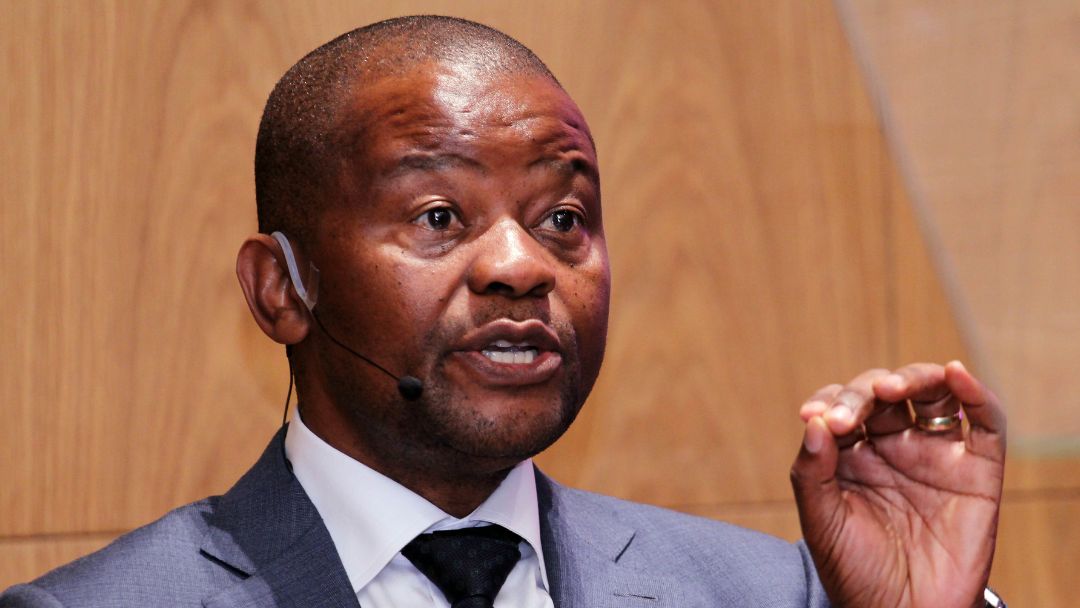
FOR a man who has spent much of his professional life at the highest levels of corporate South Africa, Peter Mthandazo Moyo’s dream job is surprisingly modest. And he would do it for free.
The Zimbabwean-born business executive, who rose from a four-roomed house in Mpopoma, Bulawayo, to occupy senior positions in some of Africa’s biggest corporations, says there are only two jobs he would actively pursue without demanding a salary: Town Clerk of Bulawayo and chief executive officer of Highlanders Football Club.
A former CEO of Old Mutual in South Africa, which at one point had assets worth R120 billion and employed 30 000 people, Moyo’s interest in Highlanders is driven by more than nostalgia.
He believes one of Bulawayo’s most valuable institutions has failed to commercialise its greatest asset: its people.
As Bosso celebrates 100 years, his proposition is straightforward.
The club does not necessarily need a wealthy owner. It needs to organise and monetise the enormous community that already owns it emotionally.
Turning emotional capital
into economic capital
His proposed US$10 Fan Revolution could be the starting point. For generations, Highlanders has been more than a football club. It has been a source of identity, pride and social connection for Bulawayo, Matabeleland and beyond and even supporters beyond Zimbabwe.
Moyo remembers a time when the city’s social and sporting life revolved around the club: basketball at BCD on Fridays, discussions at the clubhouse on Saturdays and football at Barbourfields Stadium on Sundays.
That connection, he argues, represents economic value that Highlanders has not fully exploited.
Despite its history and massive following, the club has continued to depend heavily on match-day revenue, sponsorship and emergency interventions. Its financial difficulties have become increasingly visible, with players repeatedly stopping training over unpaid salaries.
For Moyo, a century-old institution with such a substantial following should not be uncertain about meeting its immediate financial obligations.
His question is simple: what if every genuine Highlanders supporter contributed US$10 annually?
“If you just ask the number of people that love Highlanders, and all of us just put $10 in a year, I think our fortunes will be different,” he said in a recent interview on the Podcast, Bulawayo’s Finest.
The potential is significant. If 20 000 supporters contributed US$10, the club would raise US$200 000. Fifty thousand would generate US$500 000, while 100 000 supporters would contribute US$1 million.
However, these are illustrative figures, not guaranteed collections but their significance lies in demonstrating the financial potential of an organised supporter base.
Moyo insists, however, that financial sustainability must be accompanied by stronger governance.
“We are known for very, very good governance. We need to strengthen that. I get a sense that we have gone a little bit backwards. We need to make sure that we are financially sustainable in the long term.”
The Barcelona lesson: Community
ownership can work
Rather than searching for a wealthy investor, Moyo believes Highlanders should strengthen its community-ownership model.
He points to Spanish giants FC Barcelona, Real Madrid and Athletic Club Bilbao as examples of major football institutions that have maintained member-based structures while competing at the highest level.
The lesson is not that Highlanders should copy Barcelona wholesale, but that community ownership and professional commercial management can coexist.
A supporter contribution should also offer tangible benefits. These could include digital membership cards, exclusive content, merchandise discounts, events, VIP experiences and voting participation where constitutionally applicable.
Highlanders already has a membership platform offering some of these benefits. The challenge is to turn such initiatives into a reliable and growing revenue stream.
A paying supporter becomes more than a spectator. The club can understand its consumer base, communicate directly with members, sell merchandise, develop digital content and create international supporter chapters. The lifetime commercial value of a supporter could therefore extend far beyond the initial US$10.
Governance must match the ambition
Moyo’s views are informed by his previous involvement with Highlanders. Together with his friend Bongani Nqwababa, who later became Sasol’s chief executive in South Africa, he says he participated in strengthening the club’s financial and accounting systems during the late Ndumiso Gumede administration.
According to Moyo, Highlanders became the first Zimbabwean football club, and for many years the only one, to have its financial statements independently audited by KPMG. He believes the club must reclaim that culture of institutional discipline.
Highlanders has historically benefited from businesspeople and supporters who have intervened during financial emergencies, including the group known as Ayisoze Ibulawe — “It Will Not Die” (South Africa), businessmen such as Taffi Moyo, Titus Ncube, Chemist Siziba, Tshinga Dube, Hon Kuda Tagwirei, Hon Scott Sakupwanya and Wicknell Chivhayo, among others.
While such interventions are valuable, Moyo argues that they cannot constitute a sustainable business model. A club cannot build its annual budget around the hope that a benefactor will appear when players need their salaries.
Regular membership contributions would provide predictable income, allowing management to budget for contracts, academy development and commercial projects while giving sponsors confidence in the club’s financial planning. But this requires transparency, credible membership records, professional administration and regular communication about how money is spent.
The academy: Building assets rather than buying them
Financial sustainability alone will not restore Highlanders to greatness. Moyo believes the club must also rebuild its player-development structures.
Historically, some of Bosso’s greatest teams were built around talent emerging from Bulawayo and the club’s own development structures. Players such as Willard Khumalo, Madinda Ndlovu, Adam Ndlovu, Peter Ndlovu, Benjamin Nkonjera, Willard Khumalo, Peter Nkomo, Amin Soma Phiri, Alexander Maseko, Lawrence Phiri, Zenzo Moyo and Thulani Ncube, among others, helped define celebrated periods in the club’s history. For Moyo, the academy is an economic investment as much as a sporting necessity.
A well-developed player can strengthen the first team, generate transfer income, become a club ambassador or eventually return as a coach.
Consequently, money raised through membership should not disappear entirely into recurrent expenditure. A meaningful portion should be invested in youth development, coaching, scouting and sports science.
The diaspora opportunity and turning smartphone into a stadium
Highlanders’ emotional constituency extends far beyond Bulawayo. Thousands of Zimbabweans who grew up supporting Bosso now live in Johannesburg, Cape Town, London, Manchester, Australia and the United States.
Digital membership offers an opportunity to bring these supporters into the club’s financial and social ecosystem. Someone in Birmingham should be able to contribute an annual membership fee, receive a digital card, access exclusive content and participate in the club’s activities without attending a match at Barbourfields. The smartphone, Moyo’s argument suggests, must become as important as the stadium.
However, US$10 alone will not rescue Highlanders. Success depends on efficient collection systems, accountability and supporters’ confidence that their contributions are being properly used.
“You can’t say asifuni bumbulu when you are begging”
Ultimately, Moyo’s proposal is about changing the culture of football support. For decades, supporters have largely been treated as spectators who buy tickets, attend matches, cheer and go home.
He wants that relationship transformed: the supporter becomes a member, the member a contributor, and the contributor an active participant in the club’s commercial future. That also places responsibility on supporters themselves.
As Moyo puts it, people cannot continuously proclaim that Highlanders is Team Yabantu while expecting somebody else to carry the financial burden.
“Community clubs do work. You can’t stand up and say ‘asifuni bumbulu’ (we don’t want nonsense) when you are going to be begging people for money.”
The statement is blunt, but it raises an important question: if Highlanders belongs to the people, what are those people prepared to contribute towards its survival?
The naked emperor: Player unrest exposes the crisis
The club’s centenary celebrations have been overshadowed by repeated player unrest, exposing the fragile relationship between the players and the leadership.
On several occasions during the season, players stopped training over unpaid salaries. The crisis reached another low when players reportedly refused to travel for the league match against Agama over outstanding payments. The Premier Soccer League had to intervene, postponing the fixture to the following week.
The episode painted an uncomfortable picture of an institution struggling to meet basic obligations despite its rich history, large following and commercial potential.
It also raises questions about the effectiveness and capacity of the club’s administration and the sustainability of its current operating model. For Moyo, these challenges reinforce the need for professional management, stronger governance and predictable revenue.
Four pillars for Highlanders’ next century
As the club enters its second century, Moyo’s vision rests on four fundamental pillars:
1. Governance: Strong institutional structures, independent oversight and reliable financial reporting.
2. Membership: A meaningful system through which supporters contribute financially and participate in the club’s future.
3. Professional management: Running Highlanders with the commercial discipline expected of a modern football enterprise while preserving its community ownership.
4. Academy development: Investing in young talent to strengthen the first team and create future sporting and commercial assets.
These pillars must complement other revenue streams, including sponsorship, merchandising, broadcasting and digital rights, hospitality, property income and strategic partnerships.
Highlanders is not starting from zero. It has a century of history, a recognisable brand, loyal supporters, properties, an academy tradition and a global diaspora. Its centenary therefore presents an opportunity to turn those existing strengths into a sustainable commercial ecosystem.
After 100 years, the question is no longer whether Highlanders has a community. It is whether the club can organise that community well enough to finance its next 100 years.