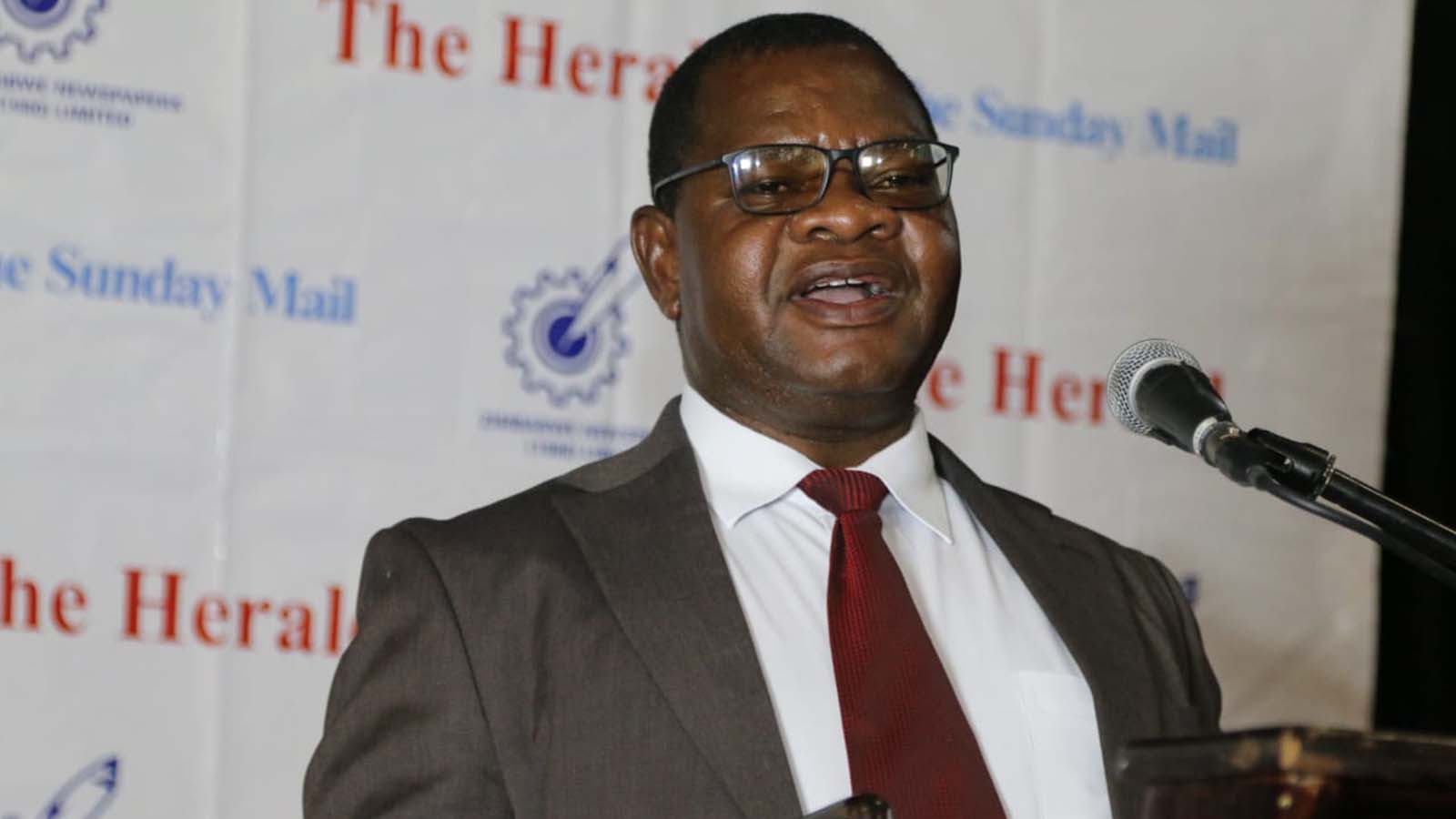
Nqobile Bhebhe recently in Hwange
THE Rural Electrification Agency (REA) is accelerating the rollout of electricity infrastructure across Matabeleland North, with schools and health facilities nearing universal connectivity as the agency prepares to extend the programme to village homesteads through densification.
The commissioning of the Sikumbi-Batoka electrification project in Hwange District on Thursday highlighted the impact of the programme, with Minister of State for Provincial Affairs and
Devolution Richard Moyo saying access to electricity was transforming rural communities and improving livelihoods.
Minister Moyo said rural communities had historically been marginalised in accessing electricity, forcing households to rely on firewood while businesses depended on paraffin-powered refrigerators, limiting their capacity to expand and improve services.
“The health delivery service was out of reach for many except for a few missionary hospitals and schools.
“This was the norm until REA changed the narrative and said ‘Let there be light’. Today we are the beneficiaries of that deliberate policy of targeting the rural community,” said Minister Moyo.
The Sikumbi-Batoka project involved the construction of an 11,82km electricity line supplying four public institutions — Sikumbi Primary School, Batoka Secondary School, Batoka Rural Health Centre and business centres.
The project forms part of wider interventions by REA in Hwange District, where 135 projects had been electrified as of November 16, 2026.
These include 53 primary schools, 23 secondary schools, 19 business centres, 14 clinics, five chiefs’ homesteads, four Government extension offices, one village business unit and 14 other community-related projects.
Minister Moyo said all secondary schools in Hwange District had been electrified, with only one still undergoing the process, while just two primary schools remained outstanding. All chiefs’ homesteads in the district had also been connected.
Across Matabeleland North, 467 of the province’s 659 primary schools had been connected, leaving 192 outstanding, while 195 of 242 secondary schools had been electrified, with 47 remaining.
“I am happy to say only one clinic is not yet electrified; the rest are enjoying electricity,” he said.
Minister Moyo expressed confidence that outstanding projects would be completed within their scheduled timelines, commending REA employees for their commitment to expanding electricity access in rural communities.
Speaking at the commissioning ceremony, Acting REA board chairperson Mrs Cecilia Chitiyo said the electrification of Sikumbi and Batoka marked a new chapter in the economic development of the Hwange community, with schools, a clinic and business centres now benefiting from Government-provided electricity.
“The coming of electricity in your area marks the beginning of good times ahead, in our efforts to provide universal access to modern energy services to all the rural communities of Zimbabwe by 2030 as enunciated in our mandate,” she said.
Mrs Chitiyo said REA had electrified 8 977 schools and clinics countrywide through grid electricity and off-grid technologies since its establishment in 2002, against a target of 10 935 public institutions.
“Only 1 958 are remaining and counting down to their completion is just a matter of few months,” she said.
She said the board had directed the executive to accelerate implementation in provinces that had previously lagged behind, particularly Mashonaland West, Masvingo and Midlands, to bring them in line with provinces that were ahead.
With the electrification of schools and clinics nearing completion, Mrs Chitiyo said REA was shifting its focus towards household connections.
“With schools and clinics nearing completion, our focus now is to look at densification and we intent to craft our budget for 2027 prioritising completion of the remaining public institutions and the electrification of village homesteads through densification.”
She acknowledged the contribution of electricity consumers through the rural electrification levy, describing it as the agency’s most reliable funding source.
“Rural Electrification levy is the single most reliable funding we get for the rural electrification programme.
“The levy you pay brings light to rural areas and you and we are happy that we are lighting up rural Zimbabwe,” she said.
Mrs Chitiyo, however, said the availability of electricity infrastructure needed to translate into increased economic activity, noting that underutilisation of power due to limited productive use remained a challenge for REA and ZETDC.
She urged traditional leaders, councillors and legislators to mobilise communities to establish income-generating projects that could not previously operate without electricity.
“In this regard and as REF Board, we request rural leadership that include, councillors, headmen, chiefs and Members of Parliament to help by initiating projects and programmes that they were unable to start without electricity.”
Minister Moyo also called on Government ministries, departments, State enterprises, parastatals, non-governmental organisations and development agencies to take advantage of the infrastructure being rolled out to stimulate investment and productive activities in rural communities.
“It is important to note that the primary mandate of the Rural Electrification Agency is to provide energy infrastructure to rural communities for development and community empowerment.
“If the energy infrastructure is not utilised productively, no meaningful development can take place in our rural communities.
“The participation and support of other stakeholders in mobilising and assisting the rural communities to use energy for productive purposes is therefore critical and important,” he said.
The programme is expected to improve rural service delivery while creating opportunities for agro-processing, small businesses, irrigation and other electricity-dependent enterprises, supporting Government’s ambition of achieving universal access to modern energy services in rural Zimbabwe by 2030.
Beyond schools and health facilities, REA is connecting business centres, small-scale farms, irrigation schemes, Government extension offices and village homesteads to support rural industrialisation under Vision 2030.
Once grid construction is complete, the infrastructure is handed over to the Zimbabwe Electricity Transmission and Distribution Company (ZETDC) for operation and maintenance.