Samkeliso Ndlovu
TREVOR Dube knows what it means to lose a harvest before a seed has even been planted. A few years ago, the 68-year-old farmer from Sogwala in Lower Gweru lost seven cattle, one after another to deadly theileriosis disease (commonly known as January disease in Zimbabwe).
With them went the draught power he had depended on for most of his farming life.
“It was one of the worst periods of my life,” he recalled.
“I had no oxen to plough and no other way of preparing the land. That season, I harvested almost nothing. When you depend entirely on cattle, losing them can mean losing your harvest as well.”
He still relies largely on oxen. When he can afford it, he hires a tractor from a neighbouring farmer, but money alone does not guarantee access. In communal areas, tractors are scarce when the first rains arrive. Owners attend to their own fields first while everyone else waits and by the time a tractor is free, precious planting days may have passed.
The rains, after all, do not wait for anyone.
It is this familiar struggle that gives particular meaning to the Expanded Mechanisation Facility, recently launched by President Mnangagwa in Harare.
The initiative seeks to bring machinery within the reach of communal and smallholder farmers, many of whom have spent generations working the land with animal-drawn implements.
It is the latest stage in a mechanisation drive that has gathered momentum over the past nine years. Through successive programmes, including the Belarus and John Deere facilities, Government has steadily expanded the national fleet.
At the launch, the President reported that tractor numbers had grown from 6,300 in 2017 to 18,740 and combine harvesters from 302 to 486.
Access, however, has remained uneven, with larger operations better placed to acquire equipment. The new facility therefore seeks to correct that imbalance.
Government is targeting about 35 000 villages through a model that allows qualifying village business units to acquire tractors and implements.
Where earlier programmes centred largely on acquisition by individual farmers and institutions, this one places greater weight on shared access and community-run enterprises, giving practical form to the President’s assertion that mechanisation should no longer be a privilege reserved for those with substantial resources.
For farmers like Mr Dube, what matters is not owning a tractor but knowing that one will be available when the land needs preparing.
A small tractor can cost around US$7,000 before a plough, harrow or trailer is added. For someone working three hectares, whose harvest must also cover the family’s everyday needs, that is a steep investment.
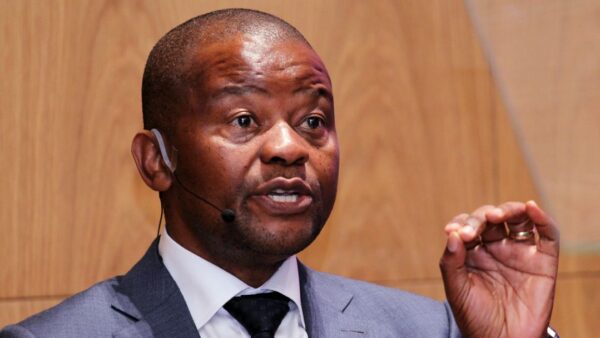
Speaking to Sunday News, Permanent Secretary in the Ministry of Ministry of Agriculture, Mechanisation and Water Resources Development, Professor Obert Jiri said the programme was designed to reach precisely these farmers.
“It deliberately extends mechanisation beyond large-scale commercial and A2 farmers to communal and smallholder farmers who have relied on manual labour and draught power,” he said.
Individual farmers can acquire machinery suited to their enterprises, while village business units can obtain equipment to offer mechanisation services to surrounding communities. A dedicated
village business category has been created for this purpose, with priority given to units already established and functioning well.
Schools and youth business units are also accommodated, opening the way for practical agricultural training and community food production, while women and young people are catered for through dedicated financing institutions.
Rather than requiring full payment upfront, the facility works through participating financial institutions, with repayments spread over five to seven years. Details on deposits and interest rates are expected in due course.
The machinery has been chosen with smallholder conditions in mind. The 25-horsepower tractors earmarked for villages are sized for small plots, while two-wheel tractors and their implements offer further options for smaller enterprises.
For those who cannot buy at all, the village business model offers another route.
“Farmers who cannot afford buying their own machinery can hire services from mechanisation service centres and village businesses in their area,” Professor Jiri noted.
That could matter a great deal in communities where a single privately owned tractor is expected to serve several farmers within the same narrow planting window.
A well-run village unit could provide land preparation and other services while earning enough to repay its loans and sustain itself. The ambition, in other words, is not simply more tractors, but rural enterprises that make mechanisation a service available within the community.
The approach draws on lessons from the past.
Zimbabwe has tried group tractor schemes and public equipment hire before and the more recent Belarus and John Deere facilities built national capacity through financing and international partnerships, yet maintenance, financing and spare parts have remained persistent challenges.
Locally managed services offer a chance to address some of these, but success will depend on affordable hiring charges, sound financial management and reliable equipment.
For farmers, though, one consideration outweighs the rest: timing.
“Mechanisation allows planting at the first effective rains,” Professor Jiri said.
In rain-fed agriculture, a delay of a few days can decide a season. Land must be prepared and seed sown while the soil holds moisture, often with no certainty about when the next good rain will come.
Reliable access to machinery therefore, offers more than convenience. It could help farmers plant on time, make better use of the rainfall they receive and reduce the risk of a lost season when the oxen fail.
The mechanisation facility could also complement Pfumvudza/Intwasa, which has sought to raise smallholder productivity through conservation agriculture. One addresses how the land is farmed; the other, the means to work it.
Its success will ultimately be measured by how widely the machinery is distributed, whether village business units can run sustainably and above all, whether ordinary farmers can access and afford the services when they need them.