Sundaymail Editor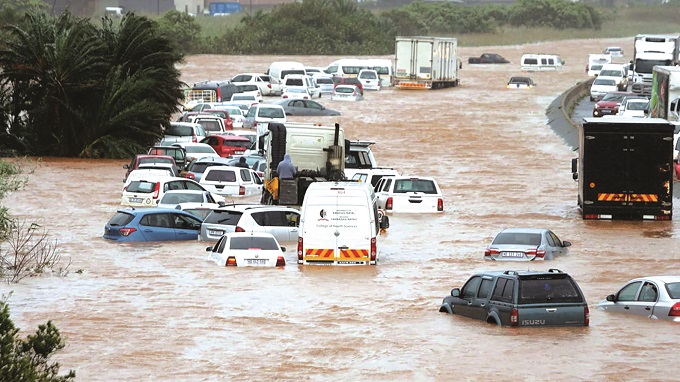
Dr Michael Musanzikwa
THE fact that the world is facing a serious threat from the changing climate is indeed a reality that needs concerted efforts from all stakeholders, including procurement.
Various parts of the world, including America, Spain, India, South Sudan and South Africa, have been the latest victims of climate change, resulting in floods.
Recently, world leaders and various stakeholders converged on Baku, Azerbaijan, for the annual United Nations Climate Change Conference, also known as the Conference of the Parties (COP29), to discuss issues of concern to the globe, societies and biodiversity with respect to changing climate.
The meeting sought means and ways to mitigate the continuous impact of climate change and how the affected people can cope during its ravaging times.
COP29 identified three categories of climate change aims:
To slow down the rate at which the climate is changing, and this involves emission reduction of gases (greenhouse gases) such as carbon dioxide, methane and nitrous oxides.
For climate change adaptation in countries or communities which are heavily impacted by climate change.
To mobilise the scarce financial resource which is needed to facilitate any action and programmes that would result in climate change adaption or mitigation.
Consequently, every corporate organisation which is part of the value chain in the employment of natural resources is a contributor to the emission of gases such as carbon dioxide, methane and nitrous oxides.
This means organisations have to be proactive in considering climate change issues as strategic and how they can mitigate the effects.
From the initiation of a business plan, say in the private sector, the aim will be to make profits, more market share and survival.
Whilst, if it is in the public sector, the aim will be to offer excellent service to the people based on a sound level of peace and tranquillity.
These strategies are achieved by the injection of share capital and millions of working capital in order to transform the factors of production into finished goods and services.
However, this transformation is enabled by the procurement function, which is the invisible instrument used to commit 65 percent-70 percent of the financial capital or budget of the corporate business.
This means, for the defined strategic objectives of the organisation to be achieved, procurement also becomes very strategic as it has the power to make things happen by identifying where the financial resource should be committed in exchange of raw materials in a friendly environment.
In this case, the world is at serious risk because of climate change challenges, which are caused by corporate organisations as they emit lots of greenhouse gases.
It is critical that policies which drive the achievement of strategic objectives must include the procurement policy, which spells out how organisations should commit their financial resources on the global supply market.
This is because procurement has a multiplier effect in the value chain from the extractive sector, manufacturing, retail, up to the final consumer.
Subsequently, this has positive or negative effects along the chain, as organisations exploit natural resources for their production needs.
Therefore, corporates must have sound procurement policies which clearly outline how they commit their funds while observing the rules of corporate social responsibilities, in line with Government policies, as well as observing the International Climate Change Regulations.
Since natural resources are unevenly distributed throughout the world and without any country having a supply monopoly of all the resources, organisations have to facilitate their production means through their procurement function in sourcing for critical materials.
Imperatively, this is where the power of procurement lies in influencing positively the climate change crisis, and this is only based on the following factors:
Corporate boards must recognise procurement as strategic in influencing the direction of the organisational success and of other communities.
Outline a procurement policy which is aligned with global sustainability efforts on climate change.
Corporates must have sound procurement policies as to how they should commit organisational funds without prejudice to communities.
The procurement function must carry out supply market intelligence from the global space for suppliers who are environmentally compliant from the manufacturing of capital equipment used in the value chain to produce other goods.
Embrace technical expertise on how environmentally friendly the capital equipment to be used by the organisation is on polluting the environment.
Identify the critical and strategic sources of supply for the long-term and invest in their sustainability.
Consider the identified suppliers of capital equipment and materials as partners in business or part of the production process in the supply chain.
Collaborate with the supplier in developing acceptable standards of specifications which are environmentally friendly.
Outline clearly the procurement method to be adopted, be it a supply partnership or an international competitive bid process so as to be cost-effective and preserve the scarce financial resource.
Include the terms and conditions so as to guide both parties on the expectations of the contract or agreement.
Embrace an acceptable work plan which acts as a reminder in managing the objectives of the agreed contract on an environmental basis.
Indeed, corporate procurement can influence positively the climate crisis only if corporates around the globe can embrace the procurement policy in identifying credible suppliers that can be engaged to be value chain players.
Pursuant to this, the corporate world must continuously adopt international best practices in the exploitation of natural resources and be sensitive, as well as be compliant to the environmental regulations stipulated by the international bodies such as the United Nations.
Dr Michael Musanzikwa is the chief director (procurement and disposal of public assets) in the Office of the President and Cabinet.



 Online Reporter