Andrew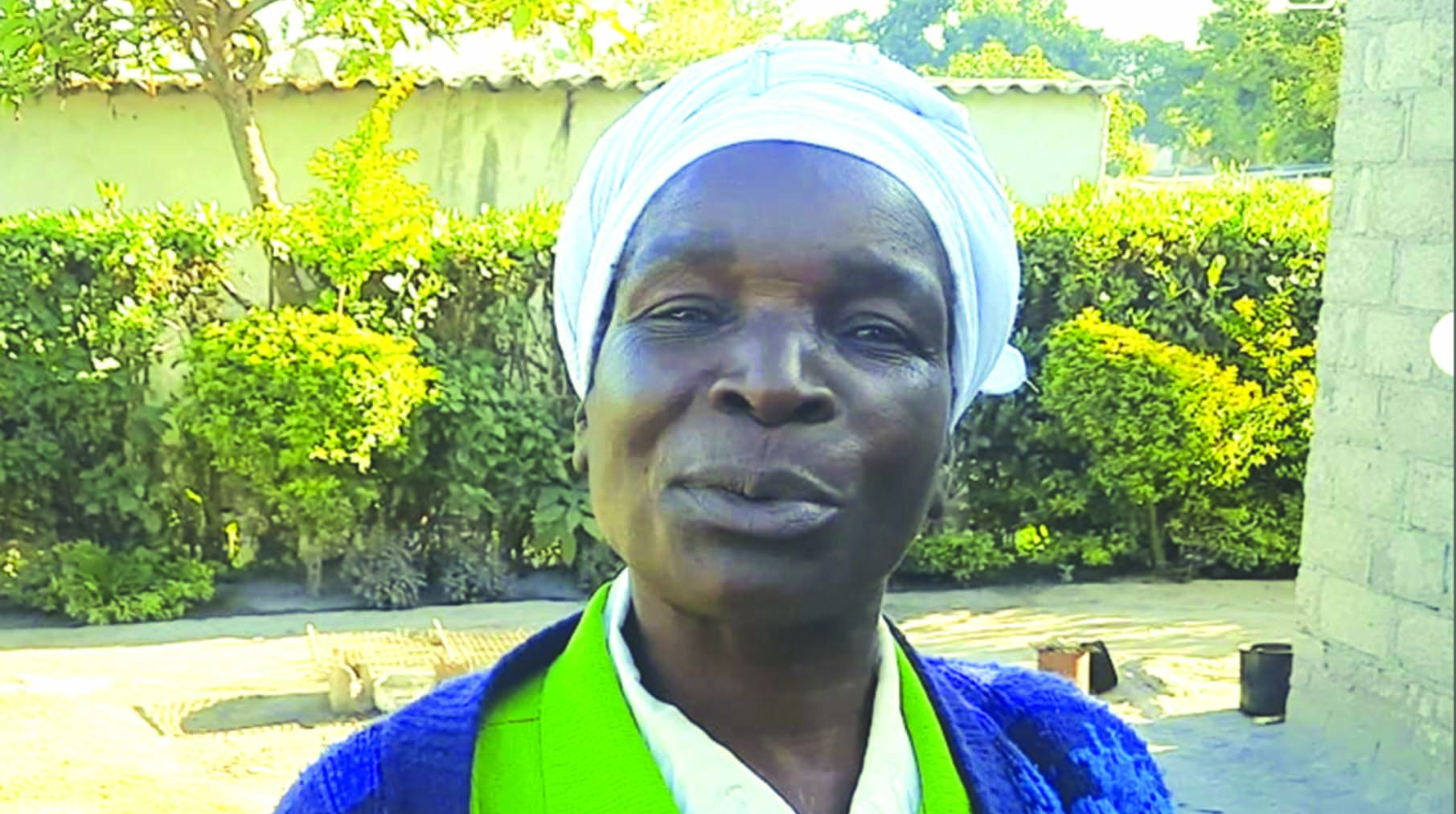
Thirty-two-year-old Mrs Primrose Ngirazi of Epworth — a sprawling suburb in south-eastern Harare — has never had a bank account or a cellphone number registered in her name.
She often asks friends to receive mobile money on her behalf. The only thing she has as “positive identification” is her child health card issued at her place of birth in Mabvuku.
Unfortunately, Mrs Ngirazi’s mother died when she was still a toddler. She was then raised by her late mother’s friend and neighbour, Mrs Nancy Makate. Growing up, she was not close to her father and relatives. As a result of her wretched circumstances, she never acquired a birth certificate.
“Getting a national ID has always been tough,” she told The Sunday Mail recently.
“My father’s relatives are said to be in Murehwa, but I have no way of contacting them.
“No one knows exactly where they are.”
Cycle of misfortune
Because she did not have a birth certificate, she dropped out of school in Grade Seven after failing to register for public examinations.
As a grown woman, she lost countless job opportunities whenever potential employers asked for some form of identification.
The mother of two now fears her children, who also have no registration documents, will inherit her misfortune.
“At one point, I went to the civil registry office for assistance, but an official asked for a US$350 bribe to facilitate the process since I did not have adequate papers,” she alleged.
“I have never had such kind of money in my life. I am only a housewife and depend on my husband’s salary.”
If her predicament persists, her 15-year-old son is unlikely to sit for public examinations next year.
“My eldest son will soon need to register for his examinations, but he cannot,” she added.
When the Government, through the Civil Registry Department, launched a national mobile registration blitz, Mrs Ngirazi thought her problems were over. Sadly, officials who were conducting the blitz repeatedly threw her from pillar to post. She was eventually referred to the Registrar-General’s head office in central Harare, where officials allegedly asked for a bribe to oil the gears of bureaucracy.
Alien
Mrs Marita Garizani was born to a Mozambican father 60 years ago. While she acquired her ID in 1980 without any difficulty, she also finds herself in a predicament not too dissimilar to Mrs Ngirazi’s.Her ID is inscribed with a bold letter “A”, signalling that she is registered as an “alien”.She had a torrid time while trying to register as a voter during the electoral registration exercise. The Zimbabwe Electoral Commission (ZEC) repeatedly refused to register her on account of her alien status.
“Those who were carrying out mobile registration referred me to Epworth Local Board registry office where I was told to go to the headquarters,” she said.
“The Registrar’s Office referred me to the Mozambican embassy. I was given a letter at the embassy indicating that I was a Zimbabwean citizen and not Mozambican. But when I returned with the letter, some officials asked for a US$200 bribe, which I cannot afford. Whenever our neighbours are registering for food aid, especially during this drought season, we are left out because we do not have acceptable identification cards.”
Mrs Ngirazi and Mrs Garizani are among thousands of undocumented Zimbabweans who continue to face challenges acquiring registration documents.
Citizenship
Registrar-General Mr Henry Machiri told The Sunday Mail that Chapter 3 of the Constitution sets out the basis of Zimbabwean citizenship.
“All persons born in Zimbabwe to parents of foreign origin, for example, Mozambique, Malawi or Zambia are entitled to get Zimbabwe birth certificates in line with the Constitution of Zimbabwe Section 43(2) (a) and (b).”
He said every person born in Zimbabwe before gazetting of the Constitution, whose parent was an immigrant from a SADC country or is ordinarily resident in the country is considered a citizen. The law also allows foster parents to register a child.
“The Births and Deaths Registration Act already allows for registration by other persons other than the biological parents of a child,” he said.
“If the foster parent is a near relative of the parent/parents, the near relative can register the child. In cases where there are no relatives, the department collaborates with the Department of Social Development in registering such children.”
Plugging loopholes
Zimbabwe Anti-Corruption Commission (ZACC executive secretary Sukai Tongogara said the anti-graft watchdog has set up a permanent reporting office at Registrar-General’s headquarters in Harare. ZACC, he added, has conducted compliance spot-checks at the RG’s office to plug loopholes for corruption.
“ZACC has been doing a lot to curb corruption at the RG’s office, which include educational awareness at the RG’s offices at Makombe, Market Square, Highfield and Chitungwiza. ZACC has reporting offices at Makombe next to the RG’s office to receive reports from members of the public who would have been asked to pay bribes to either middleman or bogus RG officers. We have made several arrests. We investigate all credible reports about corruption brought to us.”
Blitz
The RG’s office has processed more than 500 000 national identity cards (IDs) and an equal number of birth certificates since the mobile registration blitz to issue critical documents began on April 1.
“As at December 31, 2023, the department has issued 508 886 IDs, 549 960 birth certificates and 19 037 death certificates,” said Mr Machiri.
President Mnangagwa recently announced that the Government has streamlined and relaxed requirements for issuance of civic documents to make it easier for those who have been facing challenges.
According to the Zimbabwe Human Rights Commission (ZHRC) report on the National Inquiry on Access to Documentation in Zimbabwe released in 2020, 38 percent of the country’s population face challenges with civic registration.
The inquiry established that most people face challenges accessing birth certificates, which directly affect access to other documents such as IDs and passports. It indicated that 27 percent failed to meet legal requirements for registration.
“It was further submitted that more than 10 percent of birth registration applicants were turned away due to lack of awareness of registration requirements. This was established as the primary reason which affects access to documentation, especially for those living in marginalised communities.”
The report said there was a yawning information gap on registration requirements, including issues such as citizenship, the requirement for both parents to be present when registering children born out of wedlock and home-birth registrations.
Some women were not aware they could register their children in their maiden names where the father was unable or unwilling to register a child born out of wedlock.
“It was further established that sometimes the information given by the DRG’s (Department of the Registrar-General) offices was insufficient or limited and the absence of clear or sufficient detail led to people having to make numerous trips to and from the DRG’s offices, resulting in some being demotivated and abandoning their efforts to acquire national documents. It was also noted that awareness-raising, information dissemination and outreach programmes to publicise the legal requirements for acquisition of national documents were not being prioritised by the DRG’s office.”
The report singled out procrastination by parents to register births as a key factor in failure to access documentation.
Feedback: X@TheseusShambare



 Online Reporter