admin
admin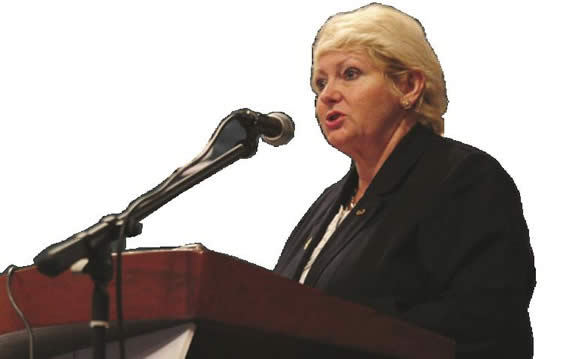

Sikhumbuzo Moyo Senior Sports Reporter
IN a bid to put an end to the dismal performances by Southern African clubs in continental competitions, regional football leaders will next year introduce an inter-clubs competition for league winners. The competition for league champions from the 14 Council of Southern African Football Associations (Cosafa) members will be run along the lines of the Champions League.
Sue Destombes, Cosafa chief coordinator told Chronicle Sport that there have been concerns from football leaders in the region over the consistent failure by clubs from member states to do well when paired against those from other regions.
“The objective behind this competition is to give an opportunity for clubs in the Cosafa region — top clubs in their respective countries — to participate internationally thereby grooming them to participate more meaningfully on the continental stage,” said Destombes.
She said the competition has initially been set to be held in South Africa for the first editions.
Southern African sides have always struggled against opponents from west and north Africa although South African giants Orlando Pirates did well to the final of the last edition of the Champions League. They lost. Their league rivals Kaizer Chiefs could not even make it to the group stage this season. AmaBhakaniya though remain the only Southern African side to have lifted the Champions League Trophy.
Local giants Highlanders are still dreaming of a group stage appearance on both versions of the continental competitions, the Champions League and the Confederation Cup while Dynamos appeared once in the Champions League final in 1998. Their performance though in the prestigious competition has been declining since then.
With the new competition set to start next year, Zimbabwe will be represented by winners of the 2014 Castle Lager Premier League title that roared into life last weekend.
It will also set up a possible long-awaited competitive clash between Zimbabwean clubs and possibly Kaizer Chiefs or Mamelodi Sundowns, hot league title favourites in the Absa Premiership.
Highlanders boss Peter Dube welcomed the plan describing it as well intentioned.
“Well, anything that helps teams to compete from different environments, helps improve football, which ever way. The top teams that will be participating will benefit from the exposure, some teams would not have gotten the opportunity to compete at that level only restricting themselves to friendlies. Now that regional champions will be put in the same pot to compete, it will benefit our clubs and the game,” said Dube.
Former Zifa president Vincent Pamire, a respected personality in Cosafa, welcomed the Cosafa Champions League idea.
“It is good. We will be able to develop football in the region. I am happy Cosafa realised the haphazard manner in which the national teams competition had degenerated into. In the beginning it was very developmental with some of the stars from early competitions proceeding to play abroad. It is good to see them trying to resuscitate competition within the region and we are excited that our teams and players will get good exposure from within the region,” said Pamire.
A member of the Dynamos Bulawayo Chapter, Sunungurayi Bhiza, welcomed the competition.
“Before our teams can conquer Africa, they need to compete more frequently among themselves, get the exposure, learn what to expect up north and west where it’s often very hostile. It will market our local league brands and expose players to international competition. The organisers or promoters of the idea have to see how best the competition can be accommodated without affecting other standing programmes,” said Bhiza.
Local referees will also get an opportunity to officiate and improve on their fitness and confidence levels.
This will be good for match officials like Ruzive Ruzive, Salani Ncube, Abraham Manda and Norman Matemera to get a measure of preparation before the more demanding continental tournaments.
Zenzo Moyo, a scoring sensation during his days with Highlanders and Paphos in Cyprus, was sceptical about the idea.
“There is an issue of congestion. There are several international tournaments, domestic fixture challenges and of course the soccer calendars in some countries are different. That provides a challenge as the levels of fitness will not be the same,” said Moyo.
Some countries have September to May seasons just like the rest of Europe while others start in March and end in December.


 Online Reporter