


 Sundaymail Editor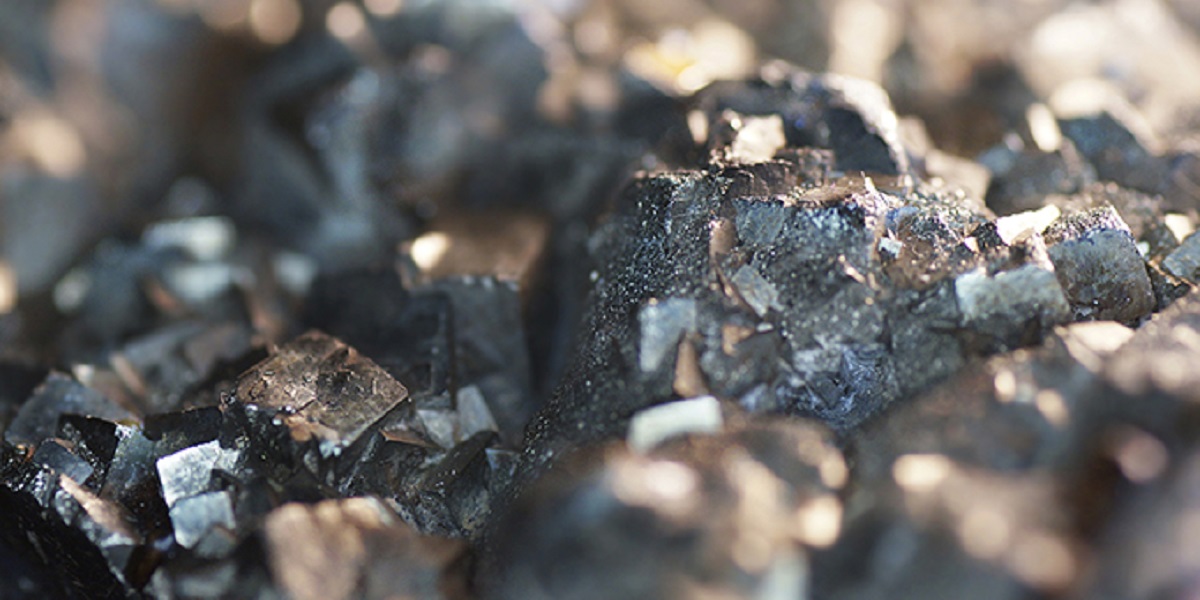
…Close to US$700 million in acquisitions in past 13 months
…US$630 million lined up for expansion projects
…Epic battle to localise battery production
Sunday Mail Reporter
AFTER the seismic political transition in 2017, Zimbabwe has increasingly been pivoting on mining and agriculture to extricate the economy from more than 17 years of decline and chart a new path to prosperity.
It was, and has been, a daunting task from the outset, especially in an economy throttled by two-decade-old sanctions imposed by the United States, the United Kingdom and their Western allies, which have progressively led to disinvestment, deindustrialisation, rising unemployment and low economic output.
Masterstroke
One of the first bold interventions by President Mnangagwa’s administration was to promulgate Finance Act No. 1 of 2018, which amended the contentious Indigenisation and Economic Empowerment Act – enacted 10 years earlier – in order to scrap the 51/49 indigenisation shareholding cap.
Essentially, the old law limited shareholding by foreign investors to 49 percent. Although noble, it was considered a major handicap in courting investments, particularly in the capital-intensive mining sector.
Investors were naturally excited by the new development, as it was a cue they had been waiting for.
Not long after the new policy dispensation, on March 22, 2018, Karo Resources – through its major shareholder Mr Loucas Pouroulis – inked a US$4,2 billion deal to develop a platinum mine in Mhondoro-Ngezi, Mashonaland West province.
Mr Pouroulis’ Johannesburg Stock Exchange-listed Tharisa Resources now controls the project.
Karo Mining has since raised over US$50 million from the Victoria Falls Stock Exchange (VFEX) for mining development after its bond was oversubscribed.
By August 2018, Russian investors had begun site establishment at Great Dyke Investments (GDI) in Mashonaland West, a US$3 billion project that was envisaged to employ more than 8 000 people.
It culminated in the establishment of a box cut – a hole that serves as the opening of the mine – at the end of January 2020.
However, the project has since been affected by the sanctions imposed on Russia after Moscow launched its special military operation in Ukraine on February 24, 2022.
On November 28, 2018, President Mnangagwa officiated at the ground-breaking ceremony of Arcadia Lithium Mine in Goromonzi, Mashonaland East.
The project was owned by Australia Stock Exchange-listed Prospect Resources.
There were plenty of activities in other sectors as well.
In the gold sector, for example, Dallaglio Investments – a subsidiary of Vast Resources, which is listed on the London Stock Exchange’s Alternative Investment Market – took over Eureka Gold Mine in Guruve, Mashonaland Central province, which had been mothballed for over 20 years.
The new investors sank in more than US$51 million and the mine has since reopened.
Overall, Government’s deliberate policy to unlock massive investments in the mining sector as a tonic to leapfrog and catch up with other economies, as encapsulated in its broad vision to achieve an upper middle-income economy by 2030, has proved to be a masterstroke.
In 2021, Zimbabwe realised its highest-ever revenues, as receipts topped US$9,7 billion, with mining weighing in with US$5,3 million – more than half the total revenues – and up from US$2,7 billion in 2018.
The country’s annual revenues galloped further to more than US$11,6 billion, buoyed by the US$5,6 billion generated from mining activities.
Gold exports outperformed other mining sub-sectors by contributing over US$2,4 billion.
White gold craze
But it is lithium, or “white gold”, that has created a lot of interest among investors and Government, especially as the world shifts to clean energy to avert a possible weather-related disaster caused by climate change.
Scientists believe the world can expect 16 times more marine heat waves each year if global climate warms up by more than 1.5 degrees Celsius, and 23 times more heat waves at 2 degrees Celsius of warming, bringing unconscionably worse climate consequences.
Much of the focus, however, has been on transport, which is understood to be one of the most pollutant sectors, contributing about a quarter of the world’s greenhouse gas emissions, according to the European Environment Agency.
This is the reason for increased advocacy to replace fuel combustion engines with electric vehicles (EVs).
While the European Parliament is mulling the possibility of requiring, by law, that 25 percent of vehicles in use be electric after 2025, countries such as Norway and the Netherlands plan to prohibit the sale of gasoline and diesel vehicles after 2025.
Germany is considering introducing the same measure starting in 2030.
In China, EVs are expected to make up 40 percent of all car sales by 2030. Already, the government has begun providing subsidies for EV purchases.
All this has led to an explosion in the demand for lithium, as it is a critical raw material in the manufacture of batteries needed for highly efficient EVs.
Fortuitously, Zimbabwe – which is in need of additional investments to drive its ambitious economic plan, and is blessed with bountiful lithium deposits – has since experienced multi-million-dollar investments in a short period.
This could increase the country’s foreign currency earnings further and drive the high growth rates needed to attain Vision 2030.
Developments in the lithium sub-sector have been very encouraging.
Zimbabwe’s stroke of fortune
Over five months, from November 2021 to April 2022, investors, predominantly from China, have swooped on four key local lithium assets – Sabi Star Mine, Arcadia Lithium Mine, Bikita Minerals and Zulu Lithium Mine.
Overall, they spent close to US$700 million in acquisitions.
Cumulatively, they are also spending US$630 million in their respective expansion projects.
In November 2021, Chengxin Lithium Group announced the acquisition of a 51 percent stake in MaxMind Hong Kong by its subsidiary, Shengyi International, for US$76,5 million.
This ultimately gave it control of Sabi Star Mine in Buhera, Manicaland.
Close to US$130 million is being invested to produce 200 000 tonnes of lithium concentrate per annum, beginning this year.
The company will employ 900 people.
During a ground-breaking ceremony presided over by President Mnangagwa on December 14, 2022, MaxMind Zimbabwe project manager Mr Elfas Mugova gave the clearest indication yet of the potential impact the venture will have on the economy.
“A fully developed Sabi Star would employ between 500 and 900 staff, 80 percent of whom will be from the local community of Buhera and its surroundings. The expected revenue from this operation will be at least US$1 billion annually based on the current market price of lithium concentrate,” he said.
On December 22, 2021, China’s Huayou Cobalt, the world’s biggest producer of the mineral, announced the acquisition of Arcadia for US$422 million.
Presently, the company is spending US$300 million to expeditiously bring the project to production, tentatively by March this year.
More than 1 700 people have been employed in the project.
Overall, the mine seeks to produce 400 000 tonnes of lithium concentrate, including both petalite (used in the ceramic industry) and spodumene (for battery manufacture).
Later, Sinomine Resources Group (or China Mineral Resources) bought Bikita Minerals for US$180 million.
It plans to invest more than US$200 million to build a plant and expand existing operations.
While the mine, which has been operating since 1950 and producing petalite, the new investment is expected to increase the output of spodumene.
In March 2022, Shenzhen Stock Exchange-listed Suzhou TA&A Ultra Clean Technology Co Ltd – one of the biggest Chinese firms, with a market capitalisation of US$6,7 billion – bought shares worth about US$15,7 million from Premier African Minerals in Matabeleland North.
Most importantly, the firm has a 75 percent holding in lithium hydroxide producer Yibin Tianyi Lithium Industry Co Ltd, as well as China’s largest EV battery manufacturer Contemporary Amperex Technology.
Locking in lithium supplies from Zimbabwe will, therefore, help secure raw materials for its manufacturing plants in China.
In addition, exploration for lithium is underway in other parts of the country such as Shamva and Mberengwa.
Major player in green energy revolution
Before the new players in lithium mining, Zimbabwe was ranked the sixth largest producer in the world after Australia, Chile, China, Argentina and Brazil, in that order.
However, the bulk of the mineral – about 90 percent – came from only three countries in 2021: Australia, Chile and China.
But envisaged output from new mines will naturally catapult Zimbabwe into the group of key global players in the green energy revolution.
This will come with immense benefits for Zimbabwe.
“Given the large-scale investment by Bikita Minerals, without even talking of investments by other players, we are bound to surpass the projected US$500 million lithium contribution to the US$12 billion milestone,” Mines and Mining Development Deputy Minister Polite Kambamura told The Sunday Mail recently.
Zimbabwe is not only content with being a lithium producer but also wants to be an active player in the manufacture of semi-finished and finished lithium products such as glass, ceramics and, most importantly, lithium-ion batteries for both EVs and solar projects.
It has even dangled a US$20 million package to canvass for investors willing to set up plants to value-add the mineral.
Encouragingly, Sabi Star Mine will reportedly be supplying raw materials for the mine-to-energy industrial park in Mapinga, Mashonaland West province.
Also, on September 16 last year, Government and two Chinese investors – Eagle Canyon International Group and Pacific Goal Investment – inked a US$13 billion deal to establish an industrial park that will beneficiate minerals in Mapinga.
The new mine-to-energy project will include the construction of two 300MW power stations, a coking plant, a lithium salt plant, a graphite processing plant, a nickel chromium alloy smelter and a nickel sulphate plant.
Separately, Dinson Iron and Steel Company (DISCO), which is establishing a US$1 billion integrated steel project in Manhize, is exploring the feasibility of a local lithium battery plant.
Localising production is expected to have a multiplier effect on the economy; it will create jobs, increase output of high-value products and feed into other manufacturing value chains.
Government has already come up with a legislative policy framework to prevent the export of raw “base mineral” ore to boost domestic processing of its resources.
The base minerals exclude precious metals, stones and natural gas.
Unprocessed raw lithium and unpolished granite exports have also been banned.
Conundrum
But experts opine that trying to convince new investors such as Huayou Cobalt, Sinomine and TA&A Ultra Clean Technology Co Ltd, which already have burgeoning battery manufacturing plants in China, to set up local plants might be difficult.
For example, TA&A Ultra Clean Technology, whose billionaire founder Zhenhua Pei was recently in Zimbabwe, controls Contemporary Amperex Technology Limited (CATL), which is not only the largest battery manufacture in the world, but accounted for 37 percent of electric battery sales in the world in 2022, according to South Korea-based SNE Research.
CATL supplies EV makers such as Volkswagen, Geely Automobile Holdings Ltd, Nissan Motor Co and Elon Musk’s Tesla Inc.
So, it might be difficult for Chinese firms, which have 60 percent of the world’s lithium refining capacity for batteries, to outsource production to other countries.
The companies also have a ready market from growing Chinese EV manufacturers such as BYD (Build Your Dreams); Nio; Geely; Xpeng; Li Auto; BAIC Motor; FAW; JAC Motors; and Great Wall Motors, which produces HAVAL, a brand that is becoming popular in Zimbabwe.
So, Zimbabwe has to do all it can to get maximum benefits from the “white gold”, which has become the holy grail globally.


 Bongani Ndlovu
 Online Reporter