


 Online Reporter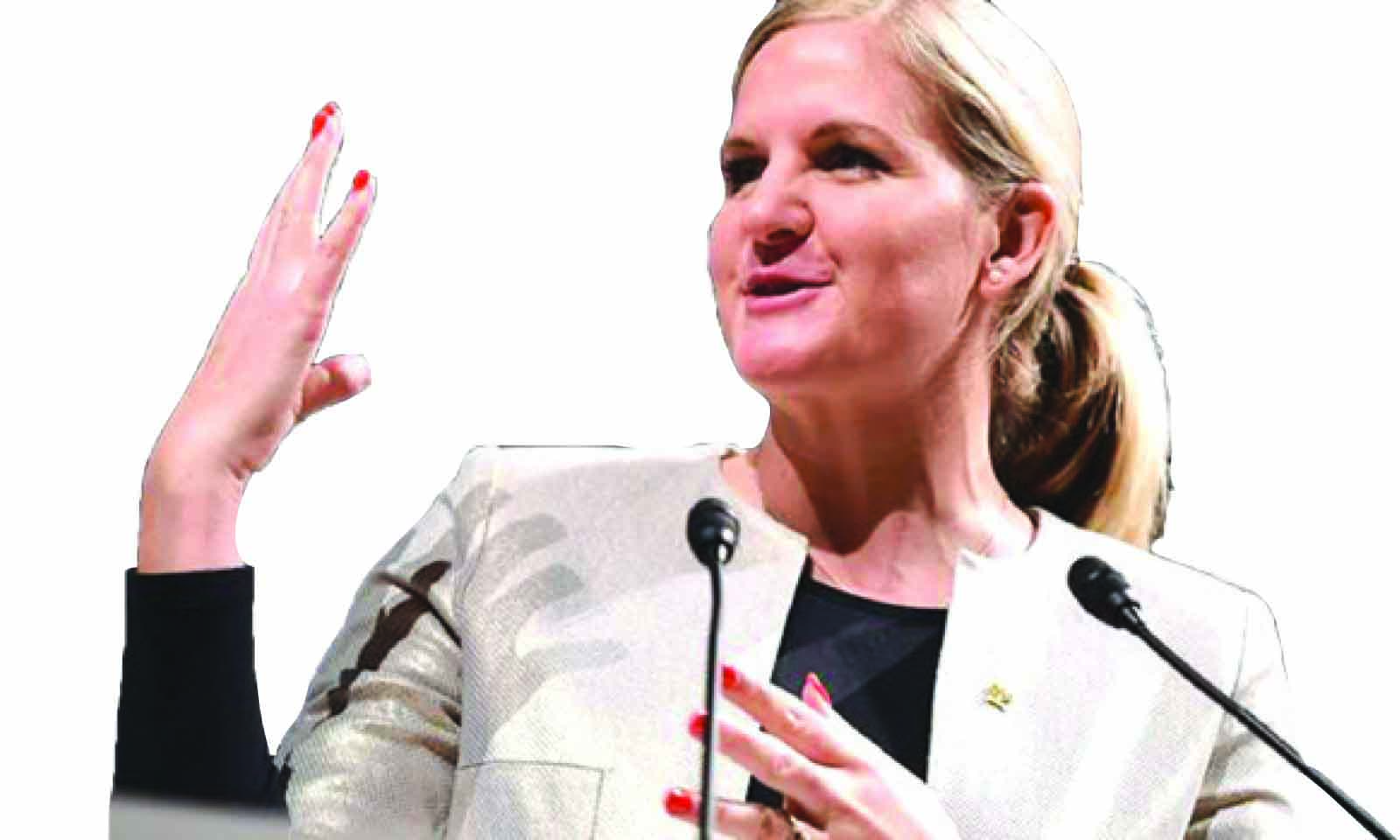
AFRICA’S most decorated Olympian of all time, Kirsty Coventry, is motivated to provide more funding to federations, national associations and athletes who need it most in a bid to fuel their medal ambitions.
Coventry, who was a recipient of an Olympic Solidarity scholarship, says when it comes to finances she wants to focus more on funding than prize money.
Coventry is in the race to lead the International Olympic Committee (IOC).
“The Olympic Solidarity Scholarship was hugely instrumental in taking a bit of pressure off my family, giving me a bit of income where I could travel to meets that I needed to go and compete in during the summer time when we weren’t in class or school,” she said.
“It allowed me to pay for my coach to travel with me when we went to world championships and that was a huge advantage. Some of the programmes I would like to focus on when I step into the presidential role is focusing more on that.
“I want to see how we can create programmes and strengthen programmes that are going to help Olympians become Olympians and become Olympic champions.”
Zimbabwe’s “Golden Girl” and Minister of Sport, Recreation, Arts and Culture says she will never ever forget the day she returned home from the Athens Olympics in 2004 and was greeted by raucous celebrations in Harare.
Coventry, who is vying to become the first female and first African president of the IOC, said the historic event illuminated for her the immense potential of sport to inspire future generations.
“Looking back now, that was the promised moment because I got to not just see how sports can bring people together, but I got to live it,” she said.
“I know that sport has this power and in the world that we live in today which is very divided, very divisive, I really think we have an important role to play in trying to ensure that we continue to inspire the new generations.”
The International Sports Press Association (AIPS) will provide access to a series of meetings with the seven hopefuls vying for the top job at the IOC, it announced in a statement to members last week.
The process to replace Thomas Bach as head of the IOC has been shrouded in secrecy, with the global press having limited access to key discussions, including those surrounding the Paris 2024 Olympic Games.
The IOC’s March session, where the next president will be elected, has already highlighted this trend by restricting the accreditation of scores of journalists seeking to cover the landmark event in Greece — an election that, after 12 years, will herald a new era for the Olympic movement.
The candidates for the position, in the order determined by the official IOC draw, are H.R.H. Prince Feisal Al Hussein, David Lappartient, Johan Eliasch, Juan Antonio Samaranch, Kirsty Coventry, Lord Sebastian Coe and Morinari Watanabe.
The AIPS-led initiative has made what once seemed impossible a reality: a series of virtual meetings in which each of the seven candidates will present their vision for the future of the Olympic movement and answer questions from the international sports press.
The sessions, which will take place via Zoom, will be moderated by Gianni Merlo, president of AIPS and a leading figure in Olympic coverage.
Merlo has covered 25 editions of the Olympic Games (12 summer and 13 winter) and more than 35 World and European Athletics Championships.
Although the event is reserved for members of the prestigious association of sports journalists and participants in the AIPS Young Reporters Programme, its impact expects to extend far beyond the organisation itself, ensuring that journalists from virtually every corner of the world can be represented, broadening coverage and fostering a more diverse and inclusive debate.
The initiative hopes to represent a major step forward in the democratisation of information, ensuring that access to quality content enriches discussions and promotes diverse reporting, avoiding any perception of exclusivity, favouritism or bias that might limit the plurality of perspectives.
It also reinforces the right of readers of different media to receive accurate and in-depth information, enabling them to draw their own conclusions — thus promoting freedom of expression and equal access to knowledge.
Another important aspect is linguistic accessibility.
To ensure a truly global audience, the sessions will be simultaneously translated into English, French, Spanish and Arabic. — Agencies/Zimpapers Sports Hub



