admin
admin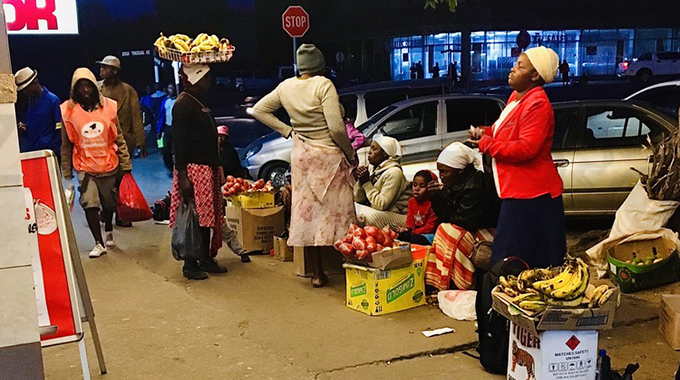
Ruth Butaumocho African Agenda
Larry Elliot is a renowned United Kingdom economics editor working for the Guardian newspaper.
Like many journalists across the globe, he has been keeping his ears to the ground on pulsating stories on the devastating effects of Covid-19.
Daily, the world is riveted to an avalanche of narratives, some alarming and disturbing, painting a gloomy and horrendous picture, reminiscent of the biblical Armageddon era.
Other narratives paint a positive image of hope and reconstruction after the pandemic.
In all these attempts to keep the world informed on the virulence of coronavirus, some journalists have written informative pieces on the social and economic implications of Covid- 19.
In a recent article on the long term global impact of coronavirus, Elliot pointed out that life will never be the same again, on the economic front, as a result of the devastating effects of the deadly virus.
“It would be an act of supreme folly to write off 2020 as an aberration and assume that everything can return to normal,” Elliot opined.
His assertion cannot be farther from the truth. The fate of 2020 and a few years from now has already been sealed, with possibilities of even huge companies closing down or scaling down operations as a result of the disruption caused by the pandemic.
On a global scale, it already appears that the world is in recession.
The Covid-19 threat has led to shutdowns across the globe, which have seen some companies going for weeks or months without any production.
Workers have been put on leave and for many, the threat of losing their jobs becomes a possibility with every passing day.
If nothing dramatic happens for many countries battling the effects of Covid-19, who have taken the route of lockdowns to prevent the further spread of the virus, there are fears that the impact of the pandemic could be worse than the global recession experienced in 2008.
Like any other nation, Zimbabwe has not been immune to the global trends, where countries are battling to remain operational against a backdrop of serious challenges posed by this pandemic.
Looking at the events of the past four weeks during lockdown in the country, where most companies closed as a preventative measure against the spread of Covid-19, Zimbabwe’s economic changes look inevitable.
Some companies, small business and projects will find it difficult to operate unless there is solid economic intervention or package to stimulate growth.
Government’s decision to unveil a stimulus package to support companies that have been badly affected by the Covid-19 lockdown, as part of measures to avert mass job losses and save livelihoods, should be lauded
Finance and Economic Development Minister Professor Mthuli Ncube said the soon-to-be announced stimulus package will provide the much-needed economic relief to companies and industries reeling under the effects of the global pandemic.
As has become norm, women and children will be hardest hit by the effects of the economic challenges that Covid 19 will bring to nations and eventually cascades to the households.
A recently released policy brief by the United Nations on the impact of Covid-19 on women, painted a sad and gloomy picture on how the reduction of economic activities across will impact negatively on women as household frontrunners.
“Emerging evidence on the impact of COVID-19 suggests that women’s economic and productive lives will be affected disproportionately and differently from men. Across the globe, women earn less, save less, hold less secure jobs and are more likely to be employed in the informal sector. They have less access to social protections and are the majority of single-parent households. Their capacity to absorb economic shocks is therefore less than that of men,” noted the report.
When the Government ordered the closure of Mupedzanhamo market in Mbare, Harare and several other markets for informal traders as part of a litany of measures to stop the further spread of coronavirus, hundreds of women found themselves out of employment and with no other source of income. The majority could be seen wandering aimlessly and breaching the lockdown provisions in respective residential areas, as they engaged in illegal vending of different wares.
It is undisputable that across states and cities, women constitute the huge percentage of people who are unemployed with the majority living below the poverty datum line, be it in the cities or in rural areas.
With the majority possessing secondary education and no professional skills, and their inability to access funding to start income generating projects of note, they are badly disadvantaged and often found at the end of the ladder in as far as means of survival to put food on the table is concerned.
As a result, the majority are informally employed, with vending being the major source of income.
A cursory walk in any part of the city from Cape to Cairo, one is confronted by hordes of women, selling all sorts of wares from food to toothpicks of any size.
On the other side of town, the majority of women would also be busy doing all sorts of menial jobs, while others have become daring enough to join syndicates of contraband dealings of cigarettes and drugs in neighbouring countries.
The situation is no better in the rural areas, where women work downstream, fishing, brick moulding, gold panning, weeding, fetching riverbed water (mvura yemufuku) and still have the dexterity and temerity to manage a household with little or no resources.
With threats of job cuts looming on most formally employed people across the globe, the informal sector, once a preserve for women will soon be crowded and taken up — further pushing women into the abyss of poverty of unimaginable levels.
Everyone should rally behind the call by UN Secretary General Antonio Guterres’ call for solidarity urgent action in response to the socio-economic impact of Covid-19 with special emphasis on women and children.
An initiative to raise US$1 billion to assist women and children in developing countries in light of the Covid-19 pandemic has since been launched, with hopes that it alleviates the suffering of these vulnerable groups.



 Online Reporter