Online Reporter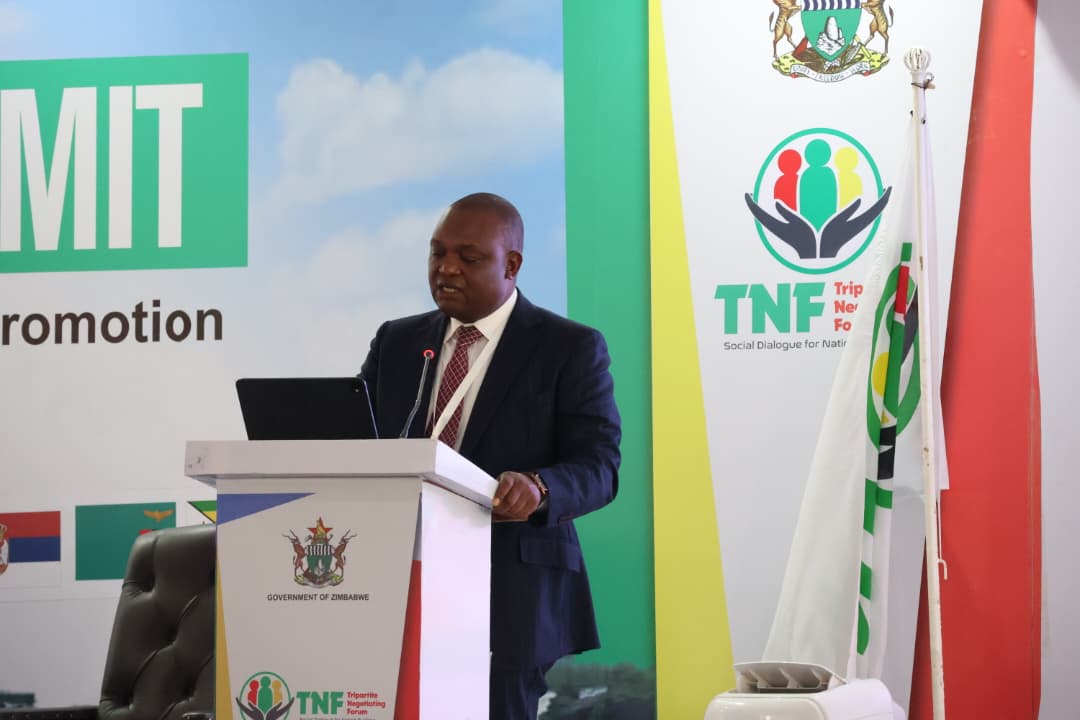
Theseus Mauruki Shambare in VICTORIA FALLS
ZIMBABWE’S recent economic stabilisation has been partly underpinned by improved relations between Government, business and labour, the Employers’ Confederation of Zimbabwe (EMCOZ) has said.
EMCOZ president Mr Demos Mbauya said strengthened social dialogue had created a platform for consultation, consensus-building and management of key socio-economic challenges.
Addressing a regional Tripartite Dialogue Workshop in Victoria Falls, Mr Mbauya said social dialogue should be viewed as an important component of economic management rather than merely a mechanism for resolving labour disputes.
“The strengthening of engagement between business, labour and government has created a platform for consultation, consensus-building, and management of key socioeconomic challenges,” he said.
Mr Mbauya said Zimbabwe’s experience demonstrated that employers and workers could find common ground despite differences in interests.
“It demonstrates that even when interests differ, employers and workers can identify areas of common interest and find common solutions,” he said.
He said this cooperation had contributed to the development of the Tripartite Social Contract, which he said was awaiting Cabinet approval.
Mr Mbauya said the progress made in stabilising the economy should also be viewed against the backdrop of broader policy reforms and developments in key sectors such as agriculture and mining.
He cited recent economic indicators, saying Zimbabwe recorded 6.3 percent growth in 2025, with growth projected at 3.5 percent for 2026, while annual inflation had declined to 2.9 percent by August.
He said social dialogue did not replace sound economic policy, but helped create the trust and shared responsibility necessary for policies to succeed.
“We therefore affirm an important principle: investment in social dialogue is an investment in economic stability,” Mr Mbauya said.
He said the approach had implications beyond Zimbabwe, particularly for SADC and other African economies seeking to balance investment, industrialisation, decent work and social justice.
Mr Mbauya said sustainable decent work also depended on viable enterprises.
“There can be no sustainable decent work without sustainable enterprises. There can be no sustainable development without social partnership,” he said.