admin
admin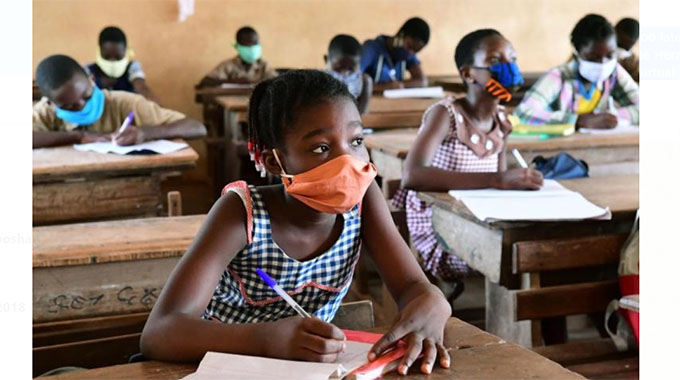
Elliot Ziwira
Senior Writer
One of the challenges that Covid-19 has brought to the doorsteps of schools globally is the collapsing of classrooms as we know them.
As teaching strategies change to move at par, or even outwit the new coronavirus through health protocols to curb its spread, the learning environment should remain conducive to teachers and learners alike.
Classrooms without walls mean that a new teacher or facilitator becomes the one in vogue, yet access to him/her, or what constitutions learning in the new normal, has been problematised. Even where physical contact may be possible, the need to maintain social distancing arises. Therefore, the normal way of learning is disrupted, and in comes the new norm. With the learner unable to read the teacher’s lips, or vice versa, due to mandatory wearing of facemasks, then the issue becomes even more complicated. Learners in lower grades benefit more from gestures, particularly through eye contact and reading of lips.
In the new normal, where the virtual teacher takes centre stage, both parents and learners have to rise to the occasion, not only for the sake of creating a conducive learning environment, but also to give impetus to the new thrust in knowledge acquisition. With the learner now spending more time at home, parents have become major facilitators of effective learning.
The collapsing of walls creates platforms that do away with institutional memory as the old school system is interrupted. Sharing of information across the board through access to the proficient virtual facilitator, creates novel opportunities where learners can benefit from the best of different disciplines without having to be part of a traditional school.
There will be opportunities for the best facilitators, chosen for their proficiency and adaptability to new forms of learning regardless of their physical location. However, parents and learners should be able to tap into the pool of shifting knowledge sources. They have to be well-informed on where to go, why, when and how. In that case, the issue of access becomes problematic, particularly where learners are far-flung and compliant gadgets are scantily available.
Internet access does not come cheap; that also is true. However, there are different platforms on which the virtual teacher can be accessed. Audio-visual aids remain the trademarks of learning; only that today’s learner is spoilt for choice, since the world has been reduced to one global village. The Internet provides platforms for mainstream and social media interaction. Therefore, facilitators and learners should be able to effectively utilise this gap.
The mainstream media: electronic, print and broadcasting, should not be left out as the future of learning shapes up. The concept of the radio teacher is not new; but the learner has changed in both scope and options. Whereas in the past, the teacher facilitated radio lessons, today he/she has become the radio teacher or facilitator, with parents playing a guiding role.
The print media can also benefit through its well-established presence, not only in print form, but also through online visibility. There are possibilities for engagement, where virtual facilitators known for their track records are engaged to tap into the gap created by the Covid-19 pandemic, where examinations are still being set, regardless of whether physical learning has taken place or not.
The good news, though, is that there is never a time when it will be too late to try out new things; even where learning is concerned. To that end, The Herald will be using this platform to engage learners and teachers through virtual lessons as the future of learning looks more digital than ever.
Just watch this space!


 Online Reporter