Chronicle Editor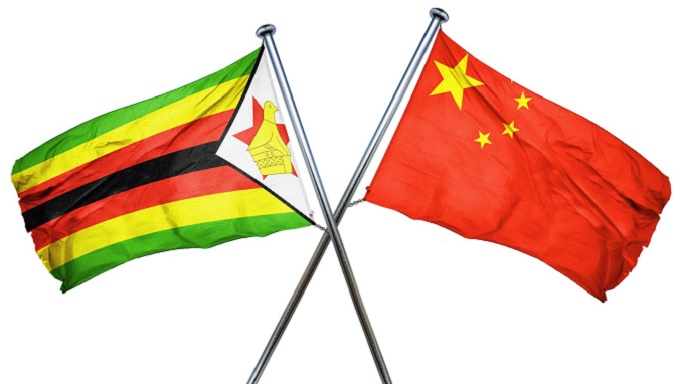
Features Reporter
Contrary to what many people may assume, China has several political parties in its system, many of then dating back several decades.
This makes the system unique and worthy of a deeper look.
Of particular importance is how the Communist Party of China (CPC), as the governing party not only managed to survive competition but also uses competition to its advantage.
The answer is contained in a white paper <http://http://www.xinhuanet.com/english/download/2021-06-25/FullText.doc>released last week, on June 25, titled “China’s Political Party System: Co-operation and Consultation” published by the State Council Information Office of the People’s Republic of China.
China has, today, nine major political parties that include the CPC, the Revolutionary Committee of the Chinese Kuomintang, the China Democratic League, the China National Democratic Construction Association, the China Association for Promoting Democracy, the Chinese Peasants and Workers Democratic Party, the China Zhi Gong Party, the Jiusan Society, and the Taiwan Democratic Self-Government League. The political system also includes prominent individuals without affiliation to any of the political parties.
Background
According to the white paper, the non-CPC political parties were created and developed in the Chinese people’s fight to destroy imperialism and autocracy and pursue democracy and their membership came from the national bourgeoisie, urban petty bourgeoisie, and intellectuals and other associated patriots.
These parties have contributed to both the founding of the country as a republic and its reconstruction, advancing reform, and realizing the “Chinese Dream”. The parties are bound by the commitment to national independence, the people’s liberation and well-being, and the prosperity of the country.
The philosophy of working together is well grounded.
According to the white paper, a country’s political party system, guaranteed by it’s Constitution, is a major component of its political framework and makes a critical contribution to democracy. The system best suited to a country is determined by its history, traditions, and realities.
The Chinese multi-party system is unique and homegrown — touting socialism with Chinese characteristics — although it has absorbed key lessons from abroad, what is considered “fruits of their political achievements”.
How it works
Under the system, the CPC as the governing party is in a leading and ruling position and leverages its leadership as the core of Chinese socialism.
The other political parties and non-affiliates accept the leadership of the CPC and support its ruling status. The CPC exercises leadership over them through political guidance, mainly on political principles, direction, and major policies.
CPC supports other political parties and non-affiliates in independently carrying out their work and performing their functions and duties.
In what is clearly a complex system, non-CPC political parties participate in state governance under socialism with Chinese characteristics.
“They are not in opposition, nor are they bystanders or outsiders,” the paper explains.
“Instead, they participate in state governance under the leadership of the CPC.”
Their role includes the administration of state affairs, consultation on major principles and policies and candidates for important leading positions, and the formulation and implementation of state policies, laws and regulations.
Their status and their right to participate in the administration of state affairs are protected by the Constitution, which is an important manifestation of people’s democracy. They offer their advice and invest effort on major issues concerning China’s economic and social development, and they have witnessed, practiced, upheld and defended the cause of Chinese socialism.
The parties participate in a system that respects, protects and accommodates their interests.
These parties agree with the CPC’s basic theory, line and policy, and act as its advisers, helpers and partners. The CPC, together with these parties and non-affiliates, conducts political consultation in good faith, carries out extensive political cooperation, consolidates the common political and theoretical foundations, and works to enhance multiparty cooperation.
The CPC and the non-CPC political parties supervise each other. The non-CPC political parties exercise oversight over the CPC mainly by putting forward opinions, criticism and suggestions; the oversight is consultative and cooperative in nature. The CPC, as the ruling party in a leadership position, willingly accepts the supervision of other political parties.
The governing party has actively engaged with these parties and sought to understand them as well as build consensus on nation building.
Since 2018, according to the paper, the special committees under the CPPCC National Committee have conducted 22 joint field missions and 24 consultations with the central committees of the non-CPC political parties concerning key proposals.
Mechanisms, including briefing on issues of major public concern, have been improved to inform members of the non-CPC political parties on topics of public concern, so that they can better perform their duties.
Learning from CPC’s leadership
While it is clear that Zimbabwe is yet to reach the maturity of Chinese politics, there are indications that the country is heading toward that direction.
Since 2019, Zimbabwe has a forum called Political Actors Dialogue (Polad) which is a grouping of about 22 political parties, including the ruling Zanu-PF.
The parties all participated in the last elections in 2018 and post-election have met several times to discuss issues of national importance such as economy and the political environment. There is largely consensus in the arrangement, with the goal of building the nation of Zimbabwe being at the forefront.
This model is seen as key to de-polarising and detoxifying the national body politic.
If it is successful, it could bring national harmony, tolerance and peace from which a successful environment for development and growth can thrive.



 Online Reporter