Vusumuzi Dube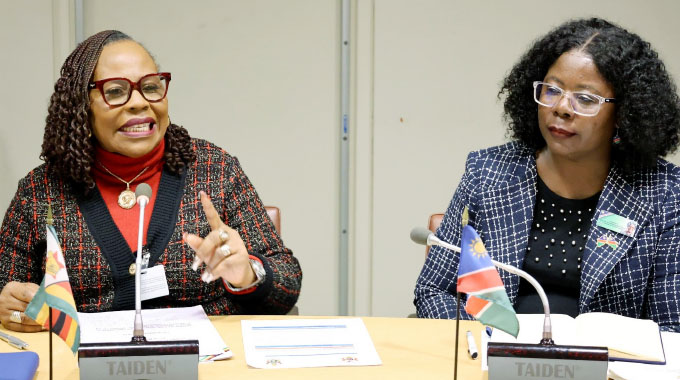
Keynote address by the Minister of Women Affairs, Community, Small and Medium Enterprises Development, Senator Monica Mutsvangwa on 18 March 2026 at a Side Event of the 70th Session of the Commission on the Status of Women in New York CSW70 Side Event: Image of LeadHERship Summit:
“Image as a Critical Tool in Breaking Barriers Through Representation”
The Director of Ceremonies
Excellencies,
Distinguished delegates, Representatives of Member States, Leaders of civil society, Colleagues, and Partners in the global pursuit of gender equality, Ladies and gentlemen.
It is an honour for me to deliver a keynote address at this event being held on the sidelines of the 70th Session of the Commission on the Status of Women, convened under the banner of the Image of LeadHERship Summit.
I would want to appreciate and commend Women Who Win Africa and the Hezena Lemaletian Foundation for bringing forward a timely and strategic contribution to our collective efforts to advance the rights and leadership of women and girls.
We meet at a moment of both reflection and urgency. Thirty years after the Beijing Platform for Action, and with less than four years remaining to achieve the Sustainable Development Goals, the global community must confront a persistent and deeply consequential reality: women remain significantly under-represented in positions of power and decision making, holding fewer than 27% of parliamentary seats and less than 32% of senior management positions globally”, with even wider gaps across the African continent.
This is not only a governance deficit; it is a development barrier and a human rights concern.
We have long affirmed that women’s equal participation in leadership is essential to achieving peace, prosperity, and sustainable development.
Yet structural, cultural, and psychological barriers continue to impede progress. Women leaders must navigate discrimination while simultaneously “managing perceptions and bearing representational burdens.” This reality demands not only policy reform, but also a transformation of the norms and narratives that shape who is seen and accepted as a leader.
It is within this context that the Image of LeadHERshiP Summit is bringing a compelling and innovative approach that positions image, presence, and representation as strategic tools.
This summit addresses an often-overlooked dimension of gender equality: the power of perception in enabling or constraining women’s authority.
We are reminded that “a powerful image amplifies credibility, dismantles stereotypes, fosters authority, strengthens decision-making power, and contributes to eliminating violence.”
This insight is critical. Stereotypes about women’s leadership are not benign; they are drivers of discrimination, exclusion, and in many cases, violence. Addressing them is therefore integral to achieving SDG 5 and fulfilling the commitments of the Women’s Empowerment Principles.
The ABCDE Model of Leadership — Appearance, Behaviour, Communication, Digital Footprint, and Empowerment — provides a structured and holistic framework for strengthening women’s leadership identity.
It recognises that leadership is not only a function of competence, but also of visibility, credibility, and the ability to navigate complex social and institutional expectations.
n A-Appearance speaks to executive presence and confidence.
n B-Behaviour encompasses civility, diplomacy, and ethical conduct.
n C-Communication addresses emotional intelligence, negotiation, and influence.
n D-Digital Footprint reflects the growing importance of online identity and global visibility.
n E-Empowerment centres mindset, cultural intelligence and purpose.
This model aligns closely with the UN Women’s Empowerment Principles, particularly those related to leadership commitment, professional development, and community advocacy.
It also advances the Beijing Platform for Action’s call to strengthen institutional mechanisms and expand women’s access to training and capacity-building.
Representation is not symbolic; it is transformative. When women are visible in leadership, stereotypes weaken, discriminatory norms shift, and pathways open for future generations.
Image plays a direct role in “challenging stereotypes that fuel discrimination and violence,” linking representation to the broader agenda of eliminating gender-based violence.
This connection is vital. Violence against women in politics and public life is a growing global concern.
Ensuring that women can lead safely, confidently, and authentically is essential to building inclusive and resilient societies.
Women Who Win Africa brings an important regional perspective to this global dialogue. African women have long been at the forefront of community leadership, innovation, and social transformation. Yet their contributions are often undervalued or rendered invisible.
This summit affirms that African women are not merely participants in leadership spaces, they are architects of solutions, custodians of community resilience, and essential actors in governance and development. Women bridge generations, bridge communities, and bridge the gap between aspiration and achievement.
As we gather here at CSW70, let us reaffirm our commitment to ensuring that women everywhere can exercise leadership free from discrimination, bias and violence.
Let us strengthen institutional frameworks, expand leadership pipelines, and invest in capacity-building that equips women with the tools to lead with authority and authenticity.
Let us also recognise that transforming the image of leadership is not the responsibility of women alone.
It requires the engagement of Governments, private sector institutions, civil society, and multilateral institutions. It requires us to challenge stereotypes, reform systems, and create environments where women’s leadership is valued, respected, and normaliSed.
The Image of LeadHERship Summit therefore offers a pathway toward this transformation. It provides the frameworks, tools, and vision needed to redefine leadership for a new era, one in which identity, dignity and representation are central to the exercise of power.
I would like to conclude by saying, Let us carry this vision forward with determination and unity as we work towards a world where every woman and girl can lead without barriers and without compromise.
Thank you


 Online Reporter