Chronicle Editor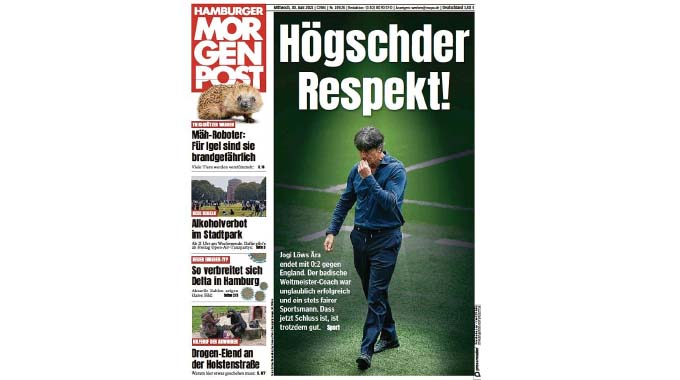
Quiet as a tomb. That was how Joachim Low described the mood in the dressing room after his 198th and final game as Germany coach.
Beaten by England, knocked out of Euro 2020 and unable to match expectations for the second tournament in a row, the Germans could only be silent.
At the final whistle, said Manuel Neuer, he had looked over to the touchline and felt a pang of regret as he saw Low shaking hands with Gareth Southgate.
Here was a man who had reinvented German football and made heroes of Neuer’s generation, leaving his post without fanfare in the North London drizzle.
“It was an inglorious end to a glorious era,” wrote a wistful Tagesspiegel on Wednesday.

At face value, Germany had lost a finely poised battle to a more clinical England team. In a game between two relative equals, the side with more momentum had won out against a stagnant, cramped opponent.
Though it could easily have gone the other way, the game seemed to sum up all problems of the back end of Low’s reign.
The veteran coach was too cautious, too slow to make changes, and left fans with more questions than answers.
Why couldn’t this gifted team create more chances? Why could they not go up a gear when they needed to? Why did Jamal Musiala come on so late?
Not that the failures of the last few years should overshadow Low’s achievements.
In his 15-year tenure, the 60-year-old has re-imagined Germany, and turned a once maligned footballing nation into one of the most exciting in the world.
To say that he should have won more silverware, that Germany are no longer the winning machine they were in the late 20th century, is to miss the point.
There are now many more major powers in international football and many more games to play at major tournaments. That Low never failed to reach a semi-final between 2006 and 2016 is and will always remain an astonishing record.
Yet like Arsene Wenger at Arsenal, even a great manager can stay too long.
Desperate to leave on a high, Low missed his chance to exit gracefully in 2018, and has spent the last few years plugging holes which were largely of his own making.
His departure is now a welcome chance for Germany to stop tinkering and start laying proper foundations for the future.
“I do think that some players will develop,” he said with an optimistic nod towards Euro 2024, which Germany will host. — Daily Mail


 Online Reporter