Online Reporter
CRISES have a strange way of reshaping Highlanders. Each time the club teeters, it doesn’t crumble, it evolves.
A new cast rises, bold and unshaken. Heroes are born. Legends begin.
Relegation scares? Highlanders have been there before. Internal strife? It’s practically stitched into the club’s history. Go back to 1963, when discontent sparked the birth of the Cobras. The split was messy.
A number of players and officials walked out, striking like the team’s namesake.
But those who stayed didn’t fold. Mackenzie Duli Sibanda, Edward Dzowa and the late Edward “Magungubala” Dlamini stepped up. They were soon joined by a young, left-footed talent from Hwange: Andrew “Scrupata” Jele.
With stalwarts like the late goalkeeper Robert Donga, Bosso held firm in the Bulawayo African (Amateur) Football Association.
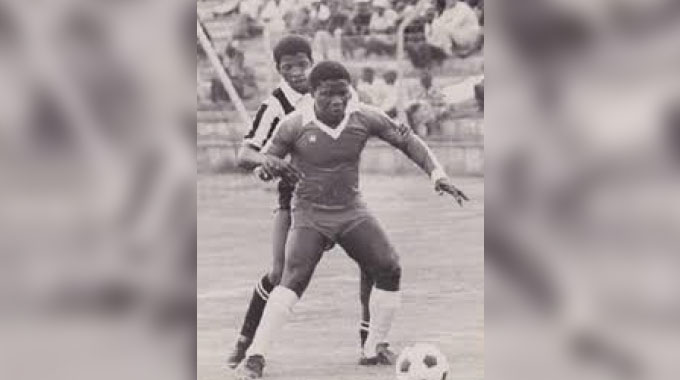
This resilience came after Highlanders missed out on a place in the newly formed Rhodesia National Football League, which marked the start of semi-professional football in the country.
The exodus to Cobras had left a hole, but from 1964 to 1966, a new generation began to bloom. Lawrence Phiri, Kainot Luphahla and Billy Sibanda were among the first in a wave of talent that would shape Bosso’s next six decades.
Without that painful breakaway, it’s unlikely these players would have ended up in black and white.
Then came 1971. Highlanders entered the professional league and finished the season with just seven points, dead last. Relegated.
It had started in 1968, when the club joined the South Region Division Two, facing off against teams like Wankie (Hwange), Cobras, Bulawayo Wanderers, Kamativi, BSAP and Rangers. The goal was progress, but the leap to professionalism came with growing pains.
In 1972, Highlanders narrowly missed promotion, finishing behind Rangers. Still, they made it to the Rhodesia National Football League regional First Division.
That’s when Silas Ndlovu, young, sharp and impressively well-read, took over. He wasn’t just a coach.
He was a British style manager, assembling a team of stars who would deliver the Chibuku Trophy in 1973 against the star-studded Mangula (Mhangura) and sweep three straight league titles, capped with a national play-off win in 1974.
Then the storm hit again.
By the end of 1976, discontent over pay saw senior players, Barry Daka, Isaac Mafaro, Chutika Tembo, Itai Chieza, Ananias Dube, Stanley Nyika and young talents like Ephraim Moloi and Sebastian Sibanda break away to form Olympics. It gutted the club.
Most teams wouldn’t survive losing that kind of core. Highlanders didn’t just survive, they adapted.
The exodus bled into the youth ranks too. Juniors and reserve players left for the armed struggle. The club’s depth vanished. But once again, from the ashes, a new crop emerged: David Mhlanga, Augustine Lunga, Yonah Malunga, Peter Nkomo, Douglas Mloyi and Doughty Sithole. These names carried the badge through the South Zone Soccer League from 1977 to 1979.
Had the 1976 group stayed, many of those players would never have gotten their shot. Daka, Mafaro, and their peers still had years left, they could’ve played into the mid-80s.
By 1982 and 1983, another chapter was closing. Club greats like Lawrence Phiri, Billy Sibanda, Josiah Nxumalo, William “Shakespeare” Mabika, David Mhlanga, Majuta Mpofu and the late Willy Luphahla were stepping down. But the club wasn’t empty handed.
Coach Bobby Clark put his trust in youth. Willard Khumalo, Alexander Maseko, Summer Ncube, Netsayi Moyo and Mercedes Sibanda rose through the ranks. They joined experienced heads like Fanuel Ncube, Peter Nkomo, Douglas Mloyi and Richard Ndlovu, bolstered by fresh legs in Tito Paketh, David Phiri and Amin Soma-Phiri.
It didn’t click right away. The 1983 season was rough and relegation loomed.
But Clark stuck with his plan. He gave the young ones minutes and it paid off. From 1984 to 1990, Highlanders won everything there was to win.
That golden generation may never have come through if those who left for war in the late 70s had stayed. By the 80s, those ex-combatants would’ve been in their prime, possibly blocking the rise of Bosso’s next wave.
Fast-forward to 1989. The club faced another low.
Key players departed, Alexander Maseko, Simon Ncube, Madinda, Willard Khumalo, Nqobizitha Maenzanise, Tito Paketh, Mercedes and even Rahman Gumbo for a spell. Bosso looked broken.
But again, youth saved the day. Adam Ndlovu, Peter Ndlovu, Makwinji Soma-Phiri and Cleopas Dlodlo took the stage. In 1990, they delivered the club’s first league and cup double.
Now, Highlanders are back in crisis. No balance. No bite. Months have passed without three straight wins.
For a 99-year-old institution, the threat of relegation hangs heavy.
But if history says anything, it’s this: from every collapse, Bosso finds its future. The only question now is, who will rise this time?