admin
admin
Talking Strategy with Dr Julius Tapera
Effective strategy implementation remains elusive for most organisations, resulting in most strategic plans being mere blueprints that decorate shelves for organisational leaders from one planning period to another. It is, therefore, important to identify those critical success factors that facilitate the effective implementation of the strategy. Critical success factors (CSFs) are those components of any process that must be executed efficiently and effectively to ascertain organisational success. CSFs impact strategy and organisational performance through the way they support the achievement of an organisation’s goals and ultimately contribute to the success of the organisation’s mission. While many factors have been identified as critical for successful strategy implementation, the factors discussed below have been prominent in most studies, both theoretical and empirical.
Resource availability
For any strategy to be effectively implemented, there are certain requisite resources that ought to be available within an enterprise. These resources include financial, human capital, technologies, plant and equipment, and raw materials. Where these resources are unavailable or available in limited supply the effectiveness of strategy implementation is compromised to the extent of resource limitation. The deployment of resources should be in a way that best creates sustainable competitive advantage and guarantees improved organisational performance and growth. Given the resource scarcity that most organisations face in their day-to-day operations, organisational leaders need to be more astute in their mobilisation and deployment of resources, prioritising allocation to those resources that are considered to be critical and generate the greatest value for the organisation.
Dynamic Strategic Capabilities
Knowledge, skills and competencies in thinking and planning strategically are key for any organisation, particularly for those managers that are taking the lead in strategy formulation and implementation. The dynamic capabilities to implement the planned strategy are also pre-requisite for strategy success and organisational performance. While other resources cited above may be available, the absence of relevant skills and competencies to put these resources together in pursuit of the organisation’s strategic goals may spell doom for the organisation.
It is therefore very important for organisational leaders to invest in continuous capacity development for those that lead and those that have their hands on the deck when it comes to strategy implementation, such development having a deliberate focus on developing strategic planning capabilities.
Prioritisation
Various activities have different degrees of contribution to the effective implementation of organisational strategies. It is thus important to prioritise the allocation of resources to those activities that have a greater impact on strategic goal achievement and organisational performance. The Balanced Scorecard and strategic maps can be used for prioritising strategic objectives and the allocation of resources thereto. Lack of effective prioritisation will result in resources being allocated to non-core activities while core activities of the organisation are deprived of requisite resources for strategic success.
Buy-in at all levels
While the crux of strategy formulation is the core business of strategic leaders at a corporate level, the implementation largely occurs at the business and functional levels of the organisation. It is therefore important that the whole strategic planning process gets buy-in from organisational members at all levels, particularly the lower-level employees that are entangled in the daily operations that ensure effective strategy implementation. Involvement of all employees from as early as the strategy formulation stage is critical to creating ownership of the strategic plan and its effective implementation.
Organisational Culture
Organisations have different norms, beliefs, behaviours and values that shape their respective cultures and differentiate them from their competitors. These organisational cultures have an impact on strategic planning success or otherwise; what makes a difference is the extent to which an organisation translates values into attitudes and behaviours that positively influence organisational performance. Some of the cultural factors include a supportive attitude, encouragement and persuasion of staff to implement strategic planning, sharing the strategy with others, creating incentives, encouraging forward-thinking, observing ethical standards, alignment of employees’ beliefs and values to strategic planning. Higher innovation orientation has also been proved to significantly impact organisational performance in a positive manner; measured by such variables as profitability and customer satisfaction. Levels of formalisation or informality, centralisation and decentralisation are some of the cultural factors that have a bearing on strategy success or otherwise.
Strategic Focus
Ordinarily, strategy is supposed to give the organisation strategic direction through a clearly articulated vision, mission statement and core values, which gives focus to all organisational members and leads to improved performance. In addition, the strategy formulation process entails setting clear strategic goals with corresponding key performance indicators for tracking the achievement or otherwise of the set goals. The products and services that the organisation has to offer and the markets that the organisation has to compete in are also part of the strategic direction. The strategic focus thus entails ensuring that all projects, programmes, budgets and activities are directed towards achieving the organisational vision. A clear and consistent strategic focus has a positive significant impact on organisational performance. There have been new approaches to governance wherein organisations focus more on strategy than tactics, emphasising learning, team problem-solving and coaching. Divergence from the set strategic direction or lack of strategic focus may spell doom for the organisation’s strategy.

Flexibility
The business environment continues to be fluid and many dynamics continue to change, creating volatility, uncertainty, complexity and ambiguity. While the concept of strategic planning entails long-range focus, responsiveness to changes in the operating environment is very critical to ensure that the strategy remains relevant in creating competitive advantage and ensuring sustainable organisational growth. It is, therefore, necessary for strategic leaders to be flexible and agile enough to accommodate necessary changes to the initial strategy, in response to the dynamism of the business environment. Rigidity and lack of agility in responding to changes in the business environment may result in missed opportunities and failure to effectively implement the strategy.
Effective Leadership
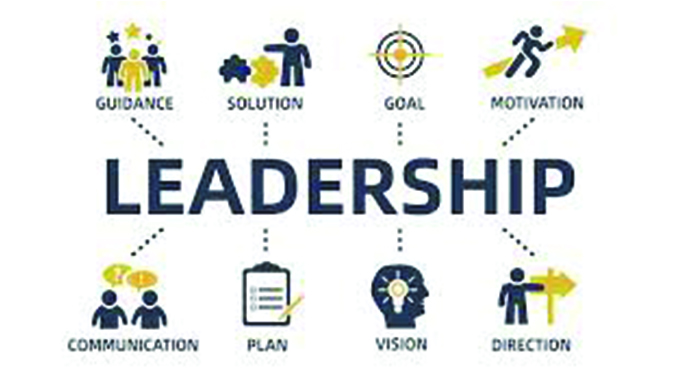
Effective strategy implementation requires strategic leadership. Everything rises and falls on leadership. Organisational leaders, therefore, ought to have strategic foresight and the requisite knowledge, skills and competencies to lead the strategic planning process; environmental scanning, formulation, implementation, monitoring, evaluation and control. Strategic leadership is necessary for creating “strategic coherence” through effective and efficient coordination, integration and alignment of all strategic processes. In addition, strategic leaders have to take a leading role in creating, among all organisational members, shared meaning and common strategic direction of the firm, executing strategic knowledge management, facilitating innovation, which leads to sustainable competitive advantage and improved organisational performance.
In our next article, we will continue with the remaining Critical Success Factors for Effective Strategy Implementation.
l Dr Julius Tapera holds a PhD in Strategic Management and is currently the Assistant to the Vice-Chancellor at Lupane State University. He is a Strategic Management Consultant, Motivational Speaker & Author. He is contactable on Mobile: +263773586037; Email: [email protected] or [email protected]



 Online Reporter