Chronicle Editor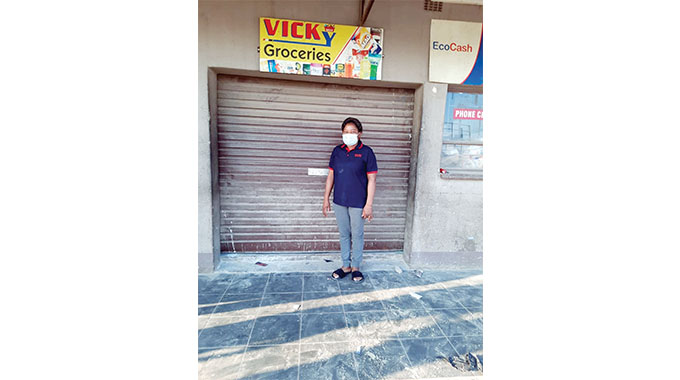
Thupeyo Muleya, Beitbridge Bureau
Ms Farirai Makota (36), has seen it all.
Cross-border transporters are mainly men, given the hustle and long, unpredictable hours involved in the trade.
However, Ms Makota used to be one.
She is a mother, a cross-border trader and has now grown into a retailer of note popularly known as Vicky Groceries, in Beitbridge town.
What started off as a mere vending experiment has turned out to be a dream come true for her.
With self-taught business skills, Vicky now owns a number of houses, business stands, and a fleet of five vehicles in Harare and Beitbridge.
Two of the minibuses (kombis) have been hired to a private school in Harare, while two others are used for business errands between Beitbridge and South Africa.
Her story could even be archived for future generations who might derive inspiration.
“We started off selling groceries on a table as vendors in 2012 with my cousin, Anna Mary Makoni known as Mariana at the popular Dulivhadzimu rank market known as Musina. Here, we were hoarding our products from South Africa,” said Ms Makota.
“After that, we rented a small shop to sell the groceries and later agreed to go solo two years ago. In those two years, things have improved and I now have two supermarkets at Dulivhadzimu Business Centre”.
Ms Makota said she literally grew up at the border since marrying her ex-husband who was a cross-border transporter in 2007.
She said the couple would wake up early in the morning to get goods for other traders and their own in South Africa daily for the better part of their adult lives.
They later went separate ways over business differences in the last three years.
“So, after that, we decided to go solo with each with their own employees. That’s when my business started growing.
Now I have 10 employees of whom four are women and six are men. They all treat me with respect like their elder sister.
“At first, we could go to buy goods for others, but now since my business has grown, I am now focusing on getting goods for my shops using a rigid truck,” said Ms Makota.
To minimise pressure at work, she manages a strict calendar of events.
She has dedicated days for restocking in South Africa, delivering to goods to her shops, taking stock and doing orders for local products at local wholesalers.
The entrepreneur envisages owning her own business premises to accommodate her growing business and dedicated shops for young women entrepreneurs.
“Although the cross-border transporting has been mainly a male domain, together with my cousin, we decided to roll up sleeves as women and do it for ourselves,” she said.
“What keeps us going in this kind of business is patience and honesty and we are goal-driven.
We prefer to do things by the book, most of us plan well and make sure that we pay the required import duties to avoid unnecessary situations like seizures or arrests. In fact, we can’t afford to miss a day in our business”.
She continued; “I was married to a cross-border transporter and we divorced after disagreeing on how to do business due to abnormal working hours”.
Ms Makota said the Covid-19 pandemic has not spared her.
She said procuring stock in South Africa was now a challenge as most suppliers having been forced out of business, and the few that remain have increased prices of their goods.
This, she said, had an effect on the pricing of goods on the local market, where shops also operate for a limited time due to lockdown restrictions.

“Before the pandemic, we could open shops up to midnight because of the demand linked to high cross-border travel and demand of the goods. Now, we are feeling the heat since we have to raise funds for sundry expenses and operational costs,” said Ms Makota.
As her business keeps growing, the entrepreneur said she was gradually increasing the number of workers and help with the upkeep of members of her extended family.
She said she had sent some to primary, secondary, and tertiary education and employed some in her projects.
Ms Makota is determined to stay in the cross-border business as long as she can.
“This is what I do and do it best. I am determined to face all the challenges in this field. My wish is to see more women chasing their dreams, regardless of the stereotypes we get from community members,” she added.
Although they are running competing businesses with her cousin, Mariana, their relationship has remained solid and they keep encouraging each other and sharing business notes.
“Women who wish to follow the same business route should learn to be patient, dedicated, determined, and be focused. The road to success will never be easy,” she said.
Ms Makota claimed she had become a victim of frequent armed robberies and order hijackings by male competitors.
She said such unfortunate incidents make her even more determined to excel.
Ms Makota enrolled her two children aged nine and 11 years into a boarding school and makes time for them during holidays.
This, she said was good to save them trauma from the armed robberies she endures and that it helps strike a balance to the energy she commits to business and social life.
Her road to success has become that of an entrepreneur with self-confidence in her business with no fear of failing. — @tupeyo.



 Online Reporter