Sikhulekelani Moyo
Zimpapers Business Hub
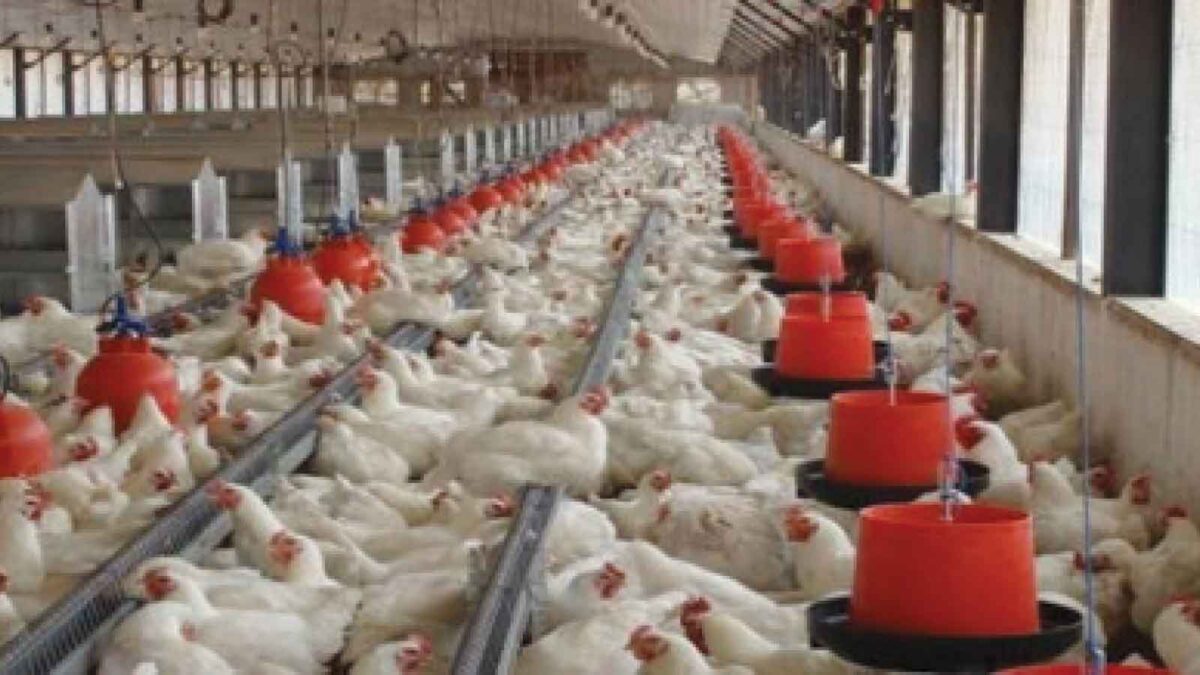
LOCAL manufacturers of poultry drinkers and feeders have received a major boost after the Government gazetted Statutory Instrument (SI) 141 of 2026 to protect the industry from cheap imports.
The Competition and Tariff Commission (CTC) said the legislation marks a tangible outcome in the commission’s efforts to support local industry through evidence-based tariff policy.
The SI, gazetted on August 21, 2026, follows an application by Corbett and Company (Pvt) Ltd in July 2024 for protection against low-priced imported plastic poultry drinkers and feeders.
The commission’s investigation found that local producers were operating in a challenging market.
According to CTC, Corbett’s capacity utilisation collapsed from 100 percent in 2021 to 41 percent in 2023.
Sales volumes fell by 37 percent in 2022 and by a further 36 percent in 2023, while employment dropped by 22 percent over the period 2021 to 2023.
“Across the industry, manufacturers reported idle capacity and weak demand as imported products gained market presence,” the recent CTC newsletter states.
“Trade data confirmed the pressure. Imports under the poultry-equipment classification jumped from 247 tonnes in 2020 to 2,538 tonnes in 2022 reflecting a 928 percent increase, while there were no recorded exports.”
A central part of the commission’s work was correcting how the products were classified.
Although the application referred to machinery code 8436.29.00, CTC noted that technical advice from the Zimbabwe Revenue Authority (ZIMRA) confirmed that plastic poultry drinkers and feeders were more appropriately classified under tariff code 3926.90.90 for “Other” plastic articles.
Because that code covered many unrelated plastic products, the commission warned that a general duty increase would have affected goods outside the case.
It therefore recommended splitting the tariff line to create code 3926.90.91 specifically for poultry drinkers and feeders, with code 3926.90.99 retained for other products.
The investigation also exposed a duty anomaly that disadvantaged local producers.
Polypropylene, a major raw material, attracted five percent duty, while imported finished poultry equipment entered at zero percent.”
For a six-litre drinker, raw materials accounted for 81,9 percent of total production cost, with polypropylene contributing 27,7 percent.
CTC proposed what it called a cascading tariff structure: reduce duty on polypropylene under code 3902.10.00 from five percent to zero percent, while applying 25 percent duty to imported finished poultry drinkers and feeders.
“Its effective-rate-of-protection analysis found that 25 percent would provide meaningful support while still encouraging local producers to improve efficiency and pricing,” the newsletter says.
The commission said it also weighed the interests of poultry farmers, distributors and consumers.
“Stakeholders cautioned that drinkers and feeders are capital equipment for a sector supporting many small-scale and backyard farmers and that protection could raise production costs or limit choice,” the newsletter states.
The recommendation was, therefore, below the 40 percent MFN (Most Favoured Nation) duty initially requested by Corbett and paired protection of the finished product with duty relief on a key input.
It also called on Corbett to improve production efficiency and reduce its mark-up.
Corbett made reciprocity commitments, including increasing production volumes, investing further in plant and machinery, strengthening research and development activities, upgrading equipment, creating employment opportunities, developing export markets and improving overall company performance.
“The commission will monitor and evaluate these reciprocity commitments,” said CTC.
SI 141 of 2026 substantially adopted this approach by reducing the general and MFN duty on polypropylene to zero percent, creating commodity code 3926.90.91 for poultry drinkers and feeders at 25 percent, and retaining a zero percent rate for other goods under code 3926.90.99.
According to the CTC, the outcome shows how the commission’s tariff work can combine precise product classification, lower input costs and targeted protection to promote import substitution, investment, employment and stronger industrial linkages.
“Its ultimate impact should be assessed through changes in local production and capacity utilisation, employment, investment, product prices and availability, and the cost of poultry equipment to farmers,” said CTC.