Online Reporter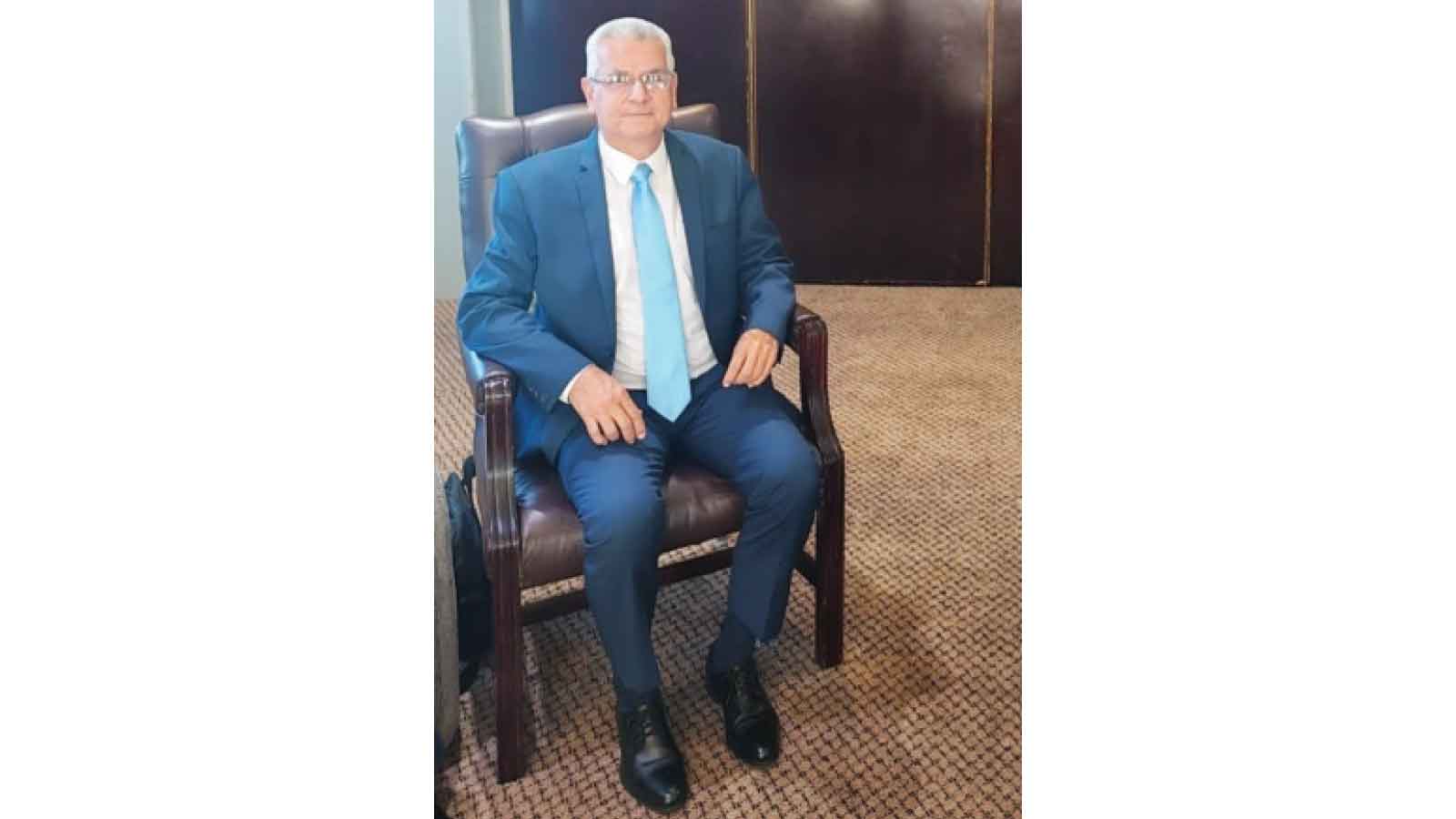
SINCE January 1, 1959, the triumphant Cuban Revolution has been relentlessly pursued by the United States, hoping it would change the course of its actions and give up its values. For sticking to its principles, Cuba has for over six decades been unjustifiably punished. On the sidelines of the fourth ministerial meeting of the national coordinators of the Group of Friends in Defence of the Charter of the United Nations on Tuesday, Zimpapers Politics Hub’s Gibson Nyikadzino (GN) had an interview with Cuba’s Deputy Minister of Foreign Affairs Elio Rodriguez Perdomo (ERP) to understand how Cuba manoeuvres this political maze and forges ahead. Below are excerpts:
GN: What are the main strategic or economic factors driving the threat Cuba is facing from the US?
ERP: I appreciate this opportunity to discuss issues of importance to Cuba, especially in the context we are currently facing. The principal factor is the persistence of the United States’ hostile policy towards Cuba is its long-standing aspiration to subordinate our country to its political, economic, and geostrategic interests. Cuba poses no threat whatsoever to the national security of the United States. What does exist is Washington’s refusal to accept that the Cuban people have chosen to fully exercise their right to self-determination and to build a sovereign and independent political project. As President Miguel Díaz-Canel has stated, US policy towards Cuba seeks to bring the Cuban people to their knees through hunger and deprivation, precisely as outlined in the infamous Lester Mallory memorandum of 1960. More than six decades later, the essence of that policy remains unchanged. The hostility directed against Cuba is aimed at provoking political change in our country through economic suffocation, financial isolation, and constant pressure. It is a policy of domination that we do not accept from any power and which is incompatible with the principles of sovereignty and equality among states enshrined in the United Nations Charter.
GN: Is the United States issuing any clear and urgent demands regarding regime change in Cuba or control of Cuba’s resources?
ERP: The policy of the United States towards our country continues to be fundamentally aimed at promoting regime change and reversing the sovereign decision of the Cuban people to build their own political, economic, and social model. Statements by senior US officials, including Secretary of State Marco Rubio, as well as measures adopted by the current administration, demonstrate the persistence of a strategy designed to increase economic, political, and diplomatic pressure on Cuba with the objective of provoking internal changes that only Cubans have the right to decide. The executive orders announced on January 29 and May 1, 2026, are concrete examples of this policy. These decisions further intensified coercive measures against our country, reinforced obstacles to economic development, and increased the difficulties faced daily by the Cuban population.
GN: How have these orders been reinforced?
ERP: They have been accompanied by increasingly aggressive rhetoric from certain US political sectors. For months, we have witnessed irresponsible statements aimed at reinforcing the notion of a direct confrontation with Cuba or portraying as legitimate forms of intervention that violate the most fundamental principles of International Law. There is also a political and media campaign intended to manufacture pretexts to justify an escalation of aggression against our country. Cuba has warned that certain recent actions appear designed to move us closer to a scenario of military aggression and to create favourable conditions for new provocations. History has shown how, on various occasions, unfounded accusations and disinformation campaigns have been used by the United States to justify military actions against other sovereign states. Our position has been, and will remain, absolutely clear. Cuba is willing to engage in dialogue with the Government of the United States on any issue of mutual interest, always based on sovereign equality, mutual respect, reciprocity, and full adherence to International Law. What Cuba will never accept is negotiating under threats, coercion, or conditions imposed from outside. Our constitutional order, our socialist political, economic, and social system, our independence, and our national sovereignty are not and will never be subjects for negotiation. Any possible understanding between our two countries must concern exclusively bilateral matters and fully respect the sovereign prerogatives of each State. This has consistently been Cuba’s historical position.
GN: How does the Cuban leadership differentiate between the will of the American people and the hostile policies implemented by the US administration?
ERP: The Cuban government clearly distinguishes between the American people and the decisions adopted by certain political sectors within the United States. Cuban authorities have repeatedly expressed respect and friendship toward the American people and recognise that broad sectors of US civil society, the academic community, business groups, religious organisations, and ordinary citizens support a normal and respectful relationship between the two countries. Policy towards Cuba has often been shaped by minority pressure groups that have turned hostility towards the Island into part of their domestic political agendas. During periods of greater bilateral engagement, scientific, academic, cultural, and health cooperation programmes were developed, demonstrating the potential for a constructive relationship. Cuba continues to keep its doors open to American citizens and remains committed to the possibility of civilised coexistence based on mutual respect. We do not see the American people as an enemy. We welcome them with respect and hospitality. It is the restrictions imposed by the US government that have, for many years, limited the full potential of that relationship.
GN: What is your response to the criticism that Havana uses the “maximum pressure” campaign and US sanctions rhetoric as a pretext to conceal internal economic problems?
ERP: That narrative seeks to minimise the real and devastating impact of the blockade. Today, there is not a single sphere of Cuban society that remains unaffected by this unilateral policy and by the additional maximum-pressure measures adopted in recent years. Cuba has never denied that it faces internal challenges that must be addressed and resolved by Cubans themselves. However, any serious analysis of the Cuban reality that ignores the impact of the blockade is inevitably incomplete and lacking in objectivity. For more than six decades, the United States has pursued a policy explicitly designed to deprive Cuba of income, hinder its economic development, and create conditions of material hardship to provoke political change. This policy directly affects every citizen, every family, and every sector of our economy and social life. The extraterritorial nature of the blockade further aggravates its effects. Banks in third countries refuse to conduct transactions with Cuba for fear of sanctions; shipping companies and insurers cancel contracts; airlines and tourism operators face pressure; and international suppliers refrain from establishing legitimate commercial relations. This policy constitutes a form of economic warfare aimed at depriving the Cuban people of their sources of livelihood and using their most basic needs as an instrument of political pressure.
GN: How have neighbouring countries in the region and international organisations reacted to these tensions, including the Global South?
ERP: Cuba enjoys broad and sustained international support in opposition to the US blockade policy. The international community has consistently recognised this reality. For more than thirty consecutive years, the United Nations General Assembly has adopted, by an overwhelming majority, the resolution calling for an end to the economic, commercial, and financial blockade imposed against Cuba. This unquestionably broad support demonstrates that opposition to this policy transcends ideological differences and is rooted in fundamental principles of International Law, state sovereignty, and non-interference in internal affairs. It is worth recalling that on several occasions, only the United States and Israel have voted against the overwhelming international consensus on this issue. The African Union has historically been a strong voice in support of Cuba. African countries understand first-hand the value of international solidarity and have consistently rejected both the blockade and Cuba’s arbitrary inclusion on the spurious US list of State Sponsors of Terrorism. Given the difficult circumstances Cuba is currently facing, we hope to continue receiving the support of friends around the world. This is not only about Cuba; it is about defending essential principles of International Law: sovereignty, non-interference, equality among States, and the rejection of unilateral coercive measures. I would also like to congratulate Zimbabwe on its election as a non-permanent member of the United Nations Security Council and wish it every success in carrying out its responsibilities.
Likewise, I extend fraternal greetings to the friendly people of this nation.