Andrew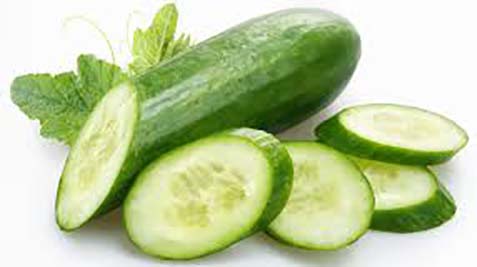
Word from the Market
Munyaradzi Chichevo
The growing of long cucumbers is becoming one of the fastest-growing farming business ventures in Zimbabwe over the past few years. The viability and short growing cycle of cucumbers makes it attractive. One does not require tracts of land to venture into cucumber farming.
Traditionally, greenhouses were dominated by tomatoes, but of late English cucumber production has changed the narrative with its consumption and demand ever-increasing. In Zimbabwe, English cucumbers are produced throughout the year under protected environment (greenhouses and shed nets) and usually takes between 45 and 55 days to mature.
Cucumbers are a low calorie and low sodium snack that provides a good dose of hydration, vitamins C, vitamin K and potassium. That diets are changing towards green salads to manage weight and nutritional balance is one reason why cucumbers are always on demand. As a naturally low sodium food with potassium, it is a recommended pick for people with high blood pressure.
Agronomic practices
Most growers prefer to plant cucumbers on soil. Cucumber plants are deep-rooted crops, which grow best in well-drained, fertile, soil that is low in soluble salts and free of soil-borne diseases.
The soil should be at least 1.2m deep and sandy loam soil is preferable to light sand or clay. Well-composted organic matter may be worked into the soil before planting to increase nutrient levels and water-holding capacity. Seeds can be directly sown, but are usually germinated in seedling trays and then transplanted. Cucumber roots are sensitive, and care must be taken during transplant so as not to damage them. The use of a sterile seedling medium is recommended to prevent disease infection.
The optimum germination temperature for cucumber seed is 25°C to 28°C. Daytime temperatures should be maintained between 23°C to 25°C and night temperature not lower than 18°C. Seedling must be kept moist, but not water soaked. Seedlings in seeding trays could be transplanted to 15 or 20 bags three to four weeks after germination, or the seed can be planted directly into the planting bags. Begin fertilising three days after transplanting or when true leaves have begun to emerge. Plants should be watered frequently with the fertilizer solution. A minimum of 14 hours of strong direct light is required for developing seedlings.
To obtain optimum cucumber production, a proper balance is required between the vegetative growth and fruit load. This balance is achieved by constant pruning of shoots, foliage, fruit and flowers. If the canopy of leaves is too dense, it will shade fruits from sunlight, causing them to be pale or unevenly coloured.
If fruit are not pruned and too many are allowed to form at any one time, a large proportion may be aborted, malformed or poorly coloured because the plant may not have sufficient reserves. Therefore, generally only one fruit should be allowed to develop in a leaf axil, although vigorous cultivars can sometimes mature more than one fruit at a node. Short, midi cucumber types will support several fruits per node. Cucumbers are trellised on a string or wire system. Various trellising methods are used by different growers. The main aim should be to capture sunlight uniformly throughout the greenhouse.
Post-harvest handling
Cucumbers lose moisture quickly and have the tendency to soften during storage. Marketable cucumbers should be sorted according to size and quality and individually wrapped in clear plastic. The optimum storage temperature for cucumbers is 10-12,5ºC, at relative humidity of 95 percent RH. Storage or transit temperatures below this range should be avoided as this will result in chilling injury after 2-3 days.
Varieties
The National Tested Seeds has three varieties that have taken the market by storm: Boreal F1 being the most grown variety in Zimbabwe. Bologna F1 and Inyathi F1 are some of the varieties which produce heavier fruits, high quality and dark green in colour. All the varieties perform well countrywide as long as good agronomic practices are employed. On average, one plant can yield up to 18 saleable fruits, making it a very economic venture.
Market
The market for cucumbers is so vast. Customers can vary from individuals to wholesalers and retailers. Open markets such as Mbare Musika are provide a ready market for cucumbers. With more people becoming more health conscious, leading retailers such as Food Lovers, OK, SPAR and PnP are also distributing the fruit as a necessity in the fruit and veg section rather than luxury good. Any average size Conservatively, one cucumber is selling for US$0.50. Zimbabweans are a braai-loving people of which cucumbers are a central part of salads used during parties.
According FAOSTAT, Zimbabwe produced 240 tonnes of cucumbers in 2017, 2018, 2019 and 209 tonnes in 2020. Top global cucumber producing countries are China, Spain, Russia, United States and Japan, among others. On the African continent, Morocco, South Africa and Egypt are top cucumber producers.
Cucumber production has the capacity to enhance agricultural production, economic empowerment, and food security in line with the National Development Strategy 1. There is no doubt that cucumber farming is one of the profitable niches when it comes to vegetable farming in Zimbabwe.
Munyaradzi Chichevo is an agronomist with National Tested Seeds. Word from the market is a column produced by the Agricultural Marketing Authority (AMA) to promote market-driven production. Feedback [email protected] or WhatsApp/Call +263781706212.



 Online Reporter