Online Reporter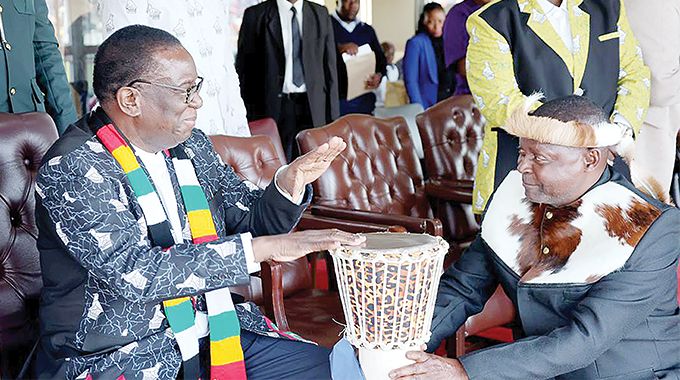
THE launch of the 2026 National Culture Month in Bulawayo is a timely reminder of the central role that culture plays in shaping Zimbabwe’s identity, unity and future development.
More importantly, the presence of President Mnangagwa at the event sends a strong signal that the Second Republic recognises culture not as a ceremonial afterthought, but as a key pillar in the country’s socio-economic and political transformation.
For a long time, culture has often been viewed narrowly, confined to traditional dances, ceremonies and heritage events. However, the message coming from the highest office in the land is clear: culture is far more than this. It is, as the President rightly noted; “the foundation upon which economies are constructed” and a powerful tool for fostering social cohesion and national pride.
Zimbabwe is richly endowed with diverse cultural expressions, from language and music to food, art and traditional knowledge systems. These are not just symbols of who we are; they are economic assets that, if properly harnessed, can create employment, boost tourism and contribute significantly to national growth. The creative sector — artists, musicians, sculptors, poets and cultural practitioners — remains one of the country’s most underutilised resources, yet it holds immense potential to contribute towards Vision 2030.
President Mnangagwa’s attendance at the launch is therefore not just symbolic. It reflects a deliberate policy direction under the Second Republic to place culture at the centre of development planning, as outlined in the National Development Strategy 2. By aligning cultural promotion with economic growth, the Government is recognising that development cannot be separated from identity and heritage.
Equally important is the role of culture in strengthening national unity. In a country as diverse as Zimbabwe, shared cultural values provide common ground that transcends regional, ethnic or linguistic differences. National Culture Month offers a platform for citizens to celebrate this diversity while reinforcing the bonds that hold the nation together.
However, the success of this initiative should not be left to Government alone. It requires the active participation of every citizen.
Zimbabweans must embrace and take pride in their cultural identity — speaking indigenous languages, supporting local artists, preserving traditions and passing them on to younger generations. Culture must not be allowed to fade under the pressure of globalisation or be seen as outdated. Instead, it should be preserved, modernised and promoted as a living, dynamic force.
Furthermore, cultural values such as respect, unity, hard work and integrity are essential in guiding not just social life, but also political and economic conduct. These values, deeply rooted in Zimbabwean heritage, can serve as a moral compass in the country’s development journey.
The call is therefore clear. As Zimbabwe marches towards Vision 2030, culture must remain at the centre of its progress. Citizens must fully embrace their heritage, not only as a source of pride but as a guide to building a stronger, more united and prosperous nation.
National Culture Month is more than a celebration. It is a national call to rediscover who we are, and to use that identity as a foundation for sustainable development.