Chronicle Editor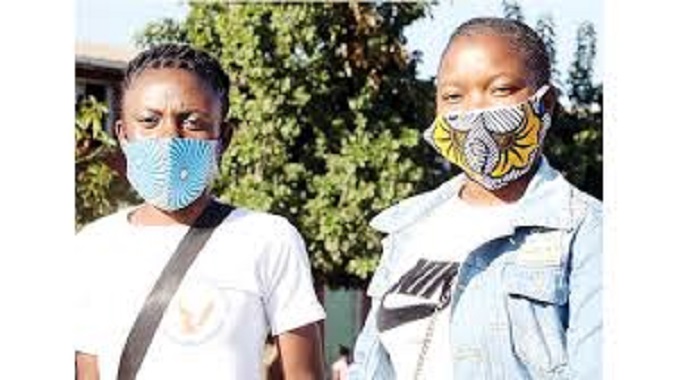
Pathisa Nyathi
He looked fixedly at me, his eyes shining and communicating with confidence and ease.
He never doubted for a moment that I knew him, as much as he knew me. For a fleeting moment he gazed my semi-exposed face. He anticipated some reciprocating gesture, a gesture that never came. He must have wondered what was going on in my mind when I failed to respond to his freely given welcoming expression. Silence, golden silence!
More silence followed, deafening silence. I could see part of his face transfigure from cheerfulness to something I could not fully comprehend. I could not read the full message on his partly hidden face. How could I, when part of his face was concealed with what looked like some pampers on his face and nose? Something was gravely missing to present me with a full picture, a picture which I could identify him with.
It is Covid-19 time. Our faces do not get full expression. As a result, sometimes you struggle to identify someone you knew well prior to transfiguration. There is a lesson to be derived from my experience, which I presume is that of other people too. Covid-19 has brought in its wake fundamental changes to our usual lifestyles. What a few months ago would have been abnormal has become normal. Changes have been wrought on social, cultural and economic fronts.
There I was, unable to recognise Khumalo who I have known for a long time. He asked me politely to wait for him outside a pharmacy where we met. He had some historical information he desired to share with me, like he always does. In fact I wonder how I arrived at the conclusion that he was polite to me. Where is politeness expressed and posted? I was not sure if I really had to wait for one who seemed a curiously looking stranger to me. Well, let me give him a benefit of the doubt.
Just who is this man? I began wondering about his identity. Yes, I mean his identity. That is what he has concealed from my eyes. I have also concealed mine from him. But he knows me all the same. So, the issue at stake here is identity. Just how do we identify individuals that we come across? It’s all about faces and identities. After some brief wait, the unidentified patronising man joined me outside the pharmacy. He continued to show he knew me well, even when part of my face was covered up. Why was I not able to know who he was? I did not want him to know that I did not recognize him.
I quickly sought to identify him by other means — his voice. I knew I was speaking to a man. His attire confirmed that too. It was a deep baroque voice, mature and enchanting. There was no way I could mistake it even when it spoke from a rock cave. It was that of Khumalo. It was time for me to reflect on human identities, in particular with regard to where they are expressed. Imagine a situation where legs were cut off and from individuals and lined up for identification. How easy would it be to identify Simelane’s legs?
Next, we could try their hands. Line up their hands for identification and associate them with a myriad of individuals. I bet it would not be easy to come up with Chamunorwa’s. Our critical identity does not reside in our hands unless of course we see the unique fingerprints.
Imagine, once again, there was placed on parade square some harvest of buttocks. How feasible would it be to identify Machilo’s bums?
Difficult, if not impossible.
What we arrive at then is that voices may be used to identify individuals. There is a problem with that though. If the person we see does not speak, how do we identify him/her by his/her voice? We are left with the face as a marker and expression of identity. During the armed struggle many people were issued with false identity cards. Zapu had a lot of people who sympathised with the struggle who worked in the Internal Affairs Department where identity documents were processed.
When some people sought to embark on journeys to join the liberation struggle, it was not easy to identify such people. All that the identity document, isithupha, had was the name, surname, chief, plus a few details which did not definitively link one to the document. The document did not bear an individual’s face. Security agents were hard put to know correct identities of people embarking on trips to Zambia.
When these people, travelling under false identities got to the border, they threw away identity documents and they knew if these fell into wrong hands, there was no harm. The situation changed dramatically when photographs became part of one’s identity document. That remains the situation to this day. Even passports bear an individual’s face.
Despite new measures that were instituted, those who sought to disguise themselves continued to do so. This was particularly the case with urban guerrillas who rubbed shoulders with security operatives but presented them with unfamiliar and unidentified faces. For example, I interviewed one veteran ZPRA cadre who told me how he altered his face by placing large round objects, such as round nuts, into his nostrils.
By so doing, he acquired a new face. Security agents had an array of identity cards of individuals that they were looking for. On notice boards and their minds they had pictures of persons they wished to ask a few questions, a common euphemism for interrogation, often going together with torture. A disfigured face was quite a challenge to identify.
The question now is, what is unique about faces? Since Covid-19 and the wearing of face masks, I have interrogated the matter with a view to understanding what it is that makes our faces the features that we are identified with? Gunmen seeking to conceal their identities cover up their faces with masks. My observation so far has been that the face has the largest number of individual, identifiable features.
There is the brow which varies from individual to individual. There are eye lashes, eyebrows, eyes, cheeks, cheek bones, cheeks, lips, chin, ears and sometimes teeth. This is not the entire story. Imagine, yet again, cheeks were cut off and placed at some identification parade. There would be difficulty identifying Tjandapiwa’s cheeks. The same goes for eyes, nose, ears and all the other facial features.
What renders identity is not individual facial features. Rather, it is the facial features’ relatedness that creates an emerging picture by which an individual is identified. What this translates to is that someone you knew as having ears and suddenly he loses them, he will initially be difficult to identify. The overall composite picture deriving from relatedness is lost. A total picture that renders identity is made up of all features and their relatedness. It would be difficult to identify one’s face when some facial features are covered up as is the case these days when the smallest organism has gone on a killing spree.
It may sound very odd to some ears to hear I am these days looking closely at the Stonehenge in England with a view to explaining and interpreting it. The Neolithic Stonehenge and related Durrington Walls and other Neolithic structures comprise a multitude of architectural features which, for their meaningful explanation and interpretation, require to be viewed in a holistic, interrelated and interacting manner and, in the process, seeking to unpack how various features within the ritual landscape relate one to other in order to render a scintillating and sustainable interpretation. Current British minds, in my view, are seemingly divorced from those of creators and builders of Britain’s leading cultural monument.
Khumalo had his total facial picture distorted when his nose, mouth and chin were concealed. I had to rely on his voice. One wonders how beauty pageants will be conducted with substantial portions of faces behind facial masks. Lipstick and related face titivating remedies will be applied. Do we light a candle and place it under a table, or do we light and place it on a bushel so that it gives light to all in a room? Let your light so shine before men, that they may see your good works, and glorify your Father who is in Heaven.
Likewise, beauty resides on our faces. Bright lights of beauty are being extinguished by coronavirus. With faces behind facial masks, our prying eyes are starved of beauty, an ingredient in the diet designed at conception and heightened through various interventions such as application of lipstick, tempering with both eyebrows and eye lashes. Life is more important than beauty. While we await the development of an appropriate vaccine, appreciation of beauty exuding from faces will have to play second fiddle.


 Online Reporter