Online Reporter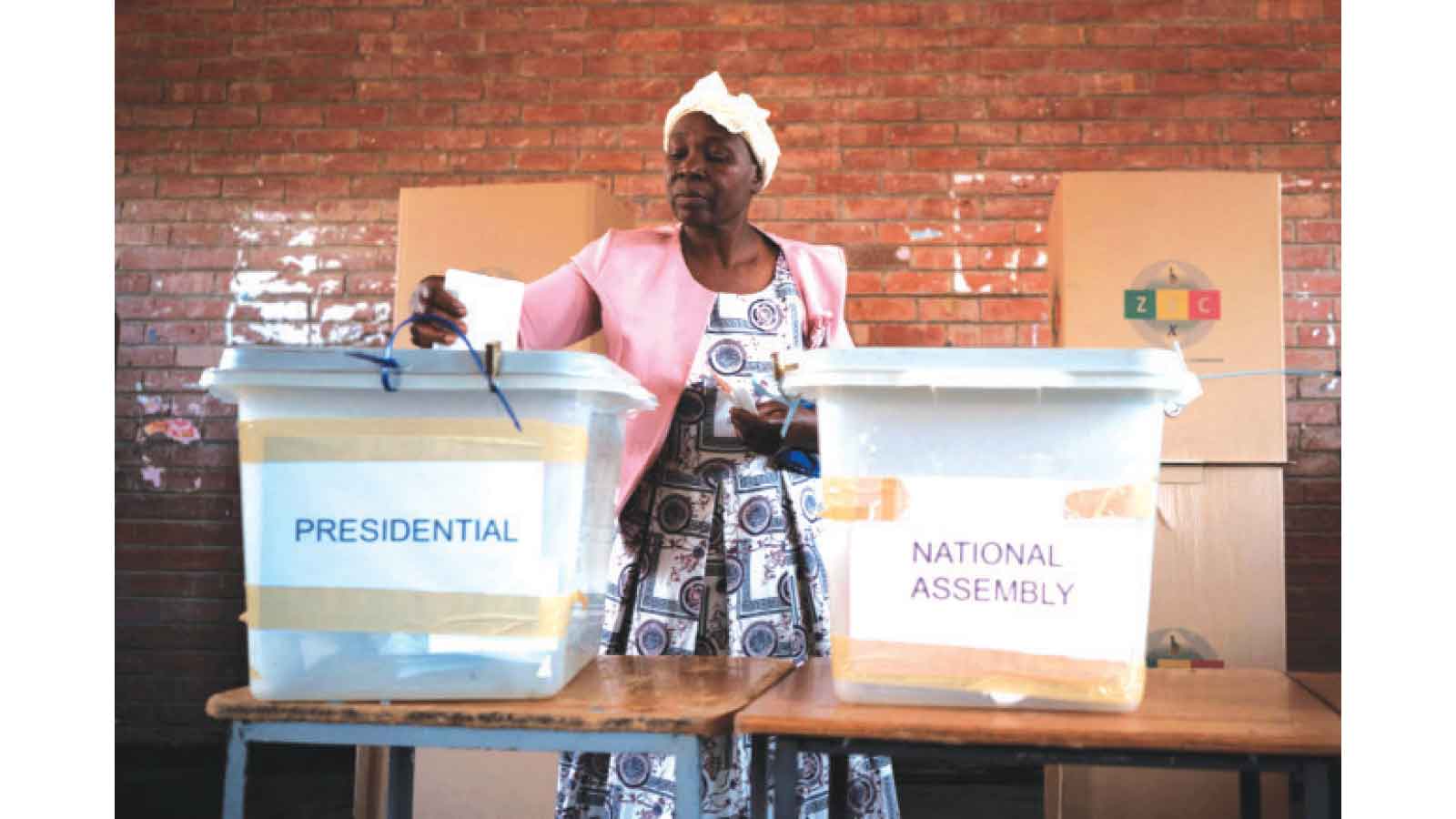
Ziyambi Ziyambi
I AM profoundly grateful for this opportunity to engage with you on the motivations and substantive content of the Constitution of Zimbabwe (Amendment No. 3) Bill, 2026 — a visionary legislative instrument approved by Cabinet on February 10, 2026 and gazetted by the Speaker of the National Assembly (Advocate Jacob Mudenda) this past Monday, thereby inaugurating a robust 90-day period of public consultations commencing on Tuesday February 17.
This dialogue is not merely an exchange of information; it is a clarion call for collective stewardship of our nation’s constitutional destiny.
At its core, the Constitution of Zimbabwe (Amendment No. 3) Bill transcends the narrow confines of partisan agendas, embodying instead a suite of institutional reforms that are unassailably robust, historically transformative and resolutely oriented towards future generations — all unequivocally in service to the supreme national interest.
The Bill stands as a cohesive, meticulously evidence-based antidote to the entrenched governance impediments that have afflicted Zimbabwe for over three decades, critically informed by judicial precedents, resonant societal aspirations and illuminating comparative experiences across Africa.
Scourge of disputed elections
In targeted and resolute fashion, the Bill seeks the eradication of the pernicious barriers that have undermined our governance framework since the introduction of direct presidential elections in 1990, which worsened from 2000 onwards.
These include the recurrent spectre of disputed electoral conduct and outcomes; the insidious cycle of perpetual electioneering that diverts precious resources from policy execution and developmental imperatives — most notably, infrastructural advancements; and the corrosive triad of corruption, inefficiency and societal polarisation.
Such maladies have exacted a staggering toll, with estimates from authoritative bodies like the World Bank, the International Monetary Fund (IMF), the African union (AU) and the Southern African Development Community (SADC) chronicling a loss of US$150 billion-US$200 billion in unrealised potential between 2000 and 2023.
It is imperative that we confront and correct this legacy of stagnation with bold, decisive action.
This Bill is firmly anchored in the binding judicial wisdom of Marx Mupungu v Minister of Justice, Legal and Parliamentary Affairs & 6 Others (CCZ 7/21, 2021), which astutely delineates term-length provisions — such as age limits in Section 186(2) or terms of office in Section 95(2)(b), which are amenable to amendment by a two-thirds parliamentary majority under Section 328(5) — from immutable term-limit caps like those in Sections 91(2) or 216(3), which alone necessitate referendums pursuant to Section 328(7).
This distinction is not merely academic; it is the bedrock of constitutional integrity.
Genesis of the Bill
It is incontrovertible that the genesis of this Bill traces to the 2024 Resolution Number 1 of the majority party in Parliament that “The President and First Secretary of ZANU PF Party, His Excellency, Cde Dr ED Mnangagwa’s term of office as President of the Republic of Zimbabwe and First Secretary of ZANU PF be extended beyond 2028 to 2030. The party and Government should, therefore, set in motion the necessary amendments to the national Constitution so as to give effect to this resolution”.
Yet, upon escalation to Government, our unwavering focus crystallised on the operative imperative: “ . . . Government should, therefore, set in motion the necessary amendments to the national Constitution so as to give effect to this resolution.”
This mandate compelled an unyielding commitment to constitutional fidelity above all else.
In this solemn pursuit, we deemed it an absolute imperative to safeguard two cornerstone provisions of the Constitution of Zimbabwe (2013):
Section 91(2): “A person is disqualified for election as President or appointment as Vice President if he or she has already held office as President under this Constitution for two terms, whether continuous or not, and for the purpose of this subsection three or more years’ service is deemed to be a full term.”
To tamper with this would invite perceptions of partisanship or personal aggrandisement, which we resolutely reject.
Section 328 (7): “An amendment to a term-limit provision, the effect of which is to extend the length of time that a person may hold or occupy any public office, does not apply in relation to any person who held or occupied that office, or an equivalent office, at any time before the amendment.”
In essence, we elected to uphold the presidential term limit in its entirety, refraining from any alteration to Section 91(2) or any facet of Section 328, particularly subsection (7).
This principled stance underscores our dedication to enduring democratic norms.
Our deliberations were profoundly shaped by the stark realities impeding the realisation of Vision 2030 (launched in October 2018), exacerbated by disruptions such as the two-year setback inflicted by Covid-19 on the National Development Strategy 1 (NDS1), launched in October 2020), compounded by the venomous undercurrents of perpetual electioneering — vividly exemplified by the violent demonstrations of January 2019 and July 2020.
These exigencies forge an irrefutable case: Zimbabwe’s prevailing five-year election cycle is manifestly insufficient to foster the audacious, infrastructure-centric and delivery-oriented governance essential to Vision 2030, NDS1 and NDS2.
Since 2000, the short five-year cycle has ensnared our nation in a debilitating “perpetual election mode”, wherein political actors prioritise rancorous division over substantive service delivery, engendering contested elections, policy paralysis, rampant corruption, operational inefficiencies and profound societal cleavages.
This Bill emerges as a courageous corrective, poised to unlock sustained advancement and national rejuvenation, propelling us triumphantly towards and beyond 2030.
Institutional election cycle
It is crucial to understand that the five-year length or term of office articulated in Section 95(2)(b) constitutes an institutional election cycle, wholly detached from the tenure of any individual president and thus independent of the officeholder.
Under our Constitution, the President leads the elected Executive, Members of Parliament comprise the elected Legislature and judges are appointed. Elections are synchronised under Section 158(1) and harmonised in Section 158(2), with the five-year election cycle outlined in Sections 95(2)(b), 143(1) and 158(1).
This intricate interdependence necessitates reforms that address these provisions governing Zimbabwe’s election cycle — a deliberate framework encompassing campaigning, voter mobilisation and electoral processes between general elections.
Erroneously portrayed by detractors as a term-limit provision, Section 95(2)(b) is, in truth, an unambiguous election cycle clause that prescribes the institutional duration or term length of the presidency.
Its language is unequivocally election-oriented: “The term of office of the President extends until — (b) following an election, he or she is declared to be re-elected or a new President is declared to be elected . . .”
This privileges electoral renewal over personal term restrictions.
Moreover, Section 95(2) explicitly frames the presidential term of office (election cycle) as “. . . five years and coterminous with the life of Parliament”, deliberately intertwining presidential and parliamentary durations or periods to affirm its role as an electoral mechanism, not a term limit, thus debunking fallacious interpretations with unassailable clarity.
In this light, Section 95(2)(b) establishes a standardised duration for the presidency as an enduring institution, ensuring administrative continuity and a rhythmic five-year electoral cadence without imposing cumulative constraints on incumbents.
This demarcation sharply distinguishes it from authentic term limits, which enforce inflexible caps, with a specific beginning and a determinable end.
The provision accommodates successive holders within a single cycle without reset, prioritising institutional stability. For instance, in the event of resignation or removal after three years, a presidential successor inherits only the remaining two years under Section 101 — as exemplified by His Excellency President Mnangagwa in 2017, who seamlessly completed President Mugabe’s term, without getting a fresh five-year term when he assumed office on November 24, 2017.
Amending Section 95(2)(b) to replace “five years” with “seven years”, augmented by a proviso for seamless continuity from September 4, 2023 to September 4, 2030, eschews any personalisation of President Mnangagwa’s tenure under Section 91(2).
Instead, it strategically extends the institutional election cycle in harmony with Parliament, fully consonant and compliant with the Mupungu precedent.
This rationale extends with equal force to the amendment of Section 143(1), an election cycle provision titled “Duration and dissolution of Parliament”, intrinsically aligned with the presidential election cycle under Section 95(2)(b).
Zimbabwe’s Parliaments have been sequentially enumerated according to election cycles since 1980, with the current Tenth Parliament commencing on September 4, 2023.
Standing Order 44 mandates annual State of the Nation Addresses to inaugurate sessions, while Standing Order 46 stipulates five sessions per Parliament, mirroring the five-year election cycle.
Historical context illuminates this framework. The Lancaster House Constitution instituted five-year election cycles, yet Amendment No. 18 of 2007 abbreviated the Fifth Parliament to align with the presidential election cycle, exemplifying constitutional adaptability.
The 2013 Constitution perpetuates this structure, with Section 95(2)(b) accommodating exigencies such as resignation, death, dissolution, impeachment or votes of no confidence.
Accordingly, amending Section 143(1) to institute a “seven-year” duration or term length complements the amendment to Section 95(2)(b) and is validated by the Mupungu precedent.
Section 158(1) reinforces this by requiring elections before Parliament’s expiry or dissolution, affirming that Sections 95(2)(b) and 143(1) are election cycle mechanisms, not term-limit provisions.
Sections 95(2)(b), 143(1) and 158(1) harmonise impeccably with Section 91(2), which defines a full term as “three or more years” without constraining the election cycle’s length, thereby facilitating the seven-year paradigm.
In summation — and this merits emphatic reiteration — amending Section 95(2)(b):
(i) Preserves inviolate the presidential term limit in Section 91(2);
(ii) Forecloses any prospect of a third term or repeal of the presidential term limit;
(iii) Abstains from extending the presidential term under Section 91(2);
(iv) Sidesteps section 328(7), which applies exclusively to term-limit provisions;
(v) Elongates the election cycle from five to seven years;
(vi) Encompasses all elective offices, including parliamentary positions, beyond merely the presidency;
(vii) Ensures that, under Section 95(2)(b), a successor pursuant to Section 101 — arising from resignation, removal or death after, say, three years — assumes solely the residual election cycle duration, fostering continuity without commencing a new term, analogous to parliamentary by-elections under Section 143(1) that replenish only the remaining cycle or period, in contrast to Section 216(2) for defence commanders, where vacancies initiate fresh five-year terms;
(viii) Operates within Section 328’s amendment regimen, mandating referendums only for Chapter 4 (Declaration of Rights), Chapter 16 (Agricultural Land) or Section 328 itself.
Notably, amendments to term-limit provisions do not intrinsically require referendums, as Section 91(2) endures unaltered, while Sections 95(2)(b) and 143(1) are exempt as election cycles.
Referendum or no referendum
We have observed a deluge of misinformation surrounding the gazetted amendment to Section 95(2)(b), including baseless claims that it necessitates a national referendum as an alleged term-limit provision.
These assertions are profoundly misguided and demand unequivocal repudiation.
The constitutional amendment architecture is lucidly prescribed in Section 328.
Pivotal is Section 328(6), which requires a referendum only for Bills altering provisions in Chapter 4 (Declaration of Rights) or Chapter 16 (Agricultural Land).
Section 328(9) extends this safeguard to Section 328 itself, equating it to Chapter 4.
Thus, only these delimited segments demand two-thirds parliamentary endorsement followed by a referendum — nothing further.
Contrary to politically motivated fabrications masquerading as legal analysis, amendments to term-limit provisions do not invariably invoke referendums.
Our Constitution enumerates 15 such provisions, none inherently shielded, permitting their revision without a referendum — save where Section 328(7) intervenes if incumbents benefit from a term-limit extension.
From this exposition, several imperatives emerge with crystalline clarity:
(i) The presidential term limit in Section 91(2) remains unamended;
(ii) All 15 term-limit provisions are amenable to amendment without a referendum;
(iii) Sections 95(2)(b) and 143(1) constitute election cycle provisions, not term limits, thereby exempting them from referendum obligations;
(iv) The litmus test for Section 95(2)(b) resides in Section 328(1)’s definition of a “term-limit provision” as “a provision of this Constitution which limits the length of time that a person may hold or occupy a public office”.
If affirmative, Section 328(7) applies with referendum ramifications; if negative, no referendum ensues. Section 95(2)(b) is categorically not a term-limit provision, as it regulates election cycles, not the tenure of individual incumbencies;
(v) Section 328(7) triggers a referendum solely if a term-limit amendment prolongs an incumbent’s tenure for one who occupied the office pre-amendment;
(vi) This precision mandates unwavering allegiance to constitutional verity over partisan speculation.
Curing toxicity
Inextricably intertwined with the amendments to Sections 95(2)(b), 143(1), and 158(1) and (2) is the repeal and substitution of Section 92, transitioning from direct popular election of the President to indirect election by Parliament.
This paradigm-shifting reform revives the sagacious pre-1987 Lancaster House model, wherein the Executive derives from parliamentary majorities, fostering consensus and eradicating the blight of disputed elections.
The 1987 Constitution Amendment No. 7 disrupted this equilibrium by establishing a directly elected Executive President with a six-year cycle decoupled from Parliament’s five-year term, precipitating bifurcated elections and persistent toxicities since 1990: widespread political violence, contested outcomes and insidious regime-change plots.
Even Amendment No. 18 of 2007, which harmonised cycles to five years and synchronised elections for the President, Parliament and local authorities, failed to extirpate the root malaise — direct presidential elections — as the perennial catalyst for disputes, consistently decried by observers from the AU, SADC and the Commonwealth.
Drawing inspiration from our pre-1987 heritage and the exemplary low-conflict models of South Africa and Botswana, the amendment to Section 92 confronts the foundational cause of perennial electoral strife, attenuating political violence and destabilisation perils — as witnessed in Mozambique’s 2024 and Tanzania’s 2025 direct presidential contests.
Parliamentary selection of the President will insulate the office of the President from divisive rancour, galvanise national cohesion and revitalise Zimbabwe’s democratic ethos, elevating our nation as Africa’s paragon of serene power transitions.
The amended Section 92 will also enable diaspora voting through consequential amendments to the Electoral Act, as electors will focus solely on MPs and councillors in constituencies and wards, respectively.
These cornerstone reforms are buttressed by synergistic enhancements, including the augmentation of the Senate under Section 120 from 80 to 90 members. The inclusion of 10 ex-officio experts will infuse diversity and specialised acumen, expanding the ministerial reservoir and mitigating polarisation to fortify parliamentary democracy.
Amendments to Section 239 on voter registration will depoliticise the voters’ roll, rationalise what has already been happening, therefore codifying established practices, while the independent Delimitation Commission (Sections 160 and 239) will forestall gerrymandering, ensuring equitable electoral demarcations.
In conclusion, this Bill dismantles entrenched impediments through a potent triad: indirect presidential election to neutralise toxicity, a seven-year election cycle to prioritise development and inclusive governance structures — all executable under Section 328(5) without the divisiveness of referendums.
This legislative masterpiece immortalises President Mnangagwa’s legacy, heralding the Second Republic as a constitutional renaissance that bridges our storied past with limitless horizons beyond 2030.
Let us embrace this transformative vision, for in its realisation lies Zimbabwe’s unyielding ascent to prosperity and unity.
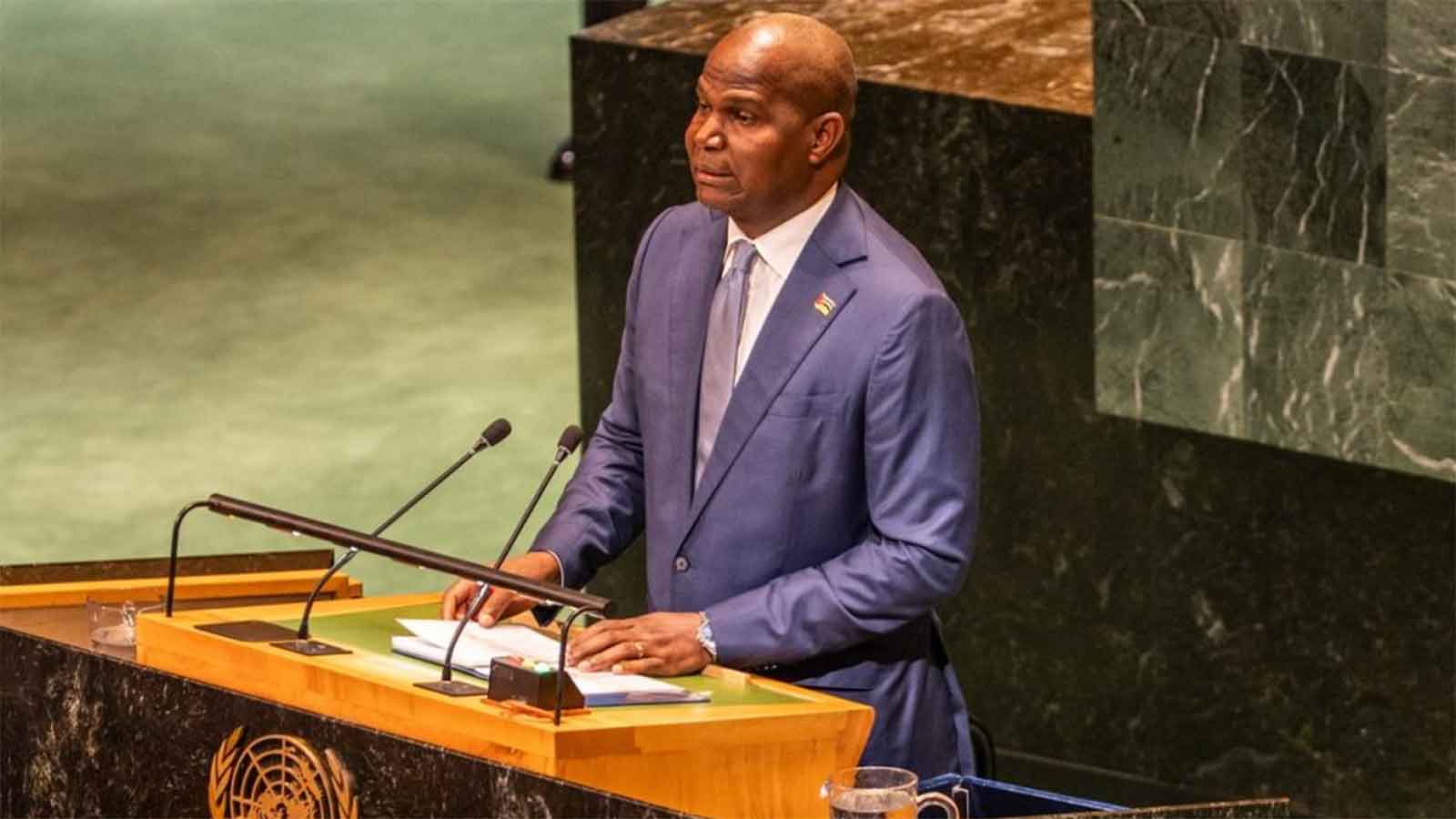
Ziyambi Ziyambi is the Minister of Justice, Legal and Parliamentary Affairs. He gave this speech when he met Zimpapers editors on Thursday.