

 Online Reporter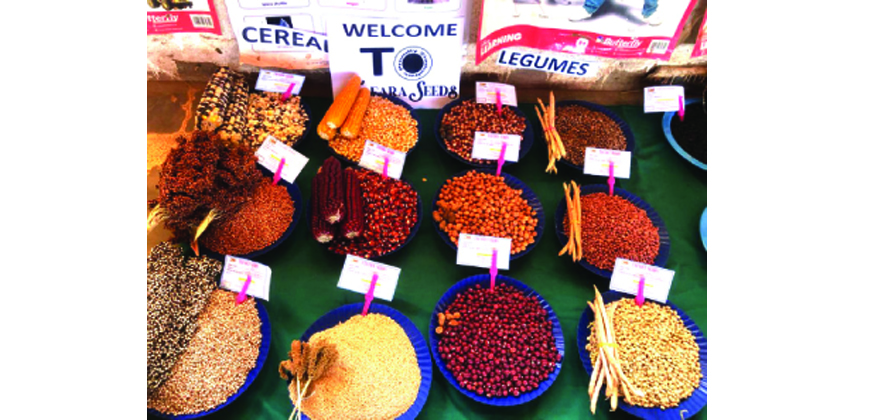
Tendai Gukutikwa
Post Reporter
WHEN the deadly Cyclone Idai swept through Chimanimani in March 2019, it left behind more than just physical devastation.
It tore through the soul of the community, flattening homesteads, drowning livestock, silting rivers and wiping out fields that many families depended on for survival.
In its wake, it left trauma, hunger and a lingering sense of uncertainty.
After their homes were restored by Government and other development partners, for months – and even years – afterwards, the question that haunted many was how they would regain their fields after nature had torn everything apart.
Today, exactly six years and three months later, the answer is being whispered, and sometimes shouted, from neatly mulched fields, small plots of finger millet and sorghum, and traditional seed fairs echoing with the sound of hope.
In Chimanimani, survivors of Cyclone Idai have, not only rebuilt their homes and replaced their livestock, but are also replanting their future, one seed at a time.
Despite ongoing challenges posed by climate change, the survivors are no longer merely victims of its wrath – instead, they are adapting, innovating and preparing for the future. In many ways, the greatest thing they are cultivating is hope, deeply rooted in their farming traditions, knowledge and spirit.
During the recent Chimanimani Seed and Food Fair Festival, hosted by the Towards Sustainable Use of Resources Organisation (TSURO) Trust at Bumba Primary School, the atmosphere was one of quiet celebration and reflection. Beneath the humble shade of pitched tents, farmers from across the district gathered, not only to display their harvests, but also to share stories of rebirth, stories rooted in the soil, seeds and shared knowledge.
Mr Langton Mutsakani, a farmer from Nezandonyi Village in Ward Seven, stood beside a woven basket filled with rukweza (finger millet) and mapfunde (sorghum). His hands moved deliberately as he separated the kernels, but his voice was animated with conviction.
“This has all been made possible by the Nature Plus Project, which is being implemented by Tsuro Trust. It is beneficial because it brings us together in seed banking and traditional seed exchange. Once you join, you become an integral part of a larger community, where you meet others and have the opportunity to access numerous seeds that you would not have had otherwise,” he said.
For Mr Mutsakani, who still vividly remembers watching water cascade down the hills of Chimanimani, uprooting lives and washing away futures, farming is not merely about survival, but also resistance.
He spoke passionately about traditional seed varieties, many of which have been traded and preserved through what he describes as a communal memory.
“These traditional seeds do not require excessive rainfall. They are ideal for a region like Chimanimani, where the weather is unpredictable – one year it is floods, the next it is drought. Moreover, most of these seeds have medicinal properties. Consuming food grown from these seeds promotes overall health. Some varieties, such as rukweza, are believed to have cancer-preventing properties,” he explained.
The age-old adage that what grows in the ground can heal more than hunger resonated throughout the fair.
However, what was most remarkable was the methodical approach to recovery.
It has not been about hastily returning to old ways, but rather rethinking farming through training, conservation, and knowledge sharing, according to Mr Mutsakani.
These practices have become lifelines, especially in an environment prone to climate volatility.
In an interview, Mrs Ever Makwinimizi, a lead farmer for the Budiriro group, recalled her own transformation. Despite having only a small plot of land, she said her harvest is now more abundant than ever before.
“Under this project, we received a number of trainings and were taught on conservation farming methods. Because of that, our yields have increased significantly. We learnt about minimum soil disturbance, permanent soil cover, crop rotation and different agroecology farming practices. These are no longer just technical terms to us, we live by them. I nourish my soil, and I know which seed belongs where,” she said
Mrs Makwinimizi’s approach is no longer unique in the district.
Across various villages, farmers trained through agro-ecological programmes are driving a movement towards food sovereignty. Fields that once grew little are now vibrant with native grains, legumes, and herbs that are better suited to survive extreme weather conditions.
Some use home-brewed biostimulants to nourish their crops, part of a growing practice of using natural inputs to strengthen plants and soils.
Agritex officer for Ward Seven, Mrs Barbra Mupasi, said the transformation has been worthy of applause.
“This project has helped empower our farmers. Yields have improved, and the mindset has changed. They have been taught conservation farming methods, and their yields have increased significantly. The Nature Plus Project has greatly assisted our farmers by imparting knowledge on traditional seed farming and conservation agriculture. You would not believe that these are the same people who were left devastated by the cyclone just a few years ago,” she said, further explaining that behind this slow and steady transformation is a quiet effort by organisations working closely with local communities, not to impose solutions, but to build knowledge, trust, and capacity.
“Through field schools and training sessions, farmers are encouraged to see themselves, not only as beneficiaries of aid, but also as custodians of seed, soil, and future resilience,” she said.
Mr Farai Gumisai, the Tsuro Trust agro-ecology lead for the project, explained how the focus is, not on replacing the existing knowledge of farmers, but rather refining it.
“Our primary goal is to teach the farmers how to conserve their resources and utilise them wisely to improve their livelihoods. We also support the Government’s food security efforts in this area. This begins with knowledge, land design, soil care, seed preservation, and even showing them how to produce bio fertilisers using readily available materials,” he said.
He said the initiative which is implemented by TSURO Trust and funded by Global Affairs Canada through the Canadian Foodgrains Bank (CFGB), in collaboration with Alongside Hope promotes climate-resilient agriculture using traditional, drought-tolerant seeds and conservation agriculture practices.
The philosophy that the solutions already lie in the hands of the people has begun to yield tangible results. However, not everything is perfect. The memory of Cyclone Idai still haunts Chimanimani. In conversations, people still recount lost family members, missing documents, and damaged infrastructure. Yet, they also speak of a different kind of recovery – one that grows silently but steadily from within.
Six years after Cyclone Idai ravaged the land, Chimanimani is no longer defined solely by tragedy. It has transformed into a landscape of lessons, healing, and new beginnings, planted by the very hands that once dug through the mud for survival, now sowing seeds for something stronger.




beautiful and informative articles, thank you