Online Reporter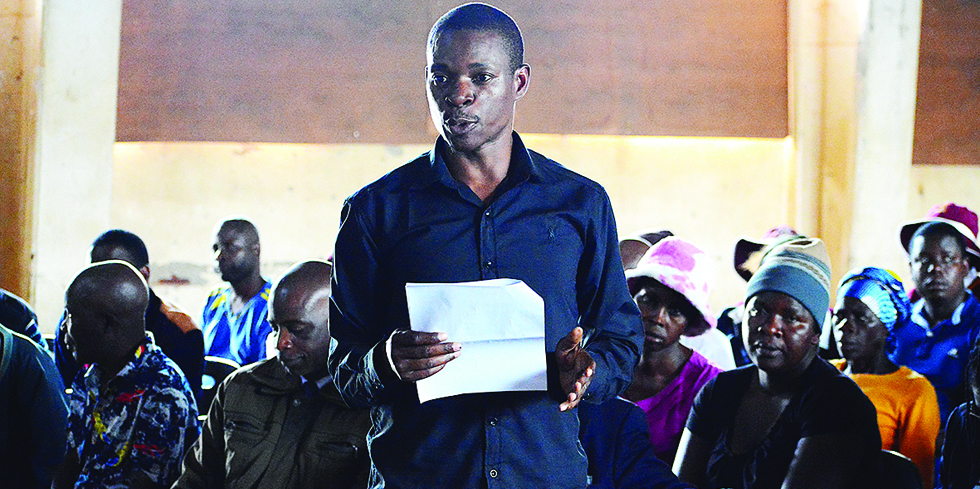
Moses Magadza and Cleophas Gwakwara in CHIPINGE
FOR Mr Thomas Sithole (28), a resident of Chipinge, Zimbabwe, the mention of climate change brings back harrowing memories.
He recalls vividly when Cyclone Idai struck eastern Zimbabwe on March 15, 2019, hitting Chipinge and Chimanimani districts the hardest, with torrential rains, intense winds and landslides causing massive devastation.
The cyclone destroyed 600 houses, and damaged 20,000 others in Chipinge, leaving over 17 000 households homeless and displacing thousands.
Critical infrastructure was severely damaged, with over 90 percenrt of road networks and 584 kilometres of roads destroyed by landslides, cutting off communities and hampering rescue operations.
The Marowanyati Dam in Buhera District overflowed, exacerbating flooding and damaging irrigation schemes.
Health and education services were disrupted, with five health facilities damaged and 139 schools affected, impacting over 9 000 learners. Agricultural losses were extensive, with more than 50 percent of maize, banana and tuber crops wiped out, along with the loss of 362 cattle, 514 goats and 17 000 chickens.
The total damages in Chipinge and Chimanimani accounted for over half of the estimated US$542–616 million in national losses.
Last Thursday, Mr Sithole was among scores of residents and representatives of interest groups who thronged Gaza Community Hall in Chipinge when the Parliament of Zimbabwe, through its Joint Portfolio Committee on Environment, Climate and Wildlife and the Thematic Committee on Climate Change convened a public hearing on the Climate Change Management Bill2025.
Sweden, through the Sexual Reproductive Health Rights, HIV and AIDS Governance Project of the SADC Parliamentary Forum, is supporting the hearings which are being conducted in line with Section 141 of the Constitution, which enjoins Parliament to consult citizens during law-making processes.
At the start of the hearing in Chipinge, Buhera Central legislator, Honourable Samson Matema, who leads one of two teams that will cover five out of the 10 provinces of Zimbabwe during the public consultations, highlighted the recent Bandama Dam disaster in Ward Seven, Chipinge, as a stark reminder of the devastating impacts of climate change.
The dam burst on March 9, causing severe flooding along the Dandoni River, which flows into Mwara and Budzi rivers. The tragedy claimed five lives, including children and destroyed livestock, crops and local infrastructure.
He noted that the incident, alongside warnings of other vulnerable dams such as
Newcastle Dam, underscores the urgent need to strengthen climate resilience and dam safety in the face of extreme weather events. Against this backdrop, Mr Sithole and scores of residents who turned up for the public hearing showed keen interest in that evolving Bill and made substantiveinputs.The Green Building Council of Zimbabwe (GBCZ) urged Parliament tostrengthen the Climate Change Management Bill by explicitly incorporating thebuilt environment. It warned that buildings account for a significant share of thecountry’s greenhouse gas emissions.GBCZ representative, Mr Phillip Mwatsika said the Bill, in its current form,overlooks a major contributor to climate change.
“The built environment is too important to be relegated under ‘any other sector’as it contributes 39 percent of greenhouse gases,” he said, and called for construction to be listed alongside other key sectors such as energy, waste and agriculture. He argued that Zimbabwe cannot effectively mitigate climate change without reforming the way buildings are planned, constructed and managed.
“Voluntarism has never been known to give the desired results. Green building standards must be made mandatory through the Climate Change ManagementBill,” said Mr Mwatsika.
He proposed specific amendments to the Bill to mainstream green building practices, including adding key definitions in Clause 2 such as “built environment,” “green building,” “embodied emissions,” and “green building rating and certification” for clarity; including construction as a distinct sector under the Intergovernmental Panel on Climate Change (IPCC) categories; and introducing a new objective in Clause 3 to establish a regulatory framework for green building practices and certification systems. Other recommendations relate to accrediting professional training institutions under Clause 6 to build national capacity among architects, engineers, builders and planners; strengthening incentives for green construction under Clause 6(2)(b), including tax rebates, expedited permits and subsidies to encourage industry uptake; updating outdated clauses to reflect the current government structure, particularly acknowledging the Climate Change Management Department; including certified green buildings in national registers under Clause 17; adding GBCZ to liaison committees under Clause 23 to provide expert technical support; developing a national Green Building Code and rating system under Clause 37; and introducing tax and fiscal incentives such as reduced stamp duty, capital gains tax and duty waivers for certified green buildings under Clause 38. Mr Mwatsika stressed that climate-resilient development must begin with thebuilt environment.
Buildings consume substantial amounts of energy andmaterials and remain in use for generations.
“All building materials come from the environment and impact the environment- bricks, cement, steel, glass, timber,” he said, adding: “We must design for bothmitigation and adaptation to climate risks.” He also highlighted the economic benefits of green construction, noting that it “creates new jobs, attracts investment, and improves public health andproductivity.”
The GBCZ urged Parliament to align Zimbabwe with regional and global trends, noting that countries such as South Africa, Kenya, Ghana and Nigeria have already integrated green building standards into national legislation. “By implementing this proposal, we can create a more sustainable and resilient built environment for future generations,” said Mr Mwatsika.
The Advocacy Core Team also made detailed submissions. It urged Parliament to strengthen the Bill by explicitly safeguarding public health, community rights and resilience.
The group, represented by Ms Diana Mailosi, said the Bill must “safeguard lives as much as it protects the environment.” It warned that climate change is already causing severe health threats including malaria, heat stress, diarrhoeal diseases, malnutrition and mental health challenges linked to climate shocks.
The Advocacy Core Team recommended that the Bill adopt clearer definitions that align with international climate law and human rights principles. These include revising definitions for adaptation, resilience, data sharing and mitigation, and adding a new definition of just transition to protect jobs and vulnerable groups during climate-related economic shifts.
They also called for the Bill to uphold Free, Prior and Informed Consent (FPIC)
for communities affected by climate projects and to adopt rights-based language
that “balances environmental protection with cultural and social development,”in line with Zimbabwe’s Constitution. A central pillar of the recommendations is the integration of health in every section of the Bill.
The group proposed establishment of an Adaptation and Resilience Unit within the Climate Change Management Department to coordinate national adaptation plans; mandatory reporting on health-related climate impacts in annual departmental reports; inclusion of a health cluster in stakeholder liaison committees to ensure medical experts, traditional healers andcommunity health workers contribute to climate decisions; and ring-fencing climate finance for public health adaptation, including disease surveillance, hospital resilience, clean water access and emergency preparedness.
The submission stressed that climate change is a health crisis before it is an environmental one and without explicit funding for health adaptation, lives would continue to be lost to preventable climate-related illnesses.
To ensure enforcement, the Advocacy Core Team urged Parliament to make national adaptation plans compulsory for every ministry and local authority; require ministries such as Health, Agriculture, Local Government, Education and Energy to prepare sector-specific adaptation plans; strengthen penalty clauses for organisations or agencies that obstruct climate action; and establish monitoring and evaluation systems with resilience indicators to track real progress.
The group further proposed the creation of a National Climate and Health Research Framework to guide evidence-based decision making. This would fund universities and local researchers to study disease patterns linked to climate change and support early warning systems for outbreaks such as cholera and malaria.
The Advocacy Core Team urged lawmakers to “adopt a people-first Bill that responds to Zimbabwe’s real vulnerabilities. Ms Dorcas Chitiyo flagged the Harare Declaration on Climate and Health, which was endorsed during the inaugural Climate and Health Africa Conference (CHAC) in October 2024, as a critical continental milestone.
She urged Parliament to adopt the Declaration’s call for integrated and evidence-based approaches that align climate action with public health priorities. In her submission, she emphasised the need for institutionalising climate–health linkages within national policy frameworks, enhancing research collaboration, and mobilising domestic resources to safeguard communities from the escalating health impacts of climate change. In conclusion, Honourable Matema commended the spirited participation of the Chipinge community, noting that their valuable contributions had been dulycaptured for inclusion in the final report to Parliament. He encouraged stakeholders to submit any additional inputs within the 14-day window period through the Committee Clerk, Mr John Mazani. Honourable Matema underscored that climate change is a defining issue that speaks to both present realities and the security of future generations and expressed gratitude for the community’s robust and engaging participation in the public hearing, where residents, including school learners, made submissions. The public hearings on the Bill continue as Parliament gathers broader public input across the country.
Moses Magadza, PhD, is the media and communications manager at the SADC PF, while Dr Cleophas Gwakwara is a SADC PF desk officer and an SRHR researcher at Parliament of Zimbabwe.