Online Reporter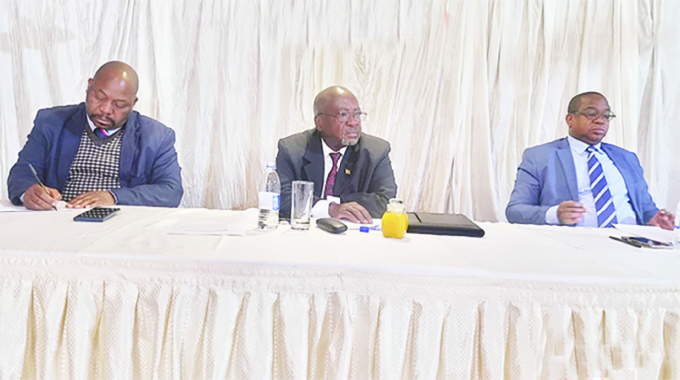
Nelson Gahadza and Mike Tome
Zimbabwe needs to focus on advancing conditions for industrial complexity, as this is the more feasible way to achieve upper-middle income status, as espoused in its Vision 2030 policy agenda, the Confederation of Zimbabwe Industries (CZI) has said.
The country’s largest industrial lobby said it was positioning itself to advance key targets under the national development priorities.
CZI president Mr Mucha Mkanganwi said developing deep and complex industries in Zimbabwe was the most viable pathway to achieving the Vision 2030 target of an upper-middle-income economy.
This comes as the Government is actively driving industrialisation initiatives to achieve the goal of transforming the country into an upper-middle-income economy by 2030.
The effort includes a focus on structural transformation, building a strong manufacturing sector, fostering rural industrialisation, growing exports, promoting green industry initiatives and attracting increased investment. The Government is also working on import substitution, targeting key sectors for local production to reduce reliance on imports.
Mr Mkanganwi noted that there were two sure ways of attaining upper-middle income status, judging by global experience, noting that rich oil and gas resources and industrial complexity were the key attributes used by countries that achieved this level of economic development.
He was speaking during the unveiling of the National Development Strategy 2 (NDS2) Roadmap in Harare yesterday.
Following extensive consultations and a robust presentation led by the Minister of Finance, Economic Development and Investment Promotion, Professor Mthuli Ncube, Cabinet has since approved 10 national priorities that will underpin NDS2.
These include Macroeconomic Stability and Financial Sector Development, Inclusive Economic Growth and Structural Transformation, Infrastructure Development and Housing, Food Security, Climate Resilience and Environment Protection, Science, Technology, Innovation and Human Capital Development, Job Creation, Youth Development, Creative Industries and Culture, Social Development and Social Protection and Regional Development and Inclusivity through Devolution.
The priorities will guide Zimbabwe’s development efforts over the five years from January 2026 to December 2030.
Minister Ncube pointed out that there was strong evidence that Zimbabwe was making good progress towards becoming an upper-middle-income economy by 2030.
This, however, required a clear understanding of the priorities for achieving this ambitious vision.
“We are fixated on becoming an upper-middle-income country by 2030,” Mkanganwi said.
He said that the CZI had undergone significant restructuring to align with the national objective, responding to the Government policy direction to ensure complementary outputs.
“When I joined the CZI presidium about three years ago, we only had two technical people. Now we have nearly 20 technical people,” Mr Mkanganwi said, illustrating the organisation’s commitment to supporting the national industrialisation drive.
The CZI president, however, pointed out that only two types of economies consistently achieved upper-middle-income status.
“We have seen that countries that are upper middle income, there are only two types of countries,” Mr Mkanganwi stated.
“One, countries that have complexity in their manufacturing and their industries. And two, countries that produce oil and gas. Those are the only two countries where you have upper-middle-income countries.”
He noted Zimbabwe’s nascent stage towards oil and gas production, which he said was a limitation.
While Zimbabwe has discovered oil and gas deposits, a lot still needs to be done to develop a mature petroleum industry, which may take time and require a huge capital outlay.
CZI thus believes the country’s only readily available pathway is to develop industrial complexity.
It is against this background that Mr Mkanganwi noted issues that need to be resolved to drive the growth and development of complex industries.
“We always talk about formal business, and the reason we talk about it is we understand that (industrial) complexity is where upper-middle incomes come from.”
Achieving such complexity, however, presents substantial challenges and demands a highly conducive environment, Mr Mkanganwi cautioned.
“To get into a complex economy is hard, and it’s hard to maintain,” he observed.
He detailed the specific prerequisites CZI relentlessly champions.
These include robust Intellectual Property (IP) protection and a focus on foundational manufacturing, not just assembly.
“So you will see that in our inputs, we push for things like IP. We talk about manufacturing for manufacturing, because we have seen that it is easy to manufacture end products,” Mr Mkanganwi explained.
He stressed that complexity cannot flourish without improved ease of doing business.
“We talk about ease of doing business, because complexity cannot develop where there is no ease of doing business,” Mr Mkanganwi asserted.
He expressed regret that the World Bank had discontinued its global rankings on this metric, noting, “It is a pity that the World Bank has been tracking this for their own political issues, but we thought it was a very useful thing for us to track.”
Furthermore, Mr Mkanganwi identified macroeconomic stability as the non-negotiable bedrock for attracting the investment needed for complex industries.
“We always talk about macroeconomic stability,” he emphasised, “because again, you will not get complexity if you don’t have macroeconomic stability. Investors will only come when these factors are addressed.”
He underlined that financial sector development and accessible credit were direct consequences of stability, stating, “Deepening of capital markets and products follows macroeconomic stability. Lending will not happen if we do not have macroeconomic stability.”
Mkanganwi’s address positioned the cultivation of sophisticated, formal industrial capabilities, underpinned by a stable and business-friendly environment, as the indispensable engine for realising the ambitions of the NDS2 and Zimbabwe’s 2030 vision.
The CZI’s own organisational transformation, he indicated, reflects the private sector’s serious commitment to this complex national endeavour.
Minister Ncube said Zimbabwe was making significant strides towards achieving upper-middle-income status by 2030, with a unique approach to development underpinned by its citizens’ self-funded housing initiatives and notably low household debt.
“Zimbabwe has already made inroads on achieving the middle-income status,” Minister Ncube affirmed.
He highlighted a distinct characteristic of the nation’s development, noting, “It is the only country where its citizens are building houses with their funds, not mortgages, as in other countries.”
The Minister further elaborated on the nation’s financial resilience, drawing comparisons with other economies.
“If you study what you call private debt in most countries in Africa, even around the world, you’ll find that Zimbabwe has some of the lowest levels of household debts on the continent and among peer countries,” Professor Ncube stated.
This strong financial position, he asserted, provides a solid foundation for future growth. “So, I have no doubt that we’re going to reach upper-middle-income status by the year 2030.”
The presentation of the NDS2 Roadmap marks a crucial phase in the country’s economic planning.
Minister Ncube also confirmed that various stakeholders, who were present at yesterday’s meeting, will now transition into being part of the thematic working groups.
This collaborative approach is set to ensure broad participation in shaping the specific strategies under NDS2, aligning with the Government’s vision for an inclusive and sustainable development trajectory.
On the way forward, Minister Ncube told participants at the conference yesterday that consultations and engagements were ongoing through the thematic committees for the development of NDS2.
“What should happen next is, first of all, let’s receive your input. You’re all speaking to specific thematic working groups to receive that input. But then the chairpersons should continue and lead, you tap over the baton and lead to deeper consultations in your thematic working area. That will be the next stage beyond this ground zero, broader consultation.”
He said the terminal evaluation of NDS1 will also take place starting from July 1, and run for 60 days.
“This is critically important as this will just lay the foundation in terms of where we are headed in terms of NDS2. “Something that we have not mentioned, by the way, is also the economic survey that ZimStat is currently conducting.
“That will also be part of the foundation and a baseline for NDS2,” he said. Minister Ncube said that on drafting the policy, there was a need for a good drafting team and the use of experts who are good at coming up with a comprehensive results measurement framework because we are focused on results,” he said.
He added that in the draft document, there is a need for a section that focuses on the results, what will be tracked, as that will be how the impact will be measured.
“All that has to be done is because it will be part of the document. After that, the document will have to be presented to the Cabinet, discussed by the Cabinet, and adopted by the Cabinet sometime at the end of October or beginning of November.
“Then in mid-November, I expect President Mnangagwa will launch the document, and then at the end or of last Thursday of November, I will then present the National Budget for 2026 with inputs from this NDS2 document,” he said.
He noted that the budget would, or at least must, speak to the NDS 2 policy document.



 leeroy