Online Reporter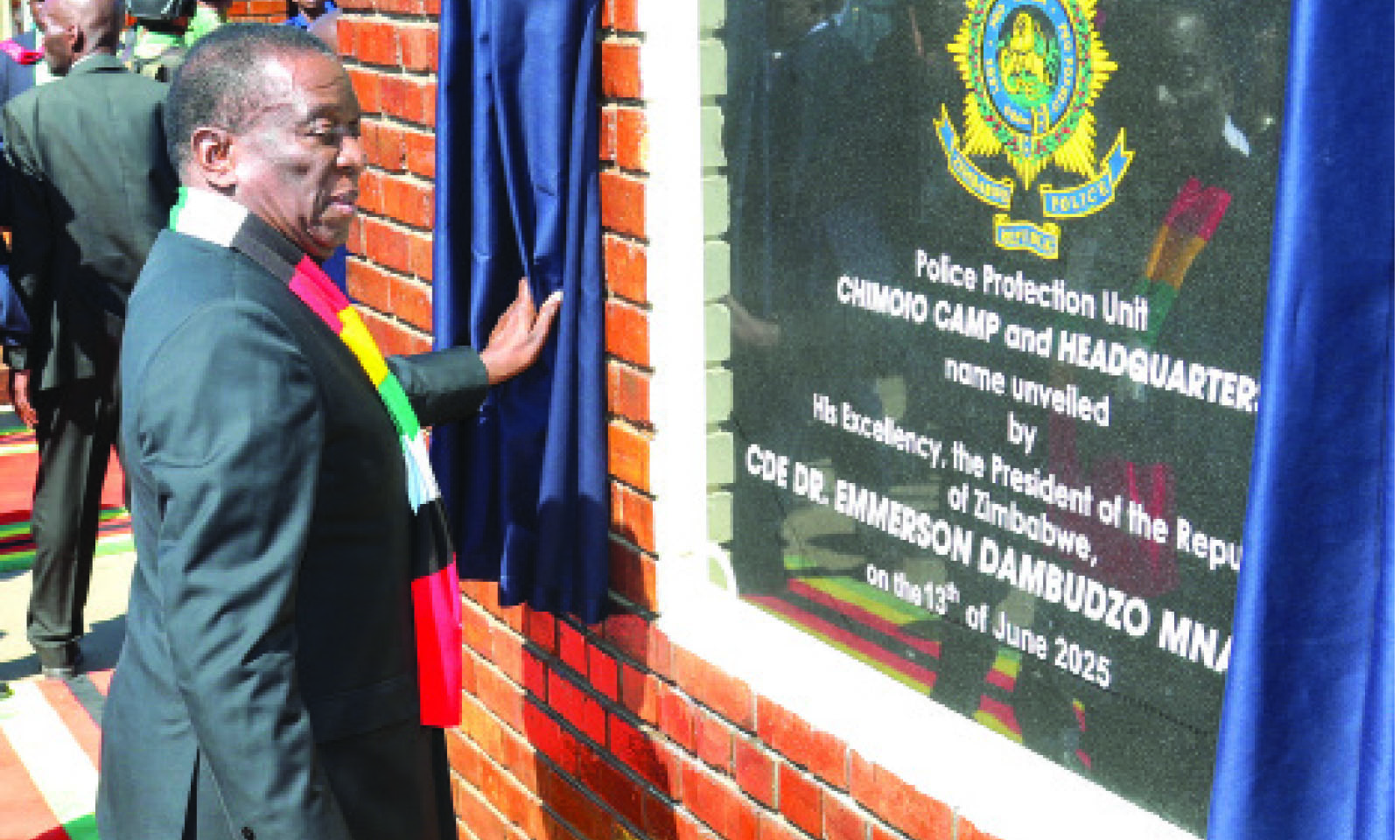
Nduduzo Tshuma
Day Editor
THE renaming of Tomlinson Police Depot to Chimoio Camp Depot presided over by President Mnangagwa last Friday, along other strategic institutions and infrastructure, represents the Second Republic’s broad decolonial agenda to reclaim historical agency and reassert national sovereignty.
National memory, particularly that of the liberation struggle, is critical in shaping a country’s identity, fostering unity and guiding its trajectory and in that light, the change to Chimoio Camp Depot represents an ideological and symbolic act of national reorientation, firmly rooted in the principles of decoloniality.
The Second Republic has undertaken a number of initiatives to honour the country’s forebears from the First and Second Chimurenga/Umvukela, including the erection of Mbuya Nehanda’s Statue in Harare and the reconfiguration of the Pupu Battlefield Memorial Site in Lupane, Matabeleland North Province, among others, as part of efforts to immortalise the nation’s heroes and preserve their legacy.
In a telling example of the ongoing battle over historical narratives, a YouTube channel called the Australian Military Aviation History three weeks ago posted a documentary titled, “The Rhodesian Bush War”, which had garnered more than 600 000 views by Monday.
The pro-Rhodesia documentary frames the country’s liberators as insurgents, while valourising the coloniser’s efforts to thwart Zimbabwe’s liberation efforts. That such narratives are still being disseminated 45 years after Zimbabwe’s independence means there are elements out there who at best suffer from colonial hangover and at worst yearn for the days before April 18, 1980. It is against this background that the efforts by the Second Republic to dismantle the lingering psychological and cultural imprints of colonialism become not only necessary, but extremely urgent.
Decoloniality seeks to break away from colonial epistemologies and restore indigenous systems of knowledge, governance and memory and one of its key tenets is the reassertion of historical truth through the valorisation of the once suppressed narratives such as the anti-colonial resistance.
As President Mnangagwa aptly stated, colonial powers used naming as a strategic tool of domination, both physical and psychological in a calculated attempt to embed colonial authority into the very fabric of daily life.
“Colonialism saw the naming of places and institutions being used as a means of dispossession, both physically and psychologically, for asserting dominion over our land and us, its rightful owners,” said President Mnangagwa in his address last Friday. “These name changes are an important tool for preserving our heritage; hence, we are ensuring that the choice of names always echoes the correct historical narratives of our beloved motherland, Zimbabwe.
“It is critically important, therefore, that the naming of our institutions should reinforce who we are as Zimbabweans and Africans.”
The President stressed that the historical significance of these names must be constantly explained to educate both current and future generations about the country’s past and cultural diversity.
He noted that the renaming of this key security facility followed the earlier change of Morris Depot to Mkushi Police Academy.
On November 23, 1977, Rhodesian forces attacked Chimoio Camp, the ZANLA military headquarters in Mozambique, killing thousands, including unarmed women and children.
On October 19, 1978, they launched coordinated aerial and ground assaults on Mkushi, a ZIPRA women’s cantonment in Zambia also killing mostly women combatants. They also attacked Freedom Camp on the same day.
These brutal attacks symbolise the immense sacrifices and suffering endured on the path to Zimbabwe’s Independence.
“The heinous and atrocious events that took place during the First and Second Chimurenga/Umvukela and the personal sacrifices of many sons and daughters of Zimbabwe should never be taken for granted.
“Although some of the experiences evoke painful memories, they should rekindle our fortitude to always defend and safeguard the independence, freedom, unity, and peace we now enjoy. The renaming of this depot to Chimoio Camp marks yet another milestone and step towards dismantling the remaining colonial legacies,” said President Mnangagwa. Through the renaming of critical institutions and buildings, the Second Republic is giving the country “a truly Zimbabwean identity and memorialising the significance of Chimoio Camp in Mozambique, among other places and incidents that connect us permanently to the liberation struggle.”
“In doing so, we are paying special tribute to our brothers and sisters in the Frontline States, both departed and living. They sacrificed their freedom and peace by sheltering us, providing food, camps to train, and other requisite material resources. Zimbabwe shall always remain eternally indebted to them for these acts of solidarity and support.
“We also honour our sons and daughters who lost their lives in Mozambique, as well as our sister revolutionary party, Frelimo, the Government and people of Mozambique. To them we say, Muito Obrigado; thank you. Aluta Continua,” he said.
In this context, renaming public institutions after key liberation sites like Chimoio is an act of epistemic justice as it confronts the colonial erasure of African heroism and ensures that the stories of sacrifice and resilience are woven into the nation’s collective consciousness.
It is not only a tribute to the fallen, but also educational and signals to future generations that national security must be anchored in the spirit of sacrifice and patriotism demonstrated by those who fought for independence.
National memory of liberation is integral to cultivating unity in diversity and President Mnangagwa’s philosophy of “leaving no one and no place behind” speaks to the inclusive aspirations of a decolonial national identity making liberation a collective inheritance.
The renaming of institutions is a powerful act of national memory reclamation and a conscious alignment with the principles of decoloniality as the famous Igbo proverb says, “A man who does not know where the rain began to beat him cannot say where he dried his body.”
This resonates with the renaming process, serving as a reminder that a nation that forgets the point at which it was wounded, suffered colonial conquest, dispossession and cultural erasure cannot fully heal or chart a clear path forward.
The Government’s deliberate efforts to remember where “the rain began to beat” through commemorating Chimoio and other liberation sites, allows the country to also celebrate where and how it is “drying its body” through rebuilding its institutions, reclaiming its history and reaffirming its sovereignty.


 leeroy