Online Reporter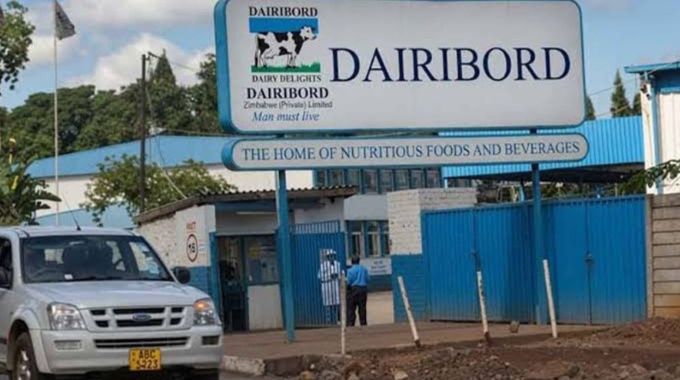
Business Reporter
THE Competition and Tariff Commission has now formally published its notice of investigation into the proposed acquisition of 48,79 percent of Dairibord Holdings Ltd by Varun Beverages Holding (Zimbabwe) (Private) Limited.
Interested stakeholders and members of the public have until Thursday, 1 October 2026, to submit written representations to the Commission.
Varun Beverages, an Indian-headquartered multinational and one of PepsiCo’s largest franchise bottlers outside the United States, has emerged as the leading prospective buyer for a controlling stake in Dairibord.
Varun entered Zimbabwe in 2018 with a greenfield bottling plant in Harare and has since disrupted the local beverage market through aggressive low-cost pricing, rapid capacity expansion and extensive retail distribution.
The transaction follows a cautionary statement from the Dairibord board advising that three major blockholders — Equivest Asset Management, Mega Market and Mutare Mart & Exchange — had entered negotiations with an unnamed third party to sell their collective shareholding of over 51 percent, which would result in a total change of control.
Mega Market holds 23,92 percent, Stanbic Nominees 23,87 percent, Serrapin Investments 12,04 percent, Old Mutual Life Assurance 10,65 percent and the Mining Industry Pension Fund 4,93 percent. Market sources indicate Varun has been quietly buying shares on the open market, though other bidders are reportedly interested.
The proposed acquisition is more than a straightforward corporate manoeuvre, as it touches the lives of nearly every Zimbabwean — from the dairy farmer in Chipinge to the tuckshop owner in Mbare, from the pension fund contributor in Bulawayo to the family doing its weekly grocery run in Harare.
In terms of Section 28 of the Competition Act [Chapter 14:28], the Commission has commenced an investigation to determine whether the merger is likely to substantially lessen competition in Zimbabwe or any substantial part of it, or whether it is likely to result in a monopoly situation contrary to public interest as provided in Section 32(4) of the Act. These questions will shape the price of milk, the availability of soft drinks, the viability of small-scale producers and the returns on retirement savings for years to come.
While the proposal is between a listed dairy giant and a multinational beverage powerhouse, it is the ordinary shopper at the heart of the inquiry. Dairibord’s scale is considerable. In the half year to 30 June 2026, revenue reached US$82,56 million, up 28 percent, with EBITDA of US$7,64 million, up 78 percent, and profit attributable to owners of US$3,25 million, up 169 percent.
Sales volume rose 26 percent to 78,3 million litres. In the full year to 31 December 2025, revenue was US$137,42 million on volume of 132,28 million litres, with total assets of US$67,30 million and equity of US$29,27 million. Raw milk utilisation of 42,5 million litres represents roughly 35 percent of national milk production, which reached 121,8 million litres in 2025. Beverages account for 64 percent of volume, liquid milks 26 percent and foods 10 percent, while the general trade and cash economy contributes over 40 percent of sales, with 96 percent of volume sold in US dollars.
There is a serious efficiency case for the merger. Dairibord operates amid constrained liquidity, Zimbabwe dollar lending rates above 40 percent, unreliable utilities and a persistent raw milk deficit. Interest-bearing borrowings rose to US$13,83 million by June 2026, and the company is being audited by Zimra for 2019 to 2024.
A partner of Varun’s scale could deliver procurement and distribution economies, inject capital to close the milk supply gap, transfer low-cost manufacturing expertise and open regional export markets. Whether those gains are shared with consumers, farmers and workers, or captured by the merged entity, is the central question.
Dairy farmers must also look at this transaction keenly. Behind every carton of Dairibord milk sits a network of farmers, transporters and suppliers whose livelihoods depend on the value chain.
Will Varun’s distribution network open new markets for local producers, or prioritise imported inputs over locally sourced milk? For farmers, this is not a distant regulatory process but a matter of livelihoods.
Employees have a direct stake too. Both companies are significant employers, and a merger inevitably raises concerns about duplication, restructuring and job security. The Commission is mandated to consider public interest, including employment, ensuring the human cost of consolidation is weighed against commercial benefits.
Competitors may also be affected. A combined Varun-Dairibord entity would possess significant market power, and smaller players may find themselves squeezed off retail shelves or unable to compete on price. Competitors have both a right and a responsibility to make their case.
For investors, it is about risk, reward and uncertainty. The deal also raises questions under Zimbabwe Stock Exchange rules, since acquiring a stake of this size would ordinarily trigger a mandatory offer to minority shareholders. The share price will remain sensitive to every development. Varun’s capital and expertise could transform Dairibord’s trajectory, or regulatory hurdles could derail the transaction entirely.
The Commission itself is on trial. A thorough, transparent and timely process will reinforce confidence in Zimbabwe’s regulatory institutions, while a rushed or opaque outcome could undermine trust when investor confidence is most needed. This is not a process reserved for lawyers and executives, but one for farmers, factory workers, shoppers, shopkeepers, pensioners and parents. The Commission has opened the door, and it remains for the people to walk through it.