Online Reporter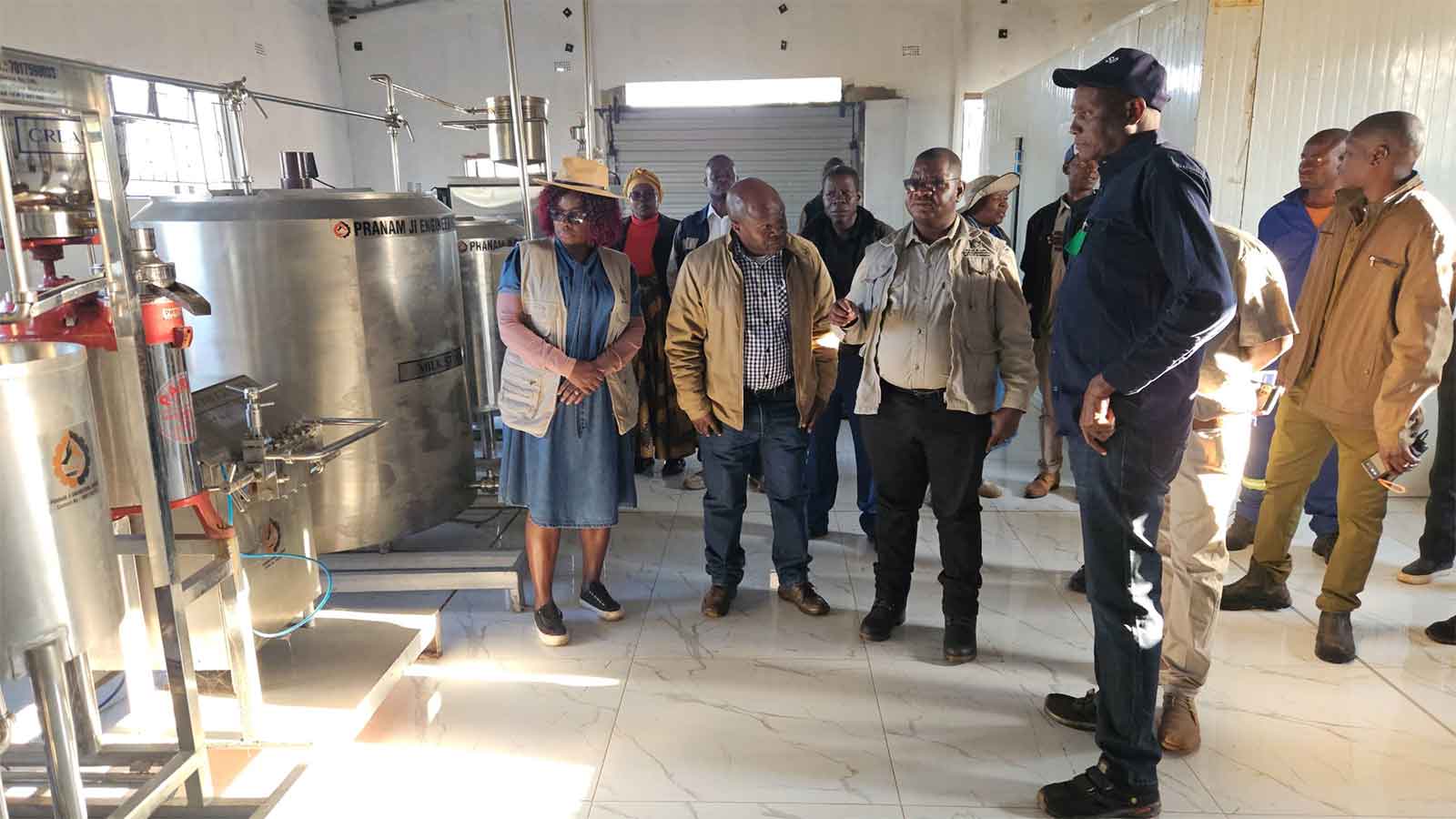
Theseus Shambare
The Government is using proceeds from a five percent levy on imported dairy products to expand Zimbabwe’s national dairy herd as part of efforts to strengthen local milk production and reduce reliance on imports.
The five percent dairy import levy was introduced in the 2022 National Budget and came into force in January 2023 as part of the Government’s Dairy Revitalisation Fund.
The levy was designed to finance dairy herd expansion, improve genetics, modernise milk production systems and reduce reliance on imported dairy products by increasing local production.
Speaking during a tour of dairy operations at Mutendi Dairy in Mbungo recently, Agriculture, Mechanisation and Water Resources Development Permanent Secretary Professor Obert Jiri, said the levy was introduced to support the growth of the country’s dairy industry by increasing the number of productive dairy animals.
“What we have done over the last few years is to ensure that we focus on local production of milk,” he said.
“This is why there is a five percent dairy levy for all those people who import their dairy products, to use that five percent to ensure we increase our herd by adding animals which can contribute to dairy production,” he said.
Professor Jiri said Zimbabwe currently has about 60 000 milking cows, with the Government targeting a significant increase in the national dairy herd.
“Currently, we are milking a total herd of about 60 000 as a country. If we can move that to 80 000 or 100 000, that means we will be able to substantially increase local milk production,” he said.
The Prof Jiri said the Government was pursuing a range of interventions aimed at strengthening the dairy value chain, which he described as a key pillar of agriculture-led industrialisation.
He said increased investment by dairy producers in breeding stock, feed production, processing infrastructure and value addition was helping to transform the sector.
“We are seeing very steady development, growing their own dairy cows and investing much in feed, in plant and in value addition of the milk, which is very critical,” Prof Jiri.
“We need the value chain to be fully developed on-farm. This is how we develop rural industries and achieve agriculture-led economic development.”
The Government has also moved to lower production costs by facilitating the importation of key feed ingredients, particularly soya beans and soya meal.
Prof Jiri said feed remains the single largest cost in dairy production, making access to affordable raw materials critical for the viability of dairy enterprises.
“We are also looking at facilitating imports. This is why we have allowed imports of soya bean and imports of soya meal by industries such as these, to ensure they do not run short and that they reduce the cost of production,” he said.
“Of course, in dairy the biggest cost is feed and this is why, as Government, we really ensure that we get these raw materials available as much as possible to farmers.”
The interventions come as the Government intensifies efforts to grow local dairy production, enhance value addition and strengthen linkages across the dairy value chain as part of broader efforts to drive rural industrialisation and economic development through agriculture.