Online Reporter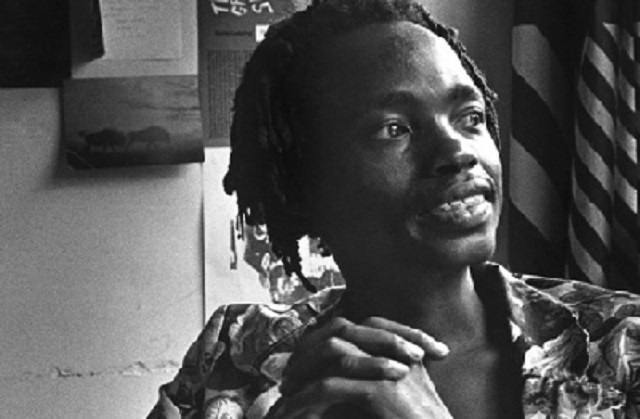
Lloyd Makonya
Correspondent
ON August 18, Zimbabwe and Manicaland in particular remembers one of its most extraordinary literary sons, Dambudzo Charles William Marechera, a writer whose short life produced a body of work that continues to provoke, unsettle and inspire readers nearly four decades after his death.
Marechera died on August 18, 1987, at Parirenyatwa Group of Hospital in Harare, aged just 35.
His death brought to an early end the life of a writer whose imagination had already carried Zimbabwean literature into territories few of his contemporaries dared to explore.
Born on June 4, 1952 in Vengere Township, Rusape, Manicaland, Marechera’s journey to literary prominence was as unconventional as the writing for which he became famous.
His relationship with books began remarkably early.
According to literary scholarship, as a child, he scavenged books from a rubbish dump where refuse from the white suburb was deposited.
Among the discarded materials he found books that opened an entirely new world to him.
That encounter would become one of the defining stories of Marechera’s literary origins.
The boy from Rusape transformed the cultural leftovers of a racially divided colonial society into a source of intellectual and imaginative liberation.
In his book, Mindblast, Marechera recalled discovering books at the rubbish dump, and described the experience as an early flowering of his imagination. His conclusion was characteristically bold: “whatever the body may be, the mind is its own world.”
It was a philosophy that would define much of his life.
Marechera’s intellectual promise became increasingly evident during his school years.
After the death of his father in 1966 and the family’s subsequent eviction from their home, his education was supported through a scholarship and assistance from Anglican missionaries.
He attended St Augustine’s Mission School in Penhalonga, where he continued developing the intellectual curiosity that would eventually make him one of Zimbabwe’s most distinctive writers.
From the Eastern Highlands, his academic journey took him to the University of Rhodesia, where he studied English Literature on a scholarship.
It was at university that Marechera’s intellectual independence began to collide openly with the structures around him. He participated in student demonstrations against the university administration and was eventually expelled. Yet what might have appeared to be a setback became another turning point in an extraordinary journey.
With assistance from his English tutors, he secured a Junior Common Room Scholarship to study at New College, Oxford in the United Kingdom.
Oxford introduced Marechera to another world, but it did not tame him. His time there was turbulent.
His unconventional behaviour, financial difficulties and confrontations with college authorities eventually resulted in his expulsion. At one point he lived in a tent beside the River Isis.
Yet, remarkably, it was during this difficult period that Marechera produced the work that would announce him internationally.
In 1978, The House of Hunger was published.
The collection was unlike much of the African literature being produced at the time.
Marechera rejected the expectation that African writing had to conform to a particular political, cultural or stylistic template.
His prose was fragmented, violent, surreal, psychological and often deliberately uncomfortable.
Rather than presenting colonial society through a neat narrative of heroes and villains, Marechera exposed its fractures the psychological wounds, racial tensions, poverty, violence, alienation and contradictions that shaped the lives of its inhabitants.
In 1979, The House of Hunger won the prestigious Guardian Fiction Prize, making Marechera the first African writer to receive the award.
His appearance at the ceremony was as unconventional as the man himself. He arrived wearing a striking red poncho and broad-brimmed black hat, carrying Ezra Pound’s The Cantos.
Marechera used the occasion to challenge the tendency to define writers primarily through racial categories. He objected to prefixes such as “black” being attached to the word writer.
For Marechera, the writer was not supposed to be imprisoned by expectations of what an African writer should write.
Marechera’s defiance was not confined to literary conventions. His life and writing became deeply intertwined. Scholars have noted the recurring appearance of fragmented identities and alternative versions of the self in his fiction.
Brendon Nicholls, writing in Postcolonial Text in 2013, argues that Marechera’s fiction and his performed public identity can be read together.
Rather than viewing his contradictions merely as personal eccentricities, Nicholls interprets them within the political and cultural circumstances that produced him.
This is important because Marechera’s apparent chaos had a deeper logic.
He had grown up under Rhodesian settler colonialism, encountered racial inequality and political repression and subsequently found himself negotiating both African and European cultural worlds.
His response was not to accept one identity and reject another.
Instead, he continually disrupted the boundaries between them. This helps explain why his writing remains so difficult to categorise.
Marechera could be African and cosmopolitan, political and anti-prescriptive, deeply influenced by European literature while simultaneously attacking the colonial structures that had privileged European cultural authority.
He was, in many ways, a literary hybrid before the term became fashionable in postcolonial literary studies.
Marechera’s literary career did not end with his prize-winning debut. He published Black Sunlight in 1980, a novel that pushed his experimentation even further. When he returned to Zimbabwe after independence, the book was banned as an “undesirable” publication on grounds of sexual and religious obscenity.
The irony was striking. The colonial system that Marechera had challenged had disappeared, but the writer found himself still confronting restrictions on artistic expression in the new Zimbabwe. He subsequently produced works including Mindblast and The Black Insider, while his poems, essays and other writings further demonstrated the breadth of his imagination.
His work was often difficult, sometimes disturbing and almost always provocative. But that was precisely the point. Marechera was not interested in making readers comfortable.
He wanted literature to disturb settled assumptions to make readers question authority, identity, culture and even the conventions through which stories themselves were told.
For Manicaland, Marechera’s story carries a particular significance. The literary giant whose work would eventually be studied in universities across the world began his journey in Rusape and passed through St Augustine’s High School in Penhalonga.
His story reminds us that great intellectual and creative achievements can emerge from places that are often overlooked in national narratives. The boy searching for books in a rubbish dump could hardly have imagined that those discarded volumes would help set him on a path to Oxford, international literary recognition and a permanent place in African literary history.
Yet Marechera’s legacy is not simply that he became a famous writer. His greater legacy may be that he refused to accept the boundaries imposed upon him. He refused to write according to prescribed formulas.
He refused to be comfortably classified. He challenged colonial cultural assumptions, questioned nationalist certainties and pushed African literature towards new forms of psychological and stylistic experimentation.
His writing demonstrated that African literature did not have to explain itself to the world.
It could be difficult. It could be experimental. It could be angry. It could be irreverent. It could be fragmented. Above all, it could be free.
Almost 40 years after his death, Marechera remains a subject of continuing scholarly attention.
His books continue to be read, debated and reinterpreted, while his life has generated biographies, documentaries, academic studies and literary discussions. That continuing interest is perhaps the greatest testament to his importance.
Marechera died young, but he did not leave behind a small literary footprint.
He left behind a literary disturbance. And perhaps that is fitting for a man whose name, Dambudzo, is associated with “trouble”.
From Rusape to St Augustine’s, from University of Rhodesia to Oxford, from a rubbish dump of discarded books to the international literary stage, Dambudzo Marechera transformed his experiences into an uncompromising literary imagination.
Manicaland did not merely produce a writer. It produced a literary rebel who made trouble with words and whose words continue to trouble the world.