Bruce Ndlovu, Sunday Life Reporter
FOR Raisedon Baya, director of Intwasa Arts Festival KoBulawayo, this year’s edition of the country’s longest-running arts showcase was the hardest he has ever had to stage.
That is no small claim. Over the last few years, Intwasa has weathered storms that almost sank it: Covid-19 lockdowns that emptied halls, restrictions that silenced crowds and financial constraints that continue to choke its ambitions.
Reeling from the blows it had been dealt by the global pandemic, Intwasa has tried to get back on its feet despite what are now chronic financial challenges.
This year’s edition, held under the theme “Experience It” between 23 and 27 September, presented the festival with a new challenge for Baya and his crew.
In a cruel twist of fate, this year’s edition coincided with the death of promoter, comedian, and radio personality Babongile Sikhonjwa, one of its staunchest supporters over the years. He was buried at his rural home, Mlowezi in Gwanda District, Matabeleland South Province and his death was well covered by the media.
An entire city came together not only to mourn but to celebrate the legacy of a larger-than-life character whose absence will be keenly felt in the arts.
Amid all the celebrations, lamentations and tears, Baya and his team still had a festival to run. This presented Baya with a dilemma, as he had to push ahead with a celebration of the arts at a time when an entire city was mourning.
“It was the hardest week in my life as a festival director,” he told Sunday Life in an interview. “You want to postpone, but you have been planning for a year and you have people coming from outside Bulawayo, outside the country. It was challenging to market events during a time of mourning.”
Baya said that by going ahead with the festival, they risked being looked upon as people who did not care for the loss of a beloved figure. However, as tragic as Sikhonjwa’s passing was, Baya and his team knew that the future health of the festival depended on hosting yet another successful edition.
“It was like you didn’t care. That was very tough. There are events we had invited people to and they couldn’t attend because of the funeral. But that’s life. It was an unfortunate and tragic thing that happened in the middle of a week we had planned for the entire year for. We lost through his death and the gap will be difficult to fill. But he will always be part of the cultural life we are trying to celebrate and keep alive,” he said.
Held in the shadow of a city in mourning, this year’s festival was also largely scaled down, as organisers came to grips with making the most of dwindling resources. Despite this, Baya said Intwasa had laser-focused on events that it knew would make an impact.
“We had said before the festival that events would not be as many as people were used to in the past. Remember, we used to run over 20 events during a festival week, but this year we managed around seven. We still think this made for a good festival because our struggle has been due to resources, which has made us rethink how we want the festival to go. In the future, we will look at the things that we do in order to make an impact.
“We tend to chase the bigger events because we think those are what will clout us, but we are coming to a realisation that you can’t be competing with your commercial festivals because we are a festival rooted in the community. We need to do things that cater to that community and have to be clear and intentional with the things that we make,” he said.
Baya expressed satisfaction with the return of the Intwasa Book Day, an event that had become forgotten in previous years.
“We had a successful book day, during which we spent an entire day speaking about literature and books. This is an area that we feel that we have been neglecting for quite some time and it’s a gap that we feel that the festival needs to fill. We did the Pathisa Nyathi lecture series, which was very eye-opening and the conversation that we had there was insightful to the arts sector and will go a long way in guiding us and showing us what we need to do to stay rooted in our culture,” he said.
This year’s edition of the festival ended with a production of Ipi Ntombi, an event that brought some of the city’s minority groups to the Bulawayo Theatre. This, Baya said, could be a hallmark of future festivals as they thought that
Intwasa needed to be more inclusive in such a diverse metropolitan city.
“We closed the festival with theatre in the form of Ipi Ntombi, and we almost had a full house. That in itself was great, but because we were collaborating with Bulawayo Theatre, we attracted the kind of audience that we don’t usually attract to the festival, for example, the white community. We feel that it’s time we also engaged them because this is a Bulawayo festival and not a festival that is focused on just one demographic group. We want to make sure that everyone in Bulawayo enjoys cultural activities in the city,” he said.
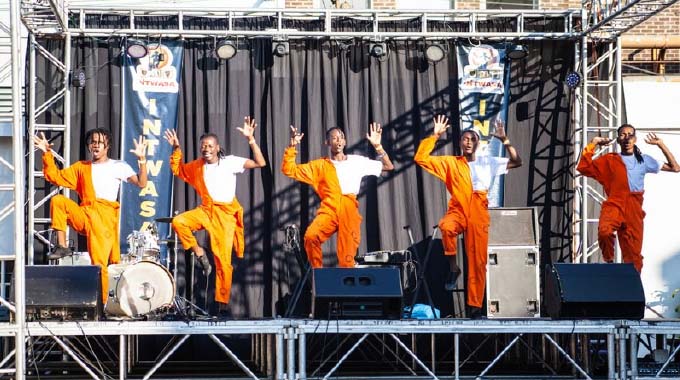
As the city mourned Sikhonjwa, a man who encouraged a spirit of togetherness in his time, Baya said future editions of Intwasa would be guided by the spirit of collaboration.
“What we learnt this year was that collaborations are the future. Most of our successful events were done in collaboration with one or two other arts organisations within the city.
We realised that while music is important and will remain an important part of the festival because it is very visible, we need to give other genres a platform. That means giving a platform to your poetry, your visual arts, and other branches of the arts. We need all the arts to be seen, to be heard, to be represented, and to be celebrated.
The festival is a platform of celebration. We want to celebrate diversity, ourselves and Bulawayo’s arts and creative sector. We want to stay focused and alive,” he said.