Online Reporter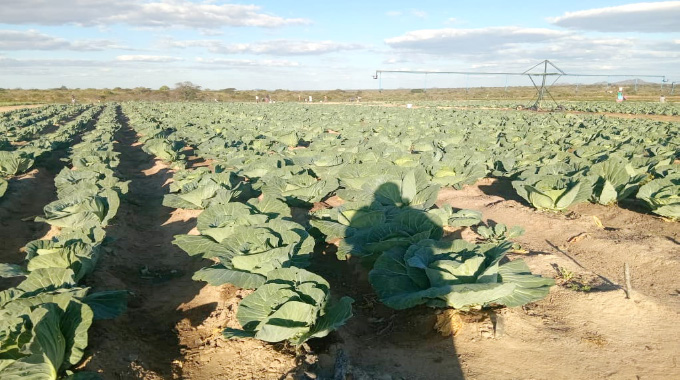
Sukulwenkosi Dube-Matutu, [email protected]
A THRIVING women-led horticulture project has been set up at Datata area in Gwanda District following the establishment of a five-hectare irrigation scheme.
Local farmers have started harvesting their first-ever crop, which they planted in April and includes cabbage, green beans, carrots and onions, among others.
The Datata Green Hub project has 48 farmers, of whom 41 are women and six are youths from Ward 1 and 2 areas.
The project members are focused on growing cash crops with a bias towards horticulture production. One of the farmers, Ms Nokuthaba Ndlovu, said the initiative will significantly empower women farmers, providing them with new opportunities for economic growth and self-sufficiency.
“In the past, as women in rural areas, we didn’t have many projects that were targeting us, but now we have this green hub project, which is mainly targeting us as women,” she said.
“We have shifted from being women who are only confined to household chores, but we are now productive. We are now playing a part in bringing food to the table and developing our community.
“We will now be able to pay school fees for our children. Through this project, we are also assisting the community to have easy access to nutritional food. Before this project, we had to travel long distances to access some of these vegetables and crops. We also seek to ensure that community members have access to affordable produce,” said Ms Ndlovu.
She said members have received training on how to run their project as a business enterprise. Topics covered include crop selection, best crop management practices and marketing.
Ms Ndlovu said they were planning to share more knowledge with young girls to ensure the sustainability of the project.
Datata Green Hub chairperson, Ms Kwanele Sibanda, said they have identified markets in Gwanda Town and nearby towns like Esigodini where they will sell their produce. She said they also plan to introduce other farming enterprises in their hub, such as livestock production.
The project is an opportunity for women to contribute to the nation’s food security.
“Moving forward, we plan to acquire dairy cows and utilise artificial insemination to breed female calves, aiming to provide each farmer with a cow.
“This will not only diversify our hub’s production but also generate additional income through milk sales, further empowering our community,” she said.
Ms Sibanda said they have acquired a centre pivot, but it does not cover the entire scheme, hence they needed a drip system to cater for the area, which is not covered by the pivot.
At the moment, they are relying on buckets, which is labour-intensive, time-consuming and leads to wastage of water.
Ms Sibanda said a more efficient water system will help improve their production.
Ward 2 Councillor, Mr Zwelibanzi Mpofu, said once the hub reaches its full potential it will not only change the lives of beneficiaries but the entire community. She said the project will create employment and ensure food security within the community.
Clr Mpofu said in the past, women used to walk long distances to reach the nearest irrigation scheme and the community was struggling to access horticulture produce.
“We are proud to have crops like green beans, cabbage, carrots and onions being produced locally in our community. The project has empowered women, which is crucial in fighting gender-based violence,” he said.
“Women have also been empowered with skills in farming as a business. The farmers now know how to produce a variety of crops, which they didn’t have knowledge of.
“When you empower women, you empower the entire community. We invite bulk buyers to visit our hub and purchase a variety of fresh, high-quality vegetables.”
Government has identified the revival of the horticulture sector as a key element in boosting the economy. Various initiatives have been rolled out, which seek to empower rural smallholder farmers and integrate them into the mainstream horticulture value chain.
This will enable the smallholder sector to participate meaningfully in enhanced production and productivity, development of local and regional markets, employment creation, expansion of exports and reduction in poverty.
Zimbabwe is spending billions on importing horticultural products and foreign currency resources could be saved through boosting local production. —@DubeMatutu