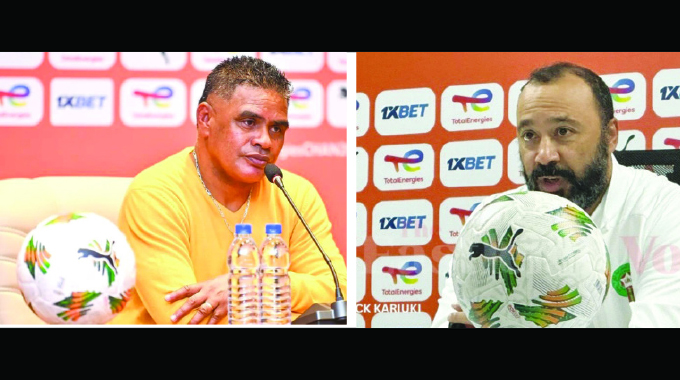
When the curtain falls on the TotalEnergies CAF African Nations Championship (CHAN) PAMOJA 2024 in Nairobi, Madagascar will be standing in uncharted territory.
The final in which North African giants Morocco start as the favourites and the is scheduled for the Moi International Sports Centre, Kasarani today (kick-off 5pm)
Madagascar are contesting their first-ever CAF senior international final, and according to Mohamed Magassouba – former Mali and DR Congo coach and now part of CAF’s Technical Study Group (TSG) – their plan will hinge on mental discipline, tactical versatility, and the collective energy that has carried them this far.
While Morocco, led by Tarek Sektioui, seek a historic third CHAN crown, Romuald Rakotondrabe’s Barea will arrive with nothing to lose and everything to gain.
The question Magassouba poses is simple: can the debutants combine resilience with calculated risk to stun one of the tournament’s giants?
Goalkeepers as Decisive Figures
No analysis of this final can begin without mentioning the men in goal. Morocco have El Mehdi El Harrar, while Madagascar’s Michel Ramandimbisoa has been one of the standout keepers of the tournament, registering 25 saves and three clean sheets.
“A goalkeeper is often called ‘Mr. 50%’ of a team,” said Magassouba.
“This final will be decided as much by the collective as by individual brilliance, and both keepers have shown they can influence games in key moments.”
If penalties loom, preparation and mental strength – not luck – will likely decide who lifts the trophy.
The Mental Edge: Calm Under Fire
For Magassouba, Madagascar’s most impressive quality has been their composure in high-pressure moments.
Against Sudan, they struck late through Toky Rakotondraibe in the 116th minute, and earlier they silenced a full Nairobi crowd when eliminating hosts Kenya.
“At the highest level, it comes down to managing emotions,” he explained.
“Madagascar showed great psycho-mental qualities. Their late goals are not coincidences, but the result of disciplined mental training. In the details, you discover great teams.”
This resilience could be critical if the final drags into extra time.
Key Individuals: Who Can Change the Game?
Magassouba identified several potential match-winners. For Madagascar, midfielder Rijaniaina Nicolas Randriamanampisoa (Man of the Match against Sudan) embodies their engine-room power.
In attack, striker Fenohasina Gilles Razafimaro offers penetration, while Rakotondraibe has already proved his big-game nerve.
For Morocco, danger men include creative full-back Youssef Belammari, attacking midfielder Mohamed Hrimat, and top scorer Oussama Lamlaoui.
But Magassouba warned: “In a final, danger can come from any player.”
Experience vs Novelty
Morocco are seasoned, having won CHAN titles in 2018 and 2020. Madagascar, by contrast, are debutants on this stage. Yet novelty can be an advantage, Magassouba argued.
“Morocco may try to unsettle Madagascar early with aggressive pressing or quick goals,” he explained.
“But Madagascar can counter with compact defending, quick transitions, and even surprise bursts of high pressing.
“They might even deliberately drag the game into extra time, relying on their fitness and unity to strike late again.”
This clash of experience and novelty could shape the tempo of the contest.
Collective Organisation vs Individual Sparks
Throughout the tournament, Madagascar have relied on their structure, even when playing with ten men against Kenya.
Their collective discipline, combined with the leadership of Nicolas in midfield, has been their foundation.
“They can sit deep, lure Morocco forward, and then break quickly,” said Magassouba.
“Or they can gamble with surges, winning fouls and set-pieces in dangerous areas. Their strength lies in mixing both approaches, while maintaining defensive stability.”
If Morocco score first, Madagascar’s challenge will be to adapt their strategy without losing shape.
The Bench and Substitutions
Magassouba stressed the importance of depth. Both coaches will have to manage substitutions carefully, knowing the match could stretch to 120 minutes.
Players like Rakotondraibe off the bench could become decisive.
“The depth of the bench is a major asset,” he noted. “It allows a coach to change the balance of power at any moment.”
Should the final go to penalties, Magassouba insisted it will not be about luck.
“At this level, victory comes from preparation – technical, tactical, physical, and above all, mental,” he said. “You must provoke fortune, because luck smiles on the bold.”
A Final Shaped by Mind and Detail
For Madagascar, this is history in the making. For Morocco, it is the chance to become the most successful CHAN team ever.
In between lies a tactical battle shaped by goalkeepers, midfield duels, emotional resilience, and the smallest of details.
As Magassouba concluded: “A final is not played, it is won. The team that stays strong mentally, second after second, minute after minute, will prevail.”
For Morocco, the focus is on whether the Atlas Lions’ tactical maturity and tournament pedigree can carry them to a record third title.
According to Kamel Kolsi, the former Tunisian international and respected member of CAF’s Technical Study Group (TSG), Morocco’s biggest strength lies in their ability to remain calm under pressure while still carrying a potent attacking edge.
“We saw in the semi-final against Senegal that Morocco can play in two ways,” Kolsi explained.
“They can build patiently, using lateral or backward passes to escape pressing, but they also know when to accelerate and break lines quickly. That mix of composure and explosiveness makes them very hard to contain.”
Senegal’s youthful side pressed aggressively in the semi-final, yet Morocco’s defensive block remained largely unshaken.
Goalkeeper El Mehdi Al Harrar and his back four consistently recycled possession until openings emerged. Once beyond the press, midfielders such as Youssef Mehri were quick to trigger forward thrusts.
Kolsi observed: “In transition, Morocco adapt instantly. If the opponent is unbalanced, they look for depth immediately. If not, they create overloads around the ball, keep it, and progress in zones. That flexibility is the hallmark of a mature team.”
This dual approach — patient retention when needed, rapid depth play, when the moment arises — has been Morocco’s calling card throughout the tournament.
It is likely to feature again in the final. –cafonline.com/Sports Reporter