admin
admin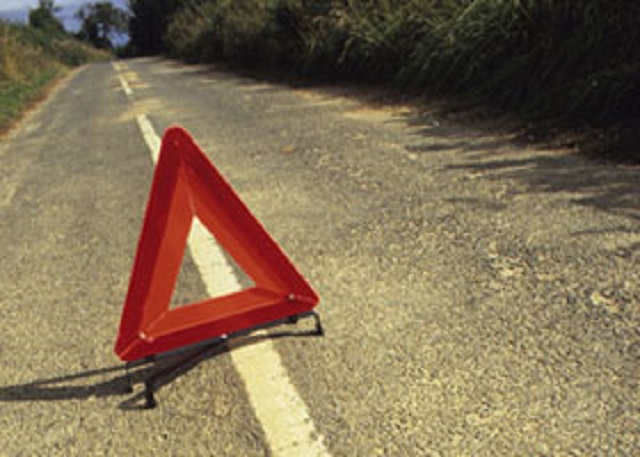

Lovert Mafukure
At some point in your life, you will need to attend to a breakdown in the middle of nowhere. You may need to change a tyre or your car may need to be towed. As simple as it may look, all that will need to be done the correct way.
Almost all cars come with special jacks that you use only for raising the vehicle in case of a puncture. It is not meant to be used as support on a vehicle for long or for other repair-work. You need axle stands for that. Never ever crawl under a vehicle supported by a jack only.
The correct procedure for changing a tyre without damaging components or injuring yourself is as follows. You want to make sure that the car is on level ground and the handbrake is firmly applied. Put the car in Park (P) and if it’s manual put it in first or reverse gear while also making sure you put blocks on the other wheels in case it slides back or forth. At this point, you then loosen the wheel nuts just half a turn leaving them in place until you have raised the vehicle. Make use of the jack to lift the car. Always position the jack at the correct jacking points. Once that is done, remove the wheel and fit a spare. Tighten the wheel nuts in a diagonal pattern just finger-tight. Lower the vehicle then tighten the wheels nuts.
Most modern vehicles are equipped with an electronic control module that controls how the engine runs. Whenever there is something amiss there most certainly will be lights that illuminate on the instrument cluster. Blue lights are normal indicative lights and do not point to anything amiss.
Yellow lights are warning lights that you should check, something is not right. The red lights on the instrument cluster mean danger, whenever you see a red light coming on when you are driving you ought to stop and check what’s going on under the hood. Lights like the oil light are red in colour. If the oil light illuminates, stop your car immediately.
Oil light comes on under almost similar circumstances, that is, when oil pressure goes below normal. It can be low oil in the engine in which case you will just need to top up the oil but you may also need to check why it is low. Under normal circumstances engines do not consume oil within the oil change period. If the light comes on continuously and there is enough oil, it may indicate oil pump failure and you may want to drive no further or you may cause extensive damage to your engine to the point of seizure.
In the event that your car breaks down and has to be towed, make sure it is towed properly or more components may be damaged. Ideally, all cars regardless of their transmission type should be towed with the driven wheels of the ground. Cars with manual transmissions however, can be towed with the driven wheels on the ground provided the ignition is not locked and proper towing equipment is used. Make use of a tow bar and desist from using tow-ropes, they are not safe. All cars with automatic transmissions have to be towed with driven wheels off the ground. Cars with All Wheel Drive (AWD) have to be transported on a low-bed trailer, they cannot be towed.
If an automatic car has to be towed then it has to be over a short distance at very low speeds or transmission damage may occur. If there’s need to tow for a long distance then drive shafts may need to be disconnected unless the engine can still run. Make sure that the car is in neutral when being towed.
Many cars have sustained damage because of towing the wrong way. As I mentioned earlier, vehicles with All-wheel drive (AWD) like Subarus shouldn’t be towed at all or drive train components may get damaged. Some tow-truck companies will tow anything and everything but it is your duty as the owner to make sure your car is towed the correct way. Till next time . . . happy motoring!
Feedback — [email protected] / www.facebook.com/automartzimbabwe
Disclaimer: This material has been prepared with the intent to provide reliable information; no warranty either expressed or implied is made to its accuracy or completeness. No liability is assumed for any loss, injury to persons, property or other damage resulting from either the use of or reliance on the material presented. Always consult the professionals.



 Online Reporter