Vusumuzi Dube
Thinking about Africa and being African is a full-time job for African scholars, politicians and some businesspeople. It is such a job that one can hazard the opinion that Africans spend more time thinking about being African than living the idea of being African, and being alright and normal about it.
The sheer number of ideologies that have been generated by Africans in thinking about Africa tells the story of how far and how deep Africa has been food for thought for Africans over the decades.
To count but a few ideologies, or philosophies, of thinking about Africa, there has been Pan-Africanism (emphasising African unity), Afropessimism (looking at the dark side of being African and black), Afropolitanism (claiming African belonging to Africa and the world), Afrofuturism (using art and science to invent African futures) and Negritude (delving into African difference and pride) in the world.
Much work, intellectually and politically, has been invested in thinking about Africa and being African, and expressing that.
The provocative Wole Soyinka once shouted at the Negritude scholars and activists, saying: “A tiger does not proclaim his tigritude, he pounces”.

In other words, Soyinka said, “a tiger does not stand in the forest and say: ‘I am a tiger.’
When you pass where the tiger has walked before, you see the skeleton of the duiker, you know that some tigritude has been emanated there.”
Soyinka’s critique was that African intellectuals spend too much time and energy talking about being African and black instead of living the life and reality of being African and black.
The point that Soyinka missed is that there is a fundamental problem with being African in the world, hence the necessity of much thought and expression of being African in a world that has dealt Africa down in many ways.
Africa has come a long way and where it comes from has not been pretty but difficult politically, economically, and existentially for the Africans.
Africans have troubled heritages, and not one heritage, in the world and its political, economic and cultural systems.
African Heritages
Most historians, African and non-African, that have taken an interest in studying Africa have looked at Africa in terms of time and events around the epics and epochs of colonialism.
At that, there is pre-colonial Africa, colonial Africa, and post-colonial Africa.
This is a historical heritage of Africa as shaped by the epical or epochal events of colonialism.
This historical heritage of Africa might unfortunately give the impression that there would be no Africa to talk bout if there were no colonialists from Europe that came and defined the life and history of the continent.
But this heritage does capture how powerfully colonialism impacted on African life and time.
Ali Mazrui conceptualised a civilisational heritage of Africa which he called the “Triple Heritage” where Africa was shaped and produced by its own historical heritage, the western Christian heritage, and the Asian Islamic and Arabic heritage.
It was Mazrui’s optimistic understanding that African future would be guaranteed by Africans trying by all means to benefit from the strengths of the three civilisations that met in the continent and discarding the weaknesses of them all.

Like the colonial heritage of Africa that is described above, the African triple heritage that is described here suggests that after all there is no Africa of the past to return to but there is only an Africa of the future.
This is an important observation to make because there are some among us that mistake the important task of decolonisation in Africa with the idea of going back to the African past and getting out of modernity.
There are nativist and primitivist currents of argument that suggest that going back to a certain pure and authentic African past is decolonisation and liberation of a kind.
Yet, decolonisation might involve more of undoing legacies of African conquest and domination, navigating African problems, and forging African futures that are more liberated than the African pasts.
Nostalgia about a grand African past that was powerful and glorious might be at best innocent and at worst naïve.
That people can go back in time and find a pure version of themselves is fantastic in the sense of being a fantasy and a fallacy.
The changing World Orders
World orders change.
What might remain constant from a long time is the world system.
As I write China has proclaimed that the world is changing and is doing everything to position itself for that new world order.
The USA has explicitly also noted that the world is changing and expressed its burning desire to “lead” that envisaged new world order.
Russia, from its own locus of enunciation as the residue of the former Soviet Union, has also proclaimed a new world order that is unfolding, and that Russia will not compromise its power and position in the new world order.
All these powers of the world are clinging to some imaginations of futures of their own that they are already actively shaping and are not compromising about them.
The feud in Ukraine has a lot to do with European futures and security and also civilisational interests of Empires.
No country or continent wants to stop existing and that entails defending one from others or attacking others to secure existence and some future.
The place of Africa in changing world orders is a subject to be concerned about for Africans.
It will be tragic if Africa, in what ever new world dispensation will come, is still going to be holding onto bitter heritages of the old-world orders and being the victim of the world.
Something must break in the long chain of African victimhood and make way for a self-defining Africa that has its full agency.
Decolonising African Heritages
The trouble with Africa, the African problem, seems to be based on where Africa is coming from and what Africa has encountered in history, and which has produced and shaped the continent and its people.
The founding African fathers seem to have been optimistic dreamers about the continent’s future.
South Africa Pixley KaIsaka Seme in 1906 dreamt of “The Regeneration of Africa.”
In 1937, Nnamdi Azikiwe from Nigeria fantasised about “The Idea of a New Africa.”
In the 1950s Kwame Nkrumah of Ghana popularised the idea of United States of Africa shaped around Pan-Africanism.
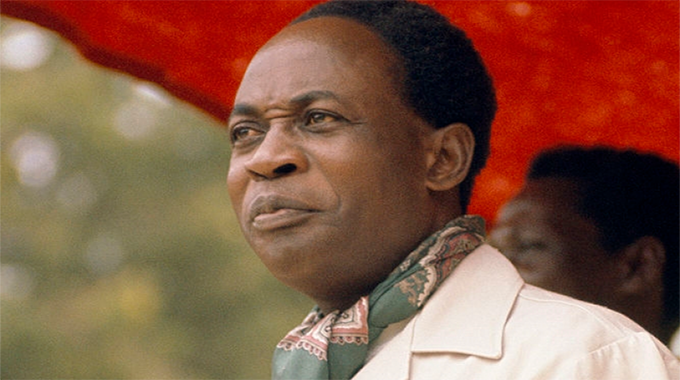
The philosopher, Amilcar Cabral, demanded a “Return to the Source” of Africa. Thabo Mbeki, in the 1990s, stole the attention of the world about an “African Renaissance.”
From Uganda, Yoweri Kaguta Museveni published a book titled: What is Africa’s Problem? A book in which he troubled himself with a political diagnosis of what exactly is wrong about Africa in the very first place.
Museveni noted bad leadership, insecurity, the lack of the public spirit in public service, the cancer of corruption, lack of nation building, dependency, crisis of the state and poor industrialisation as key African problems that need to be solved by Africans.
My only worry is that Museveni might have been describing symptoms of the African problem as the problem.
All the political and philosophical fantasies by African leaders concerning the African problem and African futures seem to be cries for the decolonisation of the continent and its heritages and histories that hold it back and press it down.
Undoing what the world has done to Africa and what Africa has gone through in history, decolonising African histories and heritages, seems to be the task of the present generation of Africans.
What remains stubborn is the Leninian question: What Must Be Done, to decolonise African heritages which is the subject of my future reflection.
Cetshwayo Zindabazezwe Mabhena writes from Sol Plaatje University, Kimberley, Northern Cape Province, South Africa. Contacts: [email protected].



 Online Reporter